During Qualcomm’s Snapdragon Summit 2025, I had the chance to sit down with one of the company’s executives to talk about wearables.
Dino Bekis is the VP & GM of Wearables & Mixed Signal Solutions at Qualcomm. Our wide-ranging discussion included an in-depth look at two of the biggest weaknesses of today’s smartwatches : battery life and charging.
Currently, most watches running Google’s Wear OS can only last one full day on a single charge, while a wide array of proprietary infrastructure makes charging a nightmare.
Bekis confirmed that longer battery life was a target for Qualcomm:
“People want to have this concept of super advanced performance and capability, and I also want to have a three-week battery life. From our perspective, being able to get to something that’s probably closer to a week is a good target.”
Current solutions on Snapdragon processors claim up to 100 hours, which is in the three-to-four-day range. Bekis reiterated that seven days is a really good target “without any equivocation or quibbling”.
I spoke to Dino Bekis at Qualcomm’s Snapdragon Summit in Hawaii
Chris Martin / Foundry
So, how do we get there?
Qualcomm plays a huge role in improving smartwatch battery life. Its chips are at the heart of most Wear OS watches, so they can have a big bearing on stamina.
Bekis explained how the company is working towards the seven-day goal:
“We look at process node as a way to, maybe more of a brute force approach, to try to drive power consumption down. The other things we look at are what can we offload, what are hardware accelerators, we can put on that require less main CPU complex overhead?”
He explained that the fewer times the main processor needs to wake up to perform a function, the better.
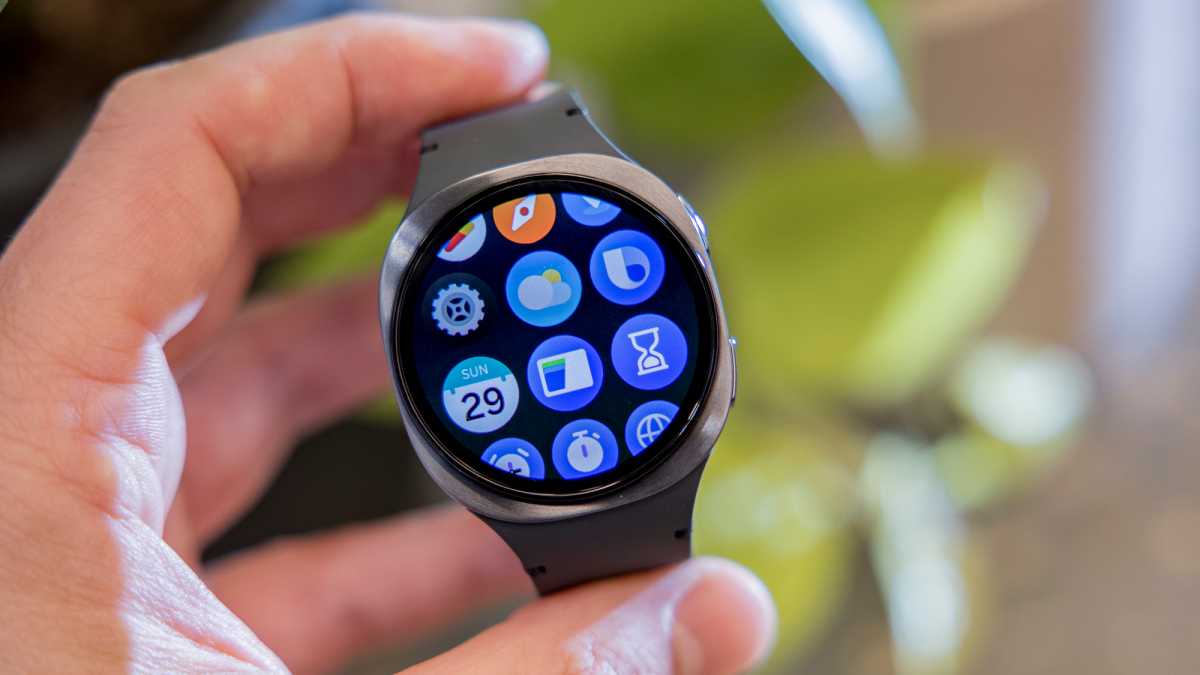
Battery life is depleted every time you open and close an app
Dominik Tomaszewski / Foundry
“That is tightly coupled with when we work with the folks at Google on Wear OS or on Android. What are the things that we can do in the operating system so that we can take advantage of these hardware offload features that we’re building in?”
He added that the company looks at typical use cases in order to optimise the things people want to do with a smartwatch every day.
How long will it take?
It’s a future we all want, but Bekis indicated that the week-long Wear OS battery life dream might take a while to become a reality:
“One of the things that we like to use is a figure of merit. As you go generation to generation, you should be looking at maybe a doubling of battery life. And that may be sort of the theoretical maximum. But when you look at what we’re doing, I think we’re very close to being able to get to maybe a five-day battery life through a combination of all these things I mentioned.”
“And I think that would be a big step forward, especially for a high-function watch. And even with hardware designs, there’s multiple iterations you can have on the software to improve it.
“So, the most aggressive I’d say is maybe two to three years, depending on how things go. Maybe the most conservative maybe you know five to six years, but I think it’s measured within that kind of narrow window where we can get to six to seven day battery life for typical use cases.”
What about charging?
I also asked Bekis about charging because it’s such a pain point of smartwatches at the moment. With so many requiring their own proprietary chargers to power themselves at all, it’s the reason I didn’t bring a smartwatch to the summit.
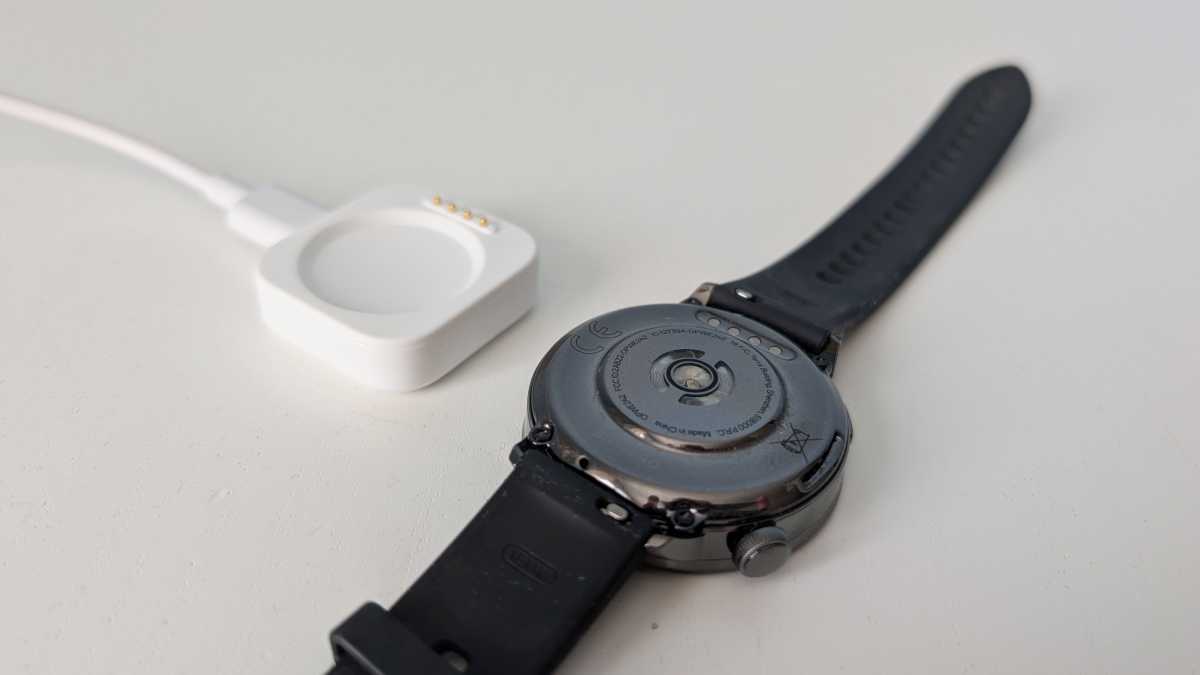
Charging is a common frustration on Wear OS smartwatches
Mattias Inghe
He foresees a future where this is less of an issue:
“I think it’s moving to wireless charging. I do. You know, the days of the four-pin and three-pin connector and all these are different shapes, I mean, that’s starting to go away. When you look at what Samsung’s done with a little bit of mag block or MagSafe charging where it snaps in magnetically, I think that’s a good step forward.”
“But wireless charging is where it’s going to end up; it’s just natural and everything will converge. The efficiency, the timing, I think we can get everyone there quickly.”
“It’ll feed on itself where consumers will say, hey, I don’t want to have 14 devices I have to plug in, I just want to bring in one thing, it’s going to be a pad, I’m going to put my stuff on the pad and they’ll just charge.”
“I’d like to believe it’s going to happen in the next five years, but you know what they say about predictions, right? They never happen as fast as you want.
There you have it. Great Wear OS battery life and simple charging is within reach, but you might have to wait for a few more years.
Don’t want to wait? In our comprehensive best smartwatches guide , the models that don’t run on Wear OS or Apple’s watchOS typically offer much longer battery life.
Qualcomm paid for my travel, airfare, and meals to travel to its Snapdragon Technology Summit. The company did not ask for or exert control over Tech Advisor’s content, including how this interview was reported.
Author: Chris Martin, Managing Editor, Tech Advisor

Tech Advisor Managing Editor Chris got his break as a reporter at infamous site The Inquirer and has been with us for more than 12 years. With a BA degree in Music Technology, audio is his specialism, but over the years he has reviewed all kinds of gadgets, from smartwatches to mesh Wi-Fi to coffee machines.
Recent stories by Chris Martin:
- What is Raylo? Phone and tech subscription explained
- Apple Watch SE 3 review: The easy choice
- Our 10 favourite budget smartwatches, vetted by tech experts
