
At a Glance
Expert’s Rating
Pros
- Automatic bed levelling
- Touchscreen control
- Easy to remove prints from spring-steel bed
Cons
- Small prints don’t always stick without a brim
Our Verdict
The ideal first 3D printer: easy to assemble, all the features you’d want and reliable print quality.
Best Prices Today: Anycubic Vyper

3D printing has been around for years, but even though it still feels a lot like a hobby only for dedicated enthusiasts, there are some 3D printers that are practically fool-proof.
Anycubic’s new Vyper is one of them. It has many quality-of-life features that other 3D printers lack – the features you don’t even realise you need until you buy a printer that doesn’t have them.
Features such as automatic bed levelling, which happen at the touch of a button, eliminate the frustration of manual levelling, which can be a huge challenge if you’re new to 3D printing. The bed on any 3D printer has to be adjusted first to ensure it’s perfectly level before you can print anything.
Second, they Vyper has a touchscreen. Most 3D printer don’t. They have jog wheels which make it a laborious process to navigate through menus and adjust settings.
Better yet, the options are sensibly grouped which means there’s fast access to the settings you need most often, such as changing the filament and adjusting bed and hot end temperatures.
But before I get into too much detail, know this: the Vyper is the ideal first 3D printer. It prints reliably, is relatively quiet and not too expensive.
Setup
- Just seven bolts & seven wires to connect
- Takes around 15 minutes
When the box arrives and you unpack the printer it can be a little daunting. However, assembly is very easy and should take just a few minutes. What’s confusing is that, despite the printed warning that the two main pieces are joined with a cable (shown below), there’s no setup guide or manual.

That’s because it’s on an SD card in one of the plastic bags: you need to pop that (or the supplied USB reader) into your computer and open the PDF file. (Also, Anycubic now ships the printer without that cable connected, so it’s considerably easier to unpack and set up.)
This will explain step by step how to get up and running, which basically involved bolting the vertical part of the frame to the base, then attaching the touchscreen with a further three screws. Tools are provided in a little tray that lives in the base of the printer and after a total of seven bolts and screws and five cable connections and you’re ready to go.
There’s a test print – an owl – ready on the SD card so you can make a print as soon as you’ve used the auto-bed-levelling feature. Just note that the SD card should be inserted into the slot on the front of the printer upside down, with the label facing the floor.
Features & design
- Build volume: 240x240x265mm
- 4.3in touchscreen
- Dual z-axis screws
- Removable magnetic build plate
The Vyper looks a lot like the Creality CR-6 SE , and no doubt that popular model provided some inspiration for the Vyper.

It’s no bad thing, but the Vyper isn’t a clone. It has quite a few similar features such as the dual z-axis screws. This means that there are two threaded rods, one on either side of the vertical frame, rather than just one, on one side, as many budget 3D printers have.
Two are better, as it means the horizontal beam that holds the print head can be kept perfectly level as it moves upwards during printing, and helps to ensure there are no errors in very tall prints. The rods are loosely held in place at the top and they do rattle around a bit, though it depends upon what you’re printing.
Another neat addition are dual sensors for the z-axis which help to compensate for changes in height when the bed is at different temperatures, again ensuring that the first layer is printed properly.
The bed itself is heated, which you’d expect at this price. A heated bed helps prints stick better, but the Vyper comes with a PEI sheet which makes life a lot easier. It’s a sheet of springy steel which is held in place by a huge magnet. When your print is finished, you simply lift off the sheet and bend it: the model simply peels off.

It has a textured surface, too, which helps the all-important first layer to adhere, and leaves a mottled finish on the underside of your print, unlike the shiny, smooth finish you get from a glass bed.
In theory, the PEI means you shouldn’t need to use a brim, but I found that very small sections such as the links in the cute octopus’ arms (above) wouldn’t reliably adhere. Brims are fiddly to remove on complex models like this, but after leveling the bed a second time, the Vyper did successfully print the octopus without a brim.
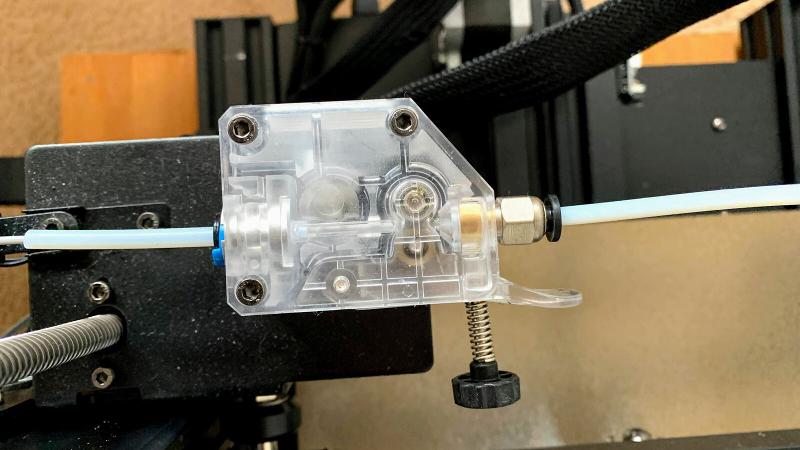
There are a few other nice touches, such as the transparent extruder mechanism that uses two gears to move the filament, rather than just the usual one. There’s a run-out sensor next to it, which will halt printing and allow you to feed in a new reel of filament, and avoid half-printed models.
The hot end itself is an all-metal V6 with a brass nozzle. This allows the Vyper to print faster without losing accuracy or compromise the strength of the model you’re printing.
Surrounding it are three fans, and the whole assembly is covered in a plastic housing, making it look nice and neat.
The tool tray houses the filament cutters, Allen keys, spanners and nozzle cleaner. Two spare nozzles are included as well.

Performance
A version of Ultimaker Cura is provided on the SD card, along with a profile for the Vyper. Cura is pretty much the go-to slicing software that turns 3D models into the code that the printer needs to build the model by printing one layer on top of another.
After levelling the bed, you can print an initial test using the small owl figure that’s included as .gcode on the SD card. This doesn’t use much filament and allows you to check everything is working properly before you print anything that does use a lot of PLA.

Next, I used Cura to slice a 3DBenchy, a small boat that’s a torture test for 3D printers. The result was impressively clean. Stringing was almost non-existent and aside from a little under-extrusion on the horizontal area at the rear (which meant there was gaps between the extruded filament), it was one of the best I’ve seen.
The only blot was a visible z-seam (not shown in the photo above but you can make it out on the octopus). This is what it sounds like: a vertical line on the print which looks like the point where the sides are joined, and is caused by the nozzle stopping at the same point on each layer. There are various ways to eliminate this, including the z-seam option in Cura under Shell settings – it would be good to see Anycubic optimise the Cura profile for this to get the best print quality.
Using the Vyper’s touchscreen you can adjust print speed and temperatures on the fly, including during printing, which can be useful if you spot something is wrong mid-print. Information and settings are kept to a minimum which is fine for beginners, but might feel a bit limited for experienced users.

The auto-resume feature works as advertised, but in order to use it you need to place your model near the rear of the bed and print from an SD card.
Prints generally adhered to the flexible bed well, and were easy to remove once printed.
A real plus is that the Vyper isn’t too noisy when it’s printing. The only thing you’ll hear are the cooling fans, which cool the filament as soon as it’s extruded.
This is an important point for longer prints which have to run overnight as it won’t stop you from sleeping, though you won’t want to be in the same room.
Price & Availability
As you can only pay in US dollars (and only via PayPal or Google Pay) the price has to be converted for other currencies. In UK pounds it works out to around £320 (including VAT and delivery). Anycubic says that if you order from the UK, printers will ship from a UK warehouse so you don’t have to pay an import fee.
Unfortunately, there’s no way to see if there is stock in a specific warehouse, but Anycubic told us that – as of 7 September 2021 – Vypers were in stock, and that there was a $10 discount available until 10 September, making the total cost for UK buyers £303 inc VAT, as delivery to the UK is also free. Be sure to choose US/Other when ordering – not EU, where the price is $409.
Verdict
If you’re after a budget 3D printer and are happy to pay a bit more than the absolute cheapest amount possible, then the Vyper is well worth your money. Its auto-levelling bed, great touchscreen and solid build quality make it excellent value and an ideal first 3D printer.
Specs
Anycubic Vyper: Specs
- FDM 3D printer
- requires 1.75mm PLA/TPU/ABS filament
- Printer size: 508mm×457mm×516mm
- Max print size: 240x240x265mm
- USB-B port or prints from SD (card provided)
- max travel speed 180mm/s
- layer thickness 0.1-0.4mm
- nozzle diameter 0.4mm
- Positioning accuracy: X/Y 0.0125mm
- Z 0.002mm
- max nozzle temperature 260°C
- max bed temperature 110°C
- AC 110-230V input
- 350W power consumption
- machine weight 10kg
Best Prices Today: Anycubic Vyper
Author: Jim Martin, Executive Editor, Tech Advisor

Jim has been testing and reviewing products for over 20 years. His main beats include VPN services and antivirus. He also covers smart home tech, mesh Wi-Fi and electric bikes.
Recent stories by Jim Martin:
- The best 3D printers 2024
- Creality K1C review
- Bambu A1 review
Just a few years ago, 3D printing was a hobby for geeks and nerds. It was difficult, frustrating and slow.
Fast forward to 2024, and that has all changed completely. Now, you can buy – for a very reasonable sum – a printer that works out of the box, doesn’t require hours of tweaking and adjusting and prints large models in hours – not days. Small models can take mere minutes.
Since you’re reading this, you’ve probably made it past the point of wondering what on earth you’d use a 3D printer for, but if not, there are many useful tools and gadgets as well as fun things to print, all of which are available to download free from sites such as Thingiverse and Printables .
Here we’ll explain what to look for in a 3D printer and recommend what you should buy.
First, a brief word on colour: consumer 3D printers are single-nozzle devices which print one colour at a time. If you want to multicolour prints, then Bambu’s P1S Combo and A1 Combo can hold four spools of filament and change colour automatically. Multicolour prints can take a long time, though, and waste filament.
One other thing: until you’ve spent time getting to grips with a 3D modelling app such as Fusion 360 or Tinkercad , you’ll be limited to printing objects that other people have designed. There are lots of them, but if you want something bespoke, you’ll have to create it yourself.
Don’t be put off buying a 3D printer, though. Choose wisely and you’ll be rewarded with a device that can print intricate, articulated models from the off.
We’re focusing mainly on FDM (fused deposition modelling) printers here because these are the most popular type. The other type is a resin 3D printer, such as the Creality Halot One Plus, which works very differently, and are designed for printing small, intricate, solid models.
Best 3D printers 2024
1. Bambu P1S – Best 3D printer for most people
Pros
- Excellent print quality
- Automatic colour changing
- Fast CoreXY motion system
Cons
- Basic non-touchscreen control panel
- Filament wastage can be high in multicolour printing
- No failed print detection
With so many tech products you get what you pay for. This inevitably means the “best” will also be the most expensive. It’s certainly the case here, but just because the P1S is expensive doesn’t mean it isn’t good value.
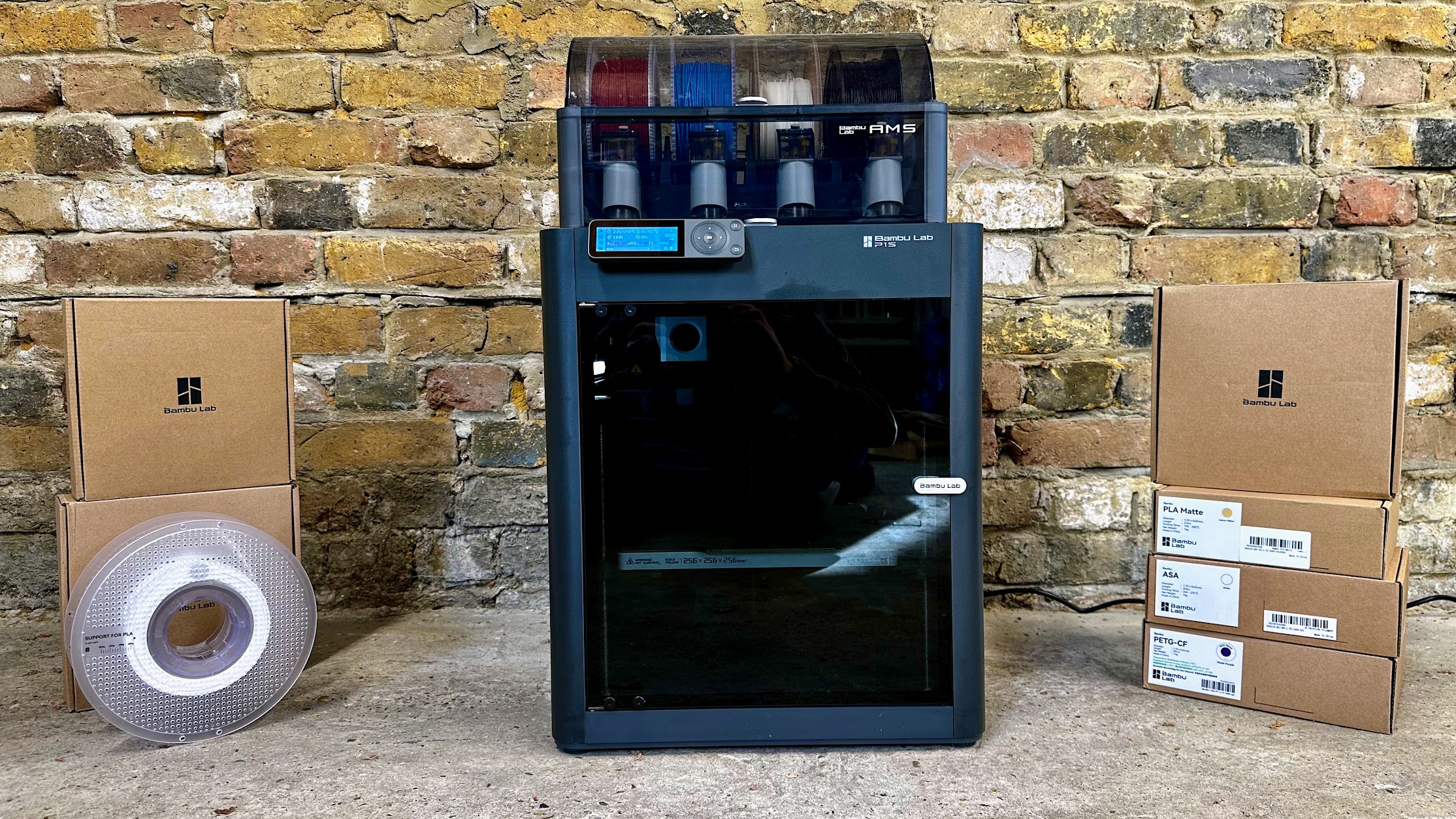
If you buy the P1S Combo, it will come with an AMS, a unit that sits on top of the printer. It holds four spools of filament and can load and unload them automatically and print in multiple colours without any assistance from you.
With only one nozzle, multicolour prints aren’t exactly fast. But the AMS also takes the pain out of changing filament when you want to print something in a different colour to the previous print.
If you don’t care about multicolour, you can buy the non-Combo version of the P1S for quite a bit less.
Overall, the P1S is a remarkably good printer. It’s really fast thanks to the use of a coreXY system, and as it’s fully enclosed it’s reliable even when printing with ASA, nylon, polycarbonate and other filament types because of the stable internal temperatures. More importantly, print quality is absolutely superb.
If there’s a downside, it’s the rubbish dot-matrix screen which seems very out of place on a printer this expensive. But, there are other ways to control the P1S, such as printing from a PC or phone via Wi-Fi. The Creality K1C is a good alternative if you must have a touchscreen, and it also has a few other features such as failed print detection.
If you just want to print with PLA, PETG and other filament types that don’t require an enclosure, take a look at Bambu’s A1 which is a lot cheaper.
Read our full Bambu P1S Combo review
2. Bambu A1 – Best budget 3D printer
Pros
- Fast, reliable printing
- Fully automatic levelling
- Excellent value
Cons
- Doesn’t support more exotic filament
- AMS Lite adds significantly to the price
In our full review, we call the A1 “the 3D printer you’ve been waiting for”, and with good reason. It’s as close to ‘one click’ printing as you’ll get right now: it adjusts itself automatically for reliable printing and has all the features most people want, at a surprisingly affordable price. Bambu’s desktop and mobile apps are really good, too.
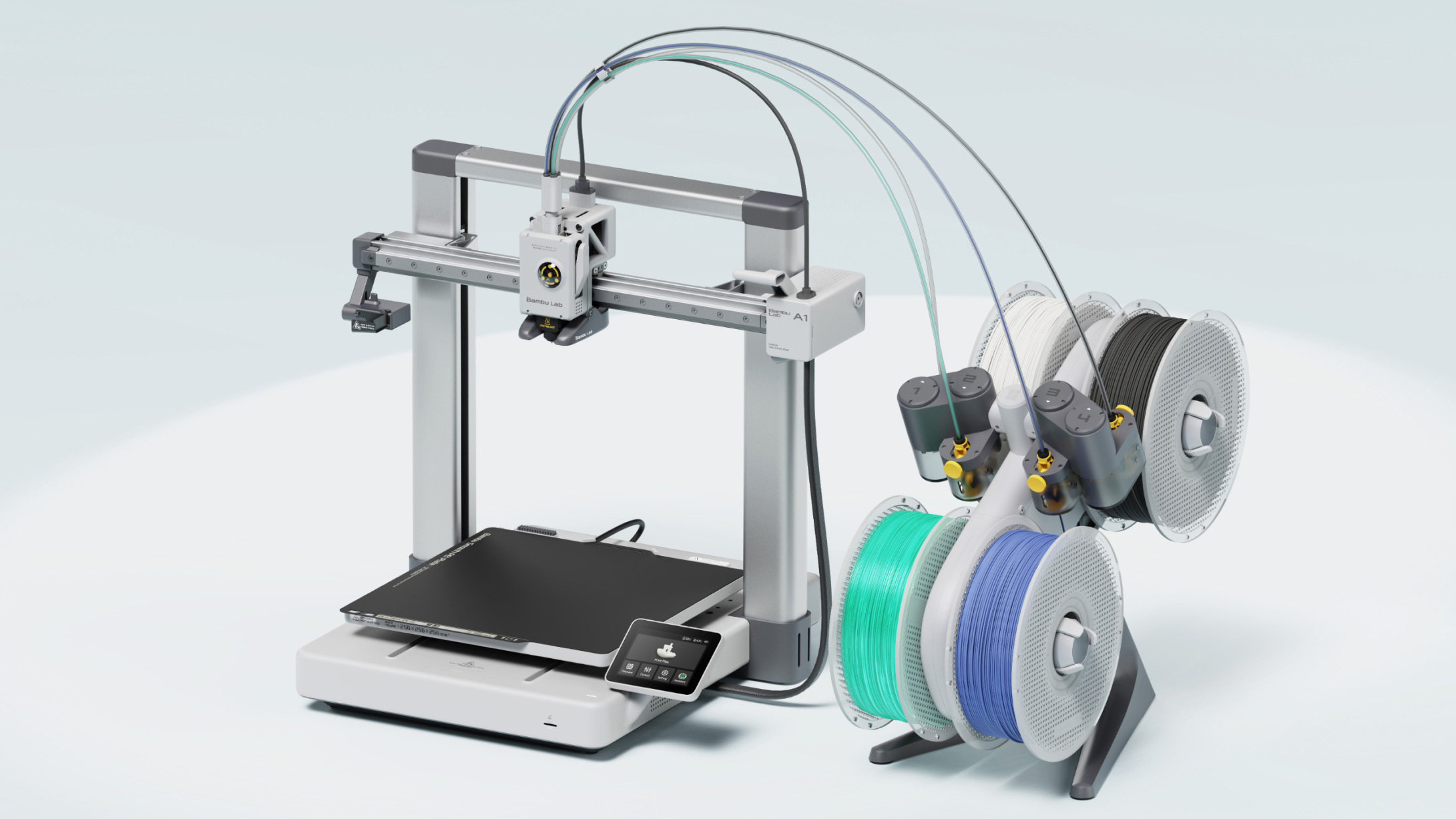
Like Bambu’s more expensive P1S, it can print models up to 256mm³ and you can buy the optional AMS Lite (shown to the right of the A1) for automatic multicolour printing.
The only drawback is that the A1 can’t really print nylon, ABS, ASA and other ‘exotic’ filaments because they require an enclosure. Without one, they tend to warp. The A1 can print carbon-fibre filaments if you buy Bambu’s hardened nozzle, which is very easy to fit.
Print quality, when using supported filament types, is sensational.
Read our full Bambu A1 review
3. Creality K1 Max – Best large 3D printer
Pros
- Fast, reliable printing
- Large build volume
- Fully automatic bed levelling
Cons
- Some features exclusive to Creality’s slicer
- No multi-colour capabilities
Some may say the K1 is just a poor copy of the Bambu P1S, but that does it a disservice when so many 3D printers are basically copies of each other. There are two models, the smaller K1 which is cheaper than the larger K1 Max.
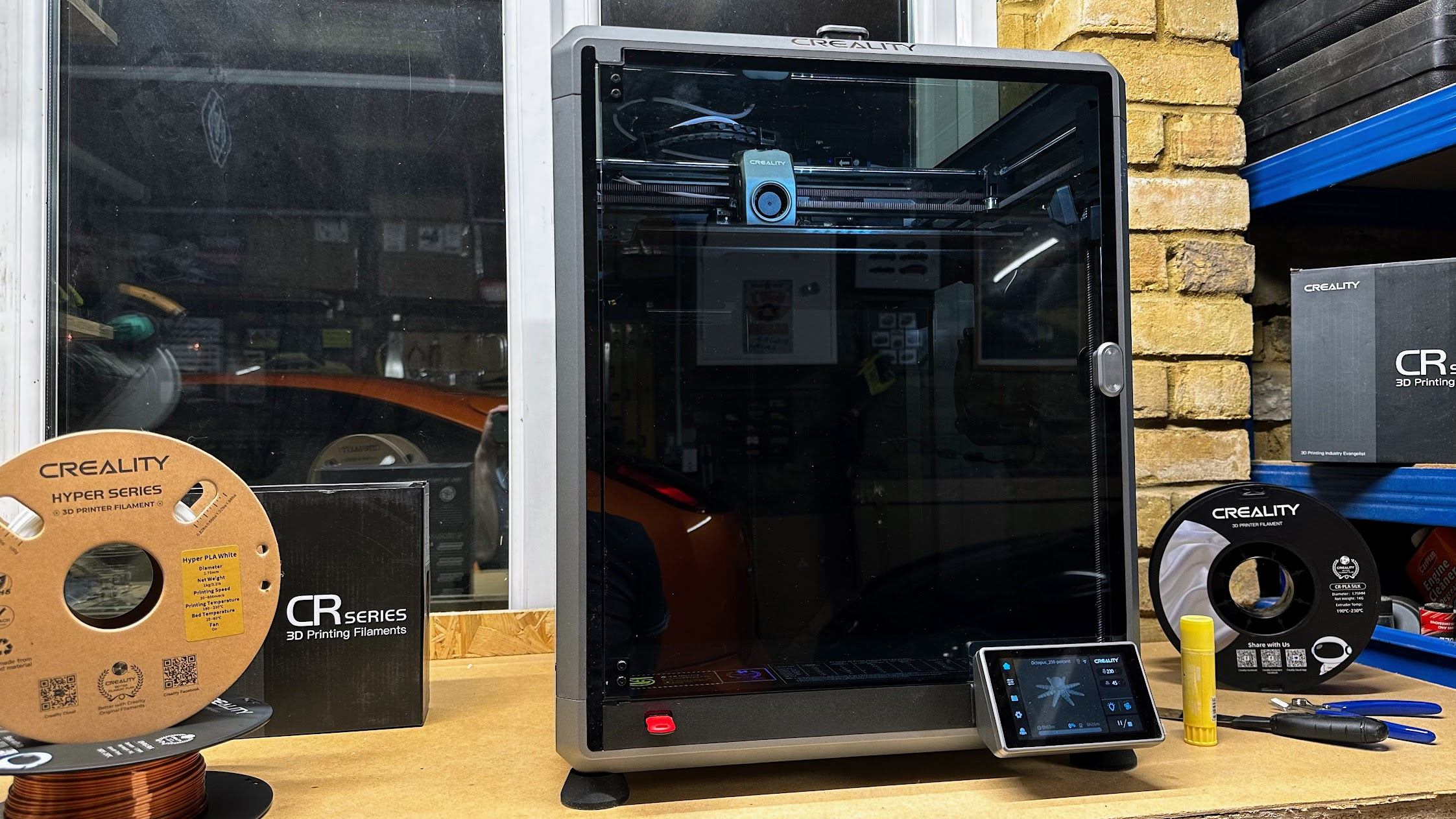
The Max offers a 300x300x300 build volume, something not currently available from Bambu and it has an easy-to-use touchscreen. Bed levelling is fully automatic and it even has a LiDAR system that helps ensure prints are successful and good quality.
There’s built-in Wi-Fi and an ‘AI’ camera that can detect when prints are failing, as well as when you might have accidentally left a model or some tools on the build plate.
As both K1 and K1 Max use coreXY systems, they’re just as fast as the Bambu and although quality isn’t quite up to the P1S’s level, it’s still very good.
Read our full Creality K1 Max review
4. Elegoo Neptune 4 – Best cheap 3D printer
Pros
- Fast printing
- Automatic bed levelling
- Intuitive touchscreen controller
Cons
- No Wi-Fi
- More expensive in UK than US
- Elegoo’s slicer isn’t the best
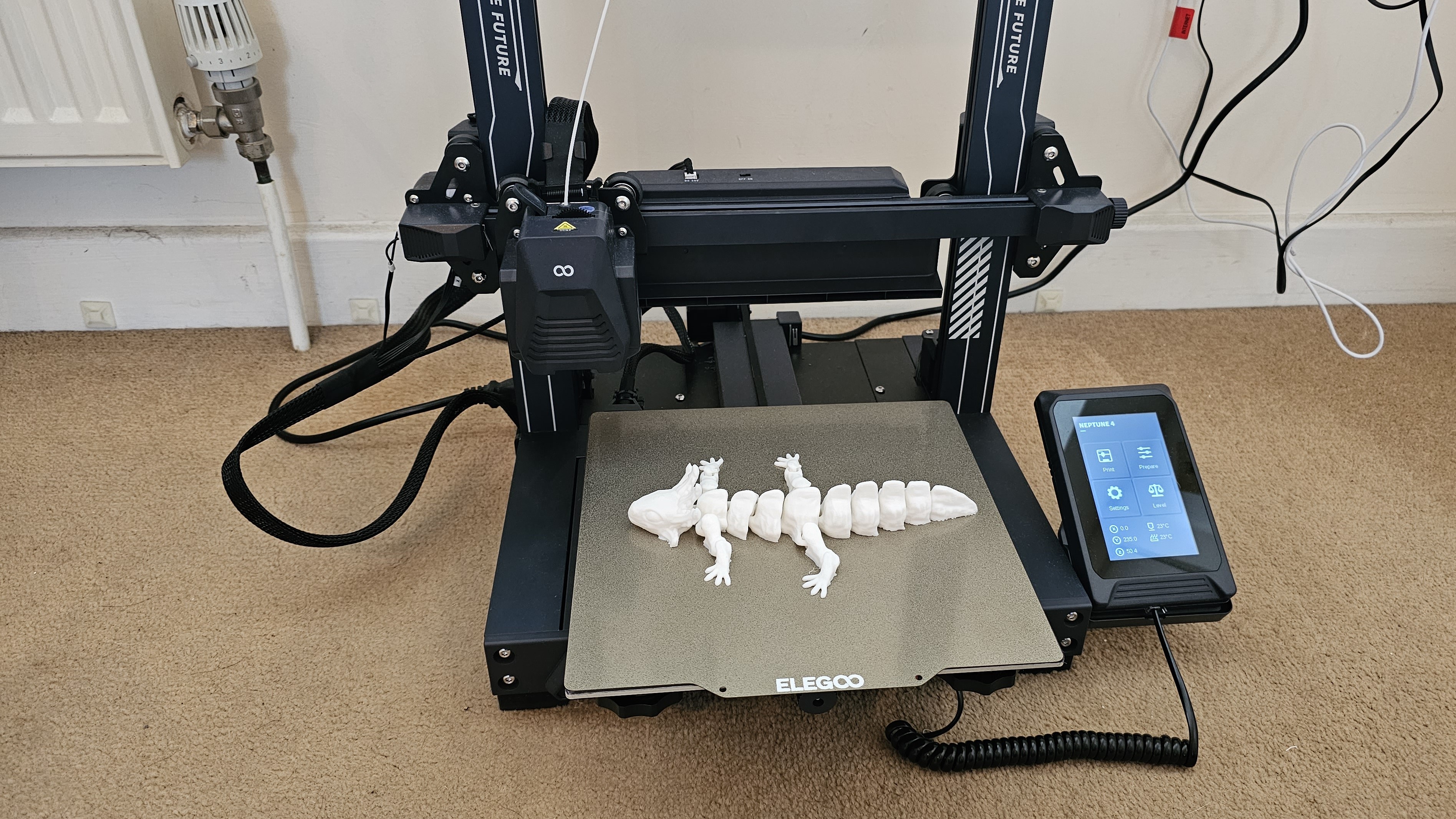
The Neptune 4 offers everything most people are looking for in a first 3D printer. It’s easy to set up, has auto bed levelling, a colour touchscreen and is pretty fast to boot.
That’s already a lot for the low price, so it’s not too surprising it doesn’t have Wi-Fi. Unlike some of the budget models here, it competes with the coreXY printers for speed thanks to an upgraded print head with much improved cooling over the Neptune 3.
It’s a shame that like the Ender 3 S1 Pro levelling isn’t completely automatic, but once you’ve adjusted the knobs, subsequent levelling is automatic.
Print quality is very good at the default 300mm speed, but it’s a good idea to use an alternative to Elegoo’s slicer which caused us quite a few headaches when prints failed.
Read our full Elegoo Neptune 4 review
5. Creality K1C – Best for exotic filaments
Pros
- Can print carbon fibre filaments out of the box
- Can print ASA, nylon, ABS as well as PLA and PETG
- Built in camera
Cons
- Single colour printing only
- Can be very noisy
- Frustrating to change filament
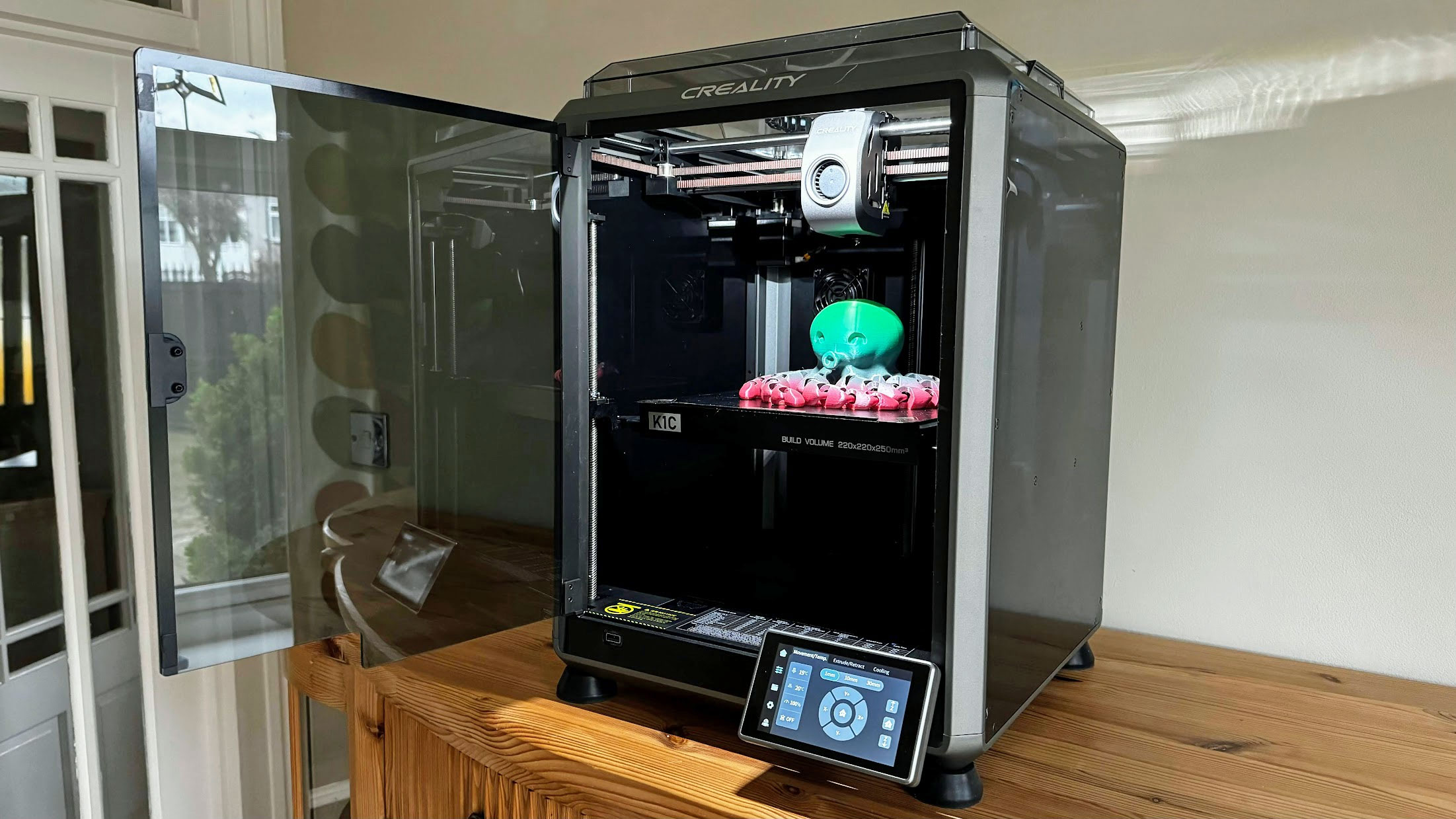
The K1C can print models up to 220x220x250mm, and comes almost fully assembled. It’s fully automatic, which means there’s no need to make any manual adjustments: it prints reliably from the word go.
Effectively, it’s an upgrade of Creality’s K1 and has a hardened steel nozzle that can print abrasive filaments like carbon-fibre infused PLA and PETG. Unlike the K1 it also has a camera for monitoring print progress remotely, and it’ll detect and notify you of problems like foreign objects left on the build plate and failed prints.
The touchscreen makes it easy to use, and Creality’s desktop and mobile apps aren’t bad, although they lack the polish and ease of use of Bambu’s.
The only real limitation is that the K1C can’t print in multiple colours, but if you don’t need to do that, it’s a great choice.
6. Anycubic Kobra 2 Plus – Best for printing huge models
Pros
- Massive build volume
- Fast
Cons
- Takes up a lot of space
- Not suitable for filaments which require an enclosure
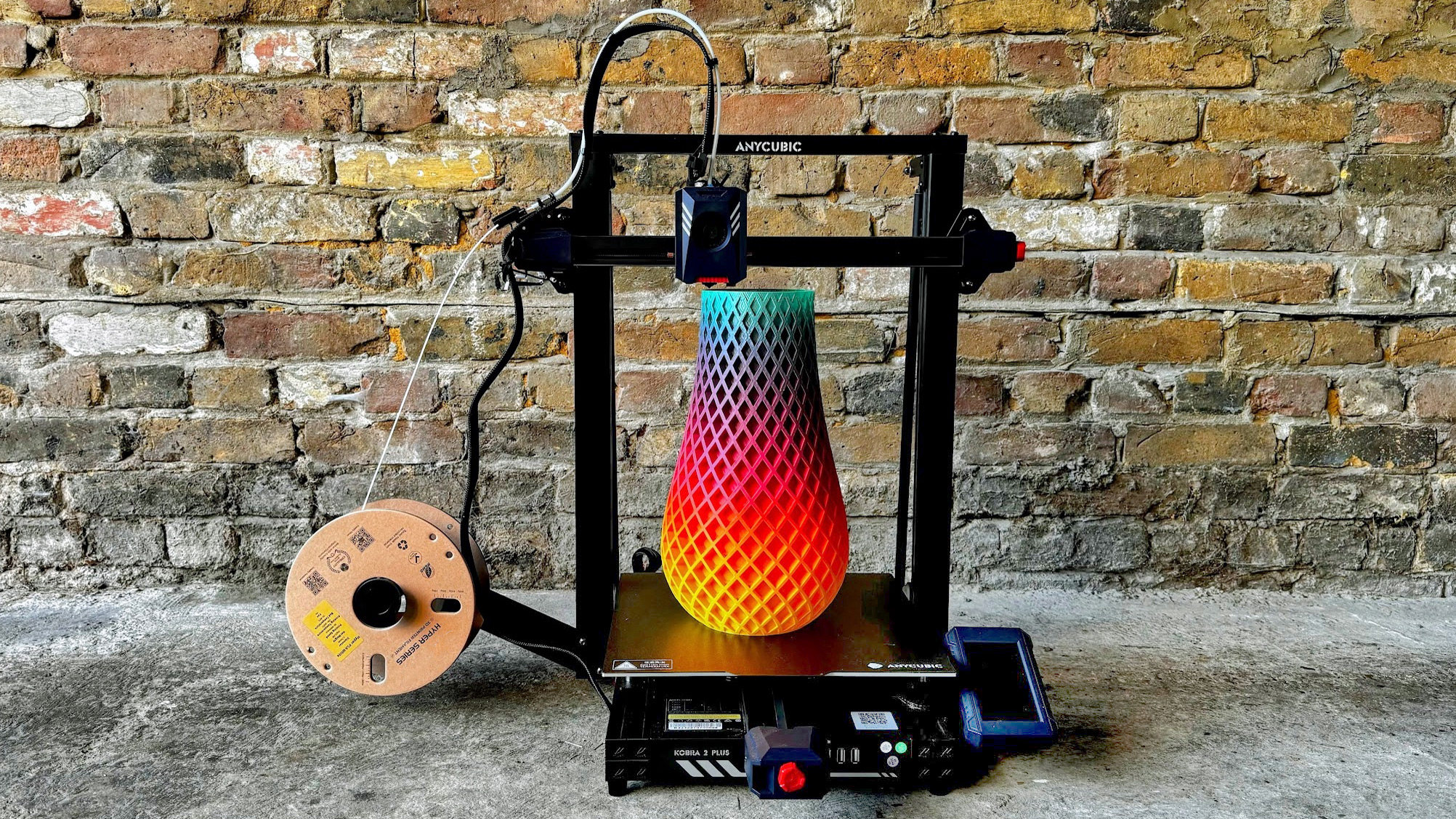
With a build volume of 320 x 320 x 400mm (WDH), the Kobra 2 Plus can print very large models. If that’s not enough, there’s also the Kobra 2 Max with an even larger 420 x 420 x 500mm volume.
It’s a bed slinger, which means the build plate moves backwards and forwards. In turn, this means you need quite a lot of desk space for the Kobra 2 Plus. It’s fast and capable of good print quality, and is pretty easy to use thanks to automatic bed levelling, vibration compensation and a colour touchscreen.
Read our full Anycubic Kobra 2 Plus review
7. Creality 3D Ender 3 S1 Pro
Pros
- Great print quality
- Almost all the features you’d want
Cons
- Auto-levelling requires manual input
- Slow by today’s standards
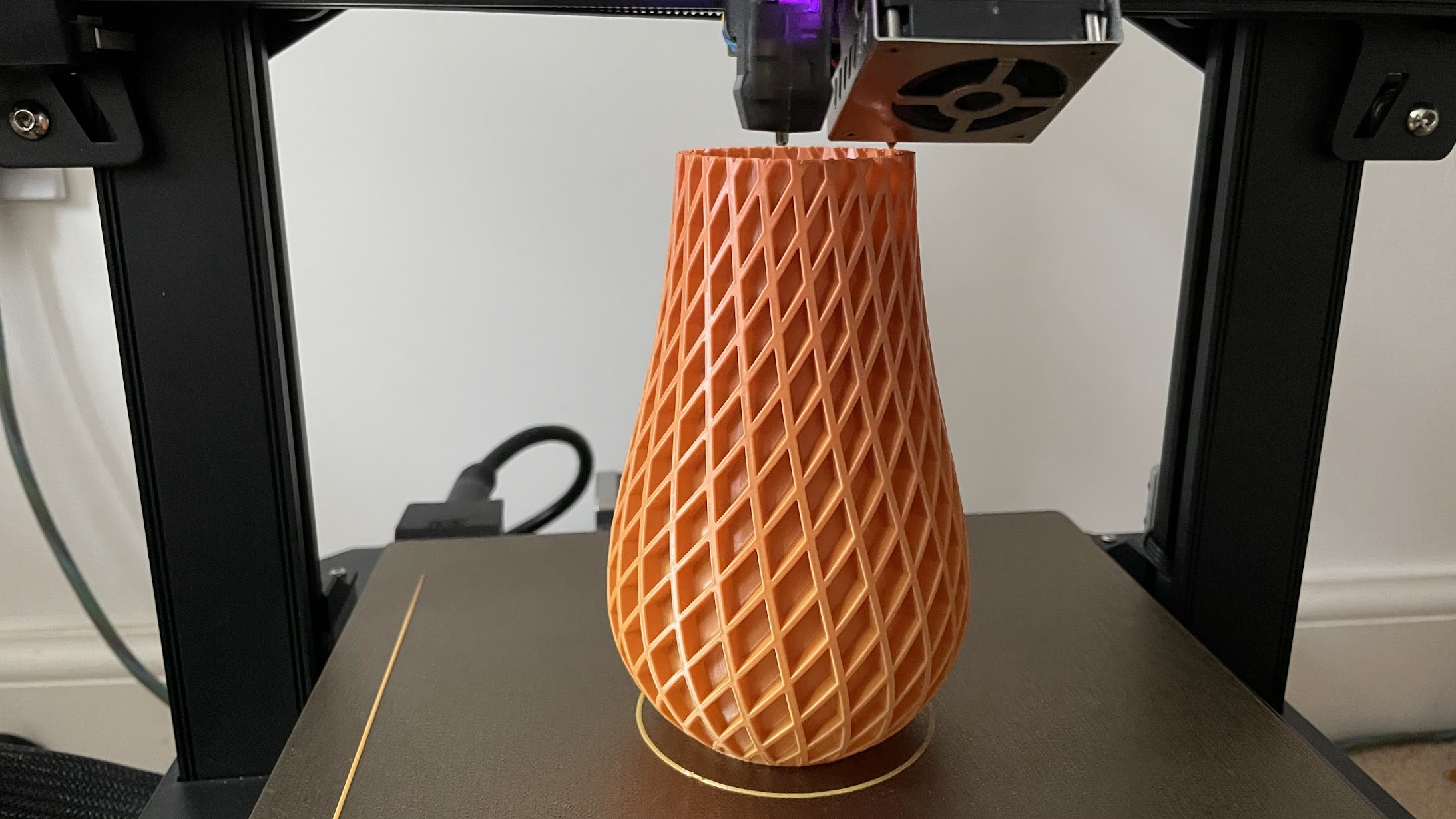
The S1 Pro is really a budget 3D printer but it’s more expensive than the cheapest because it has had all the bells and whistles thrown at it.
There’s the Sprite direct drive print head with dual metal gears for reliable extrusion. It’s capable of heating to 300C, so you can print with a wide range of filaments. The bed goes up to 110C, too, which helps prints adhere when working with more awkward types of filament.
It isn’t enclosed, though, and is a bed-slinger, so needs room in front and behind it to accommodate its range of travel. There’s a useful LED strip which is really bright, and a colour touchscreen. Its interface could be improved a bit, but it’s not bad.
Print quality is very good, but it isn’t fast. To improve it you can buy Creality’s Sonic Pad – a Klipper-based touchscreen – but this adds a lot of cost and hassle. If speed is important, choose a printer that offers 300mm/sec out of the box like the Bambu A1.
Read our full Creality 3D Ender 3 S1 Pro review
8. Creality Halot One Plus
Pros
- Easy to use & reliable
- Works with various slicers
- Great print quality
Cons
- Fan runs constantly during printing
- Requires post-printing cleanup + curing (like all resin printers)
- More expensive than some rivals
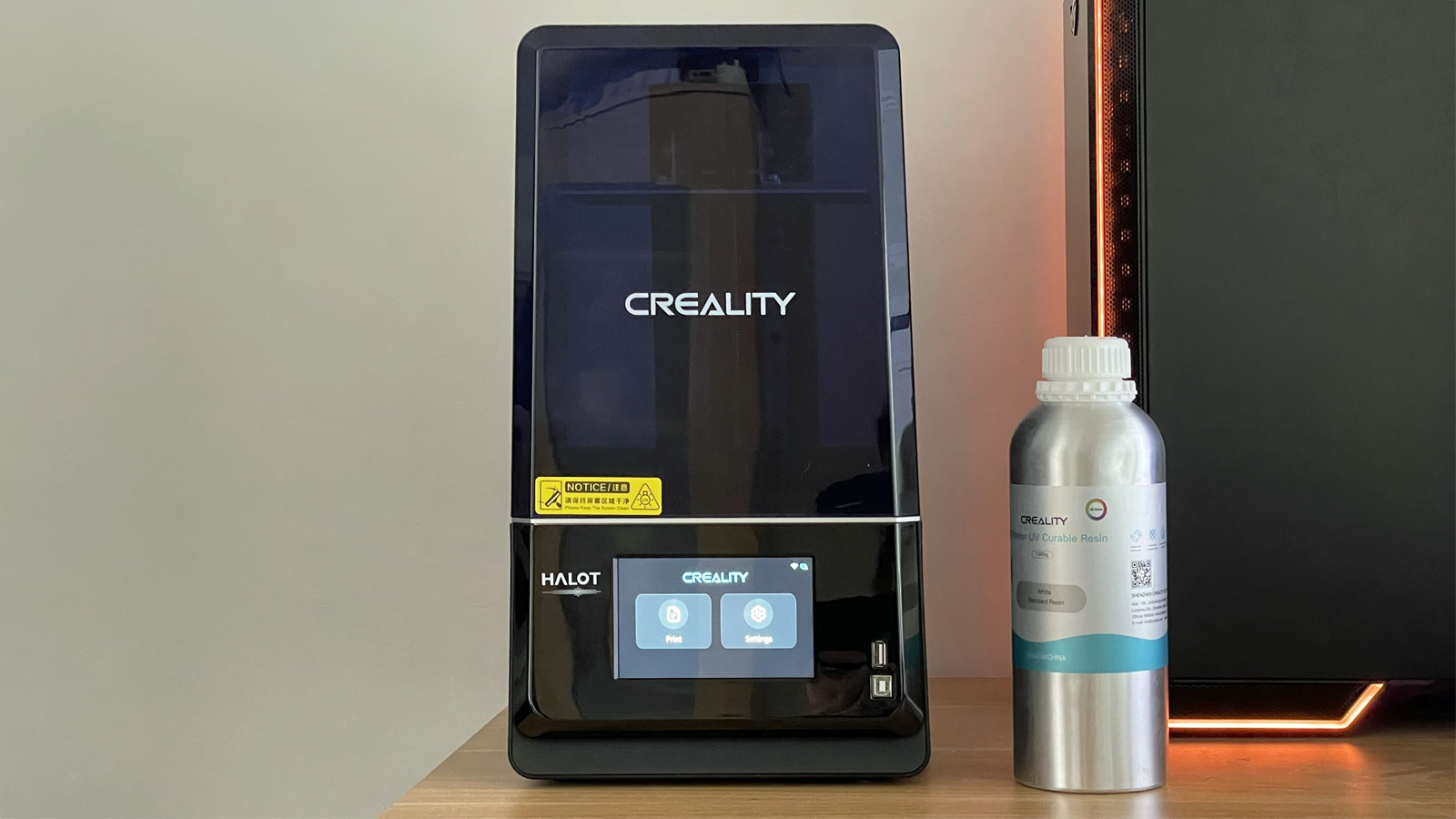
The Halot One Plus is an easy-to-use resin 3D printer that has a good-sized build volume, prints reliably and at high quality. It’s quite expensive compared to rivals, especially in the UK.
The Halot One Plus is a resin printer, so is very different to the others here. Instead of using filament on a reel, it prints using liquid resin which is cured, layer by layer, using UV light.
Build volume is smaller than the FDM printers here, but it’s still relatively large for a resin printer, and the screen’s high resolution means models have lots of fine detail.
The Halot One Plus printed ultra-reliably in our tests, but if you are keen on a resin printer, bear in mind that you have to clean up prints afterwards, which usually means buying a separate washing and curing device that looks a lot like a resin printer and takes up the same amount of desk space.
Read our full Creality Halot One Plus review
Buyer’s guide
Here are the key things you should look out for when choosing a 3D printer.
Automatic levelling
Unless the surface on which objects are printed is perfectly level, prints won’t stick to it and will fail sooner or later.
Manual levelling is a chore you could do without, so go for a printer with auto levelling. Be careful: some printers claim to have auto levelling, but rely on you to do a lot of the work. Which is why it pays to read reviews as well as knowing what to look for.
Heated bed
Almost all 3D printers have them, but it’s a must have. A heated bed will help prints to stick: don’t buy a printer without one.
PEI sheet
Models can be difficult to remove from the build plate. A PEI (polyetherimide) sheet helps immensely. It’s a flexible metal sheet with a textured coating is used, and held in place with magnets. When the model finishes printing, you simply lift the sheet off, flex it and the model pops off.
Touchscreen
Some printers still use a monochrome screen with a rotary dial or buttons. This isn’t nearly as easy to use as a touchscreen. Bambu P1S (and P1P) would be much better with a touchscreen, but it’s not the end of the world with those as you can print from your PC or phone using Bambu’s apps. When a printer doesn’t have Wi-Fi (or any networking) you are stuck using the screen it comes with.
Build volume
A printer’s build volume tells you how big an object it can print. It’s wise to assume that the actual maximum volume is a bit smaller than the specifications suggest, and go for one with a slightly larger volume than the biggest object you will need to print.
It can be hard to know this, and remember that a bigger volume means a bigger printer, which you’ll need space for.
Really large models can be printed in sections and superglued (or otherwise fixed) together, so you don’t necessarily need a huge printer.
Nozzle and bed temperatures
Most people print using PLA, the most common type of filament. It’s easy to work with, strong and durable.
All 3D printers have nozzles that go up to the 220°C or so that PLA requires. But if you want to print with ABS, PETG or another type that needs high temperatures, be sure to opt for a printer that can go up to around 300°C. But see Enclosure below, too.
Similarly, watch out for heated bed temperatures. Some won’t go beyond 80°C, but you’ll need 100°C or more for successful ABS prints.
Enclosure
Some materials such as ABS, ASA, polycarbonate and nylon need carefully controlled ambient temperature to prevent them from warping while printing. If you need to use these – perhaps because you want to print models that can survive exposure to sunlight, then look for an enclosed printer – essentially a self-contained box.
Run-out sensor
With large models taking many hours to print and the fact that you can’t always know if there’s enough filament left on the reel to complete it, a run-out sensor can be a life saver. It does it what it says: detects when the filament runs out and halts printing automatically, allowing you to load a new reel and carry on printing.
Without one, the filament could run out and the printer will carry on printing thin air, and you’d be none the wiser.
What’s the best 3D printer for beginners
The Bambu A1 is an excellent choice for beginners. It’s relatively affordable and is very easy to use because it handles so many things automatically. It’s also fast and offers top notch print quality.
How much does a beginner 3D printer cost?
Printers start from as little as $130 / £130, but you may want to spend more to get a better model with more features, faster speeds and better print quality. There are a lot of great printers under $500 / £500.
What type of 3D printer is best?
The most common type is FDM (printers that use filament on a spool), but the absolute best quality is from SLA printers, which use resin and are capable of printing much finer detail. There are lots of pros and cons of each type, but put simply, resin printers are best for small, intricate figurines, while filament printers are best for printing things that are useful around the home as well as models that hinge or articulate.
Is it cheap to use a 3D printer?
Spools of filament typically weigh 1kg and cost from $15 / £15 to $30 / £30. It’s therefore the weight of the model that matters most, not the size. So-called slicing software turns a 3D model into instructions a 3D printer can understand, and you can adjust the settings to save weight by minimising the amount of infill. Sometimes it’s cheaper to print your own parts, but sometimes you might find it’s cheaper to buy pre-made plastic things than to 3D print them.
Are 3D printers good for beginners?
3D printing is much easier than it used to be thanks to modern printers that automate a lot of the fiddly things like bed levelling. They can also compensate for vibrations, resume printing after a power cut or when the filament runs out. The difficult part is designing your own models to print, but there are thousands of pre-made models available online to download free.
Author: Jim Martin, Executive Editor, Tech Advisor
Jim has been testing and reviewing products for over 20 years. His main beats include VPN services and antivirus. He also covers smart home tech, mesh Wi-Fi and electric bikes.
Recent stories by Jim Martin:
- Creality K1C review
- Bambu A1 review
- Bambu A1: a full-size bed slinger 3D printer
