At a glance
Expert’s Rating
Pros
- Innovative customisation options
- Long-term support with easy-to-replace parts
- Exceptional battery longevity
- Impressive main camera for the price
Cons
- Sub-par display resolution and brightness
- Only two OS upgrades
- Weak GPU hampers gaming and intensive apps
Our Verdict
A great concept held back by underwhelming execution. The HMD Fusion’s modular design offers clear benefits over regular smartphones, but there are still too many downsides for most people to Consider buying it.
Price When Reviewed
This value will show the geolocated pricing text for product undefined
Best Pricing Today
Best Prices Today: HMD Fusion

The HMD Fusion introduces a unique approach to modular phones , combining repairability, sustainability, and customisation through its innovative “Outfits.”
With a rugged, industrial design and solid performance for its price, it offers a compelling proposition for those who value longevity and flexibility in their devices.
However, its sub-par display, inconsistent software experience, and limited initial selection of Outfits mean it might appeal more to tinkerers and eco-conscious users than mainstream consumers.
Design & Build
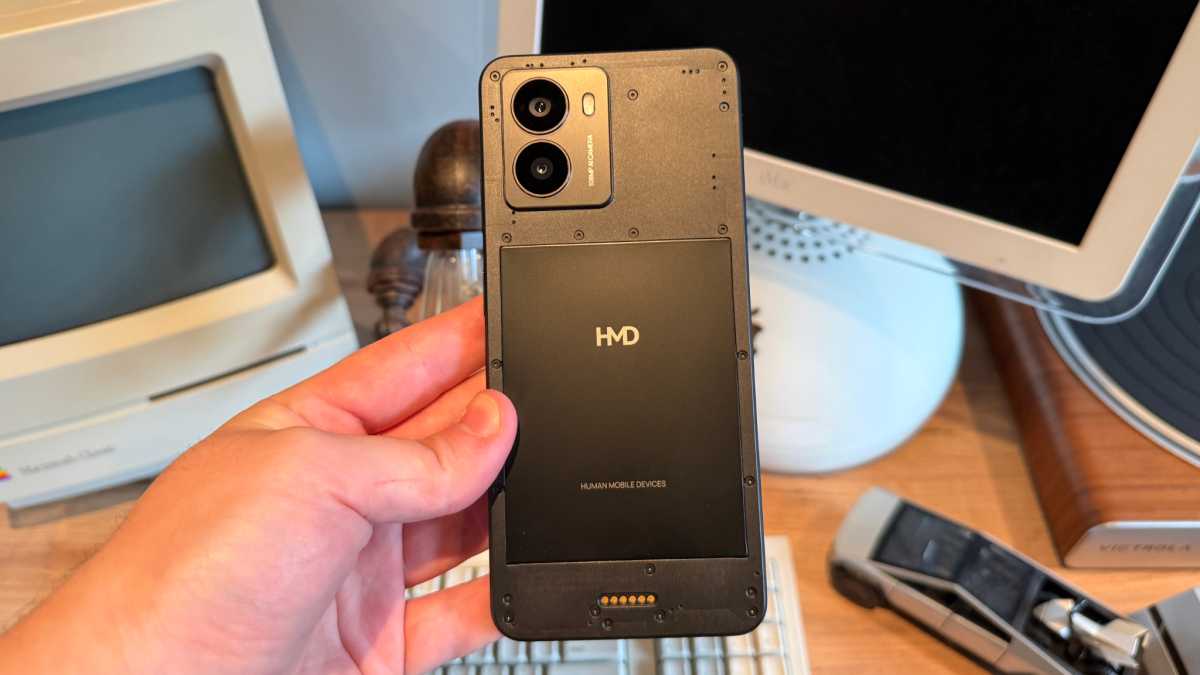
- Industrial design with exposed screws and modular “Outfits”
- High repairability with open-source customisation options
- Solid build, but on the heavy side
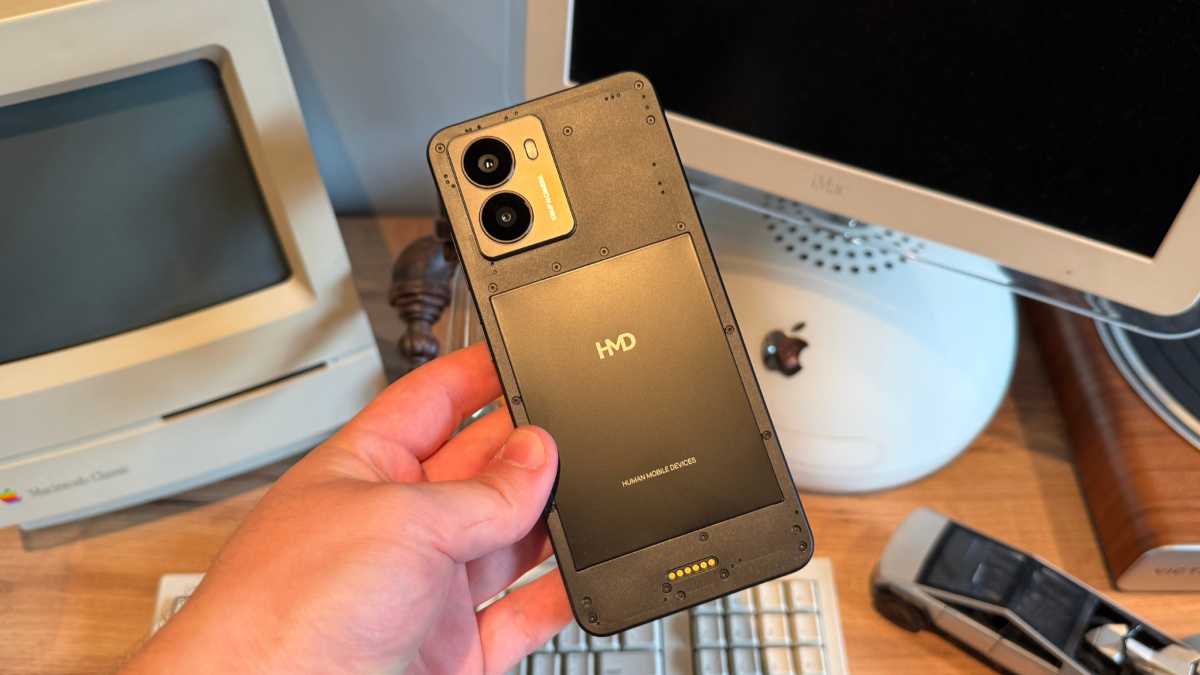
The HMD Fusion sets itself apart from other budget phones with its bold industrial design.
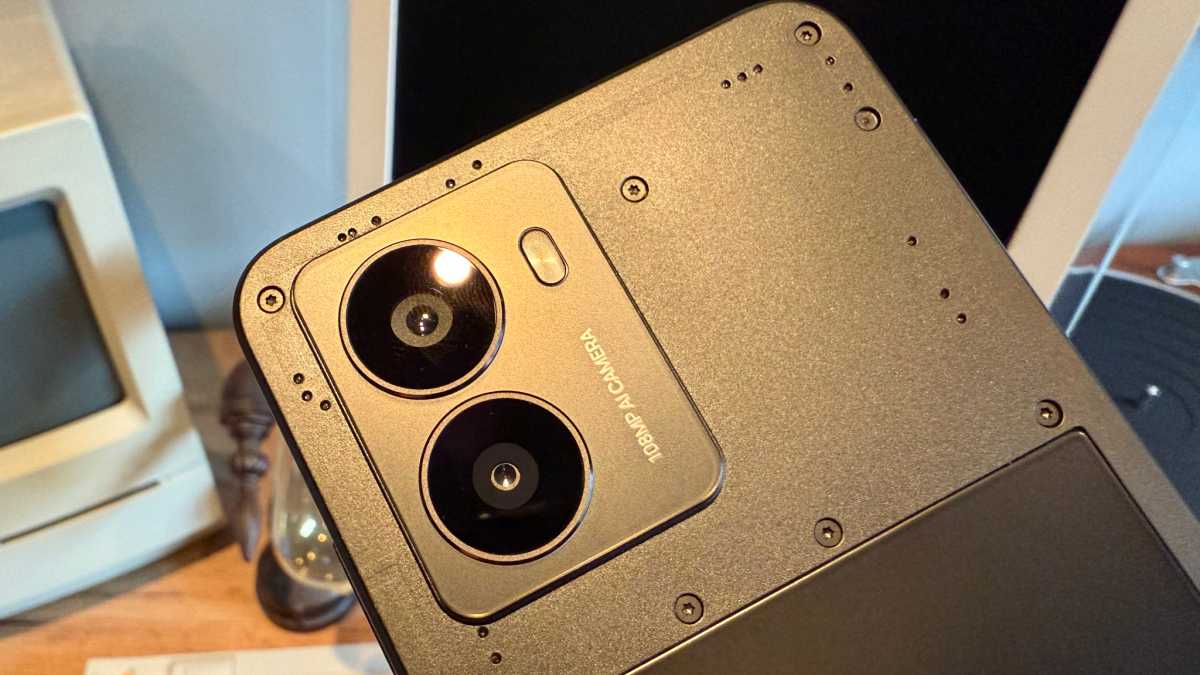
From the exposed screws to the visible pogo pins for attaching modular Outfits, the phone feels purpose-built for customisation and repair. The aesthetic might seem “unfinished” to some, but for others, it’s a welcome departure from cookie-cutter smartphone designs.
Connor Jewiss / Foundry
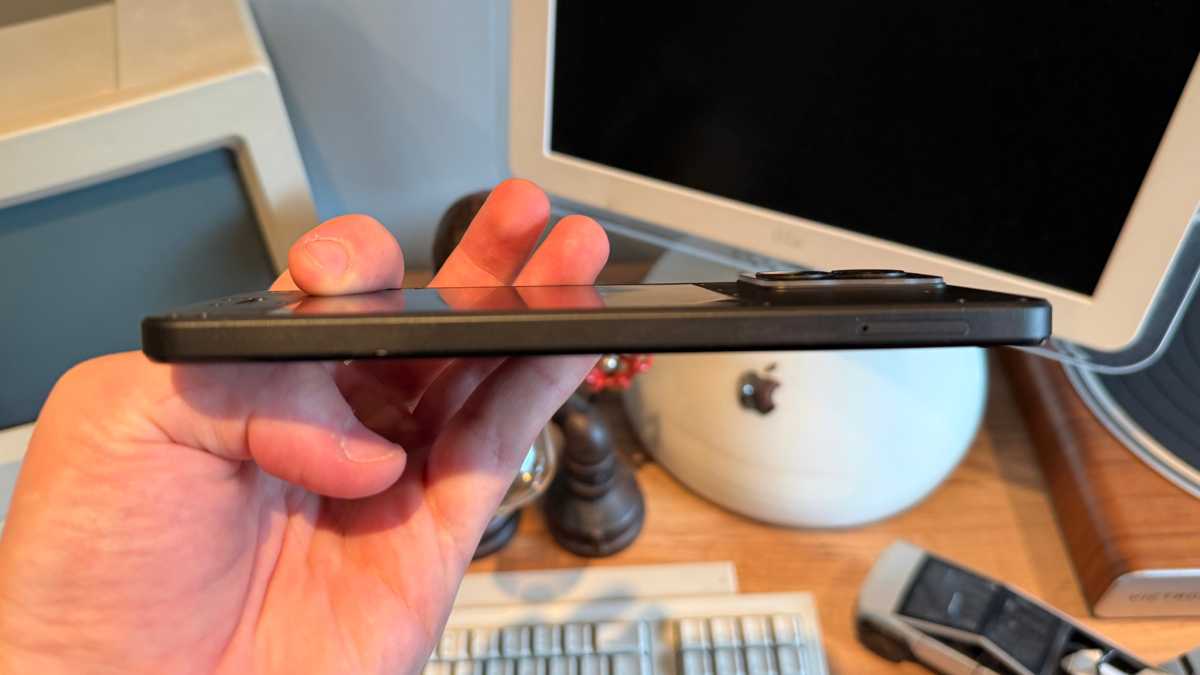
The stainless steel-reinforced plastic casing ensures durability, though the IP54 rating means it’s resistant to splashes and dust, not submersion. The ergonomic design, despite its 202.5g weight, is comfortable to hold, with rounded corners and a non-slip back plate.
Compared to rivals like the Fairphone 5 , the Fusion offers a more rugged, industrial aesthetic but lacks the same intuitive repairability. Against the Nothing Phone (3a) , it trades polish for functionality, appealing more to users who prioritise longevity over visual flair.
The clear “Casual Outfit” case included in the box is a thoughtful addition, but it highlights one limitation: the phone feels incomplete without an Outfit. This modular dependency might deter those seeking a standalone device.
Screen & Speakers
- 6.56-inch HD+ IPS LCD with a 90Hz adaptive refresh rate
- Falls behind competitors in brightness and vibrancy
- Large bezels and low resolution affect multimedia enjoyment
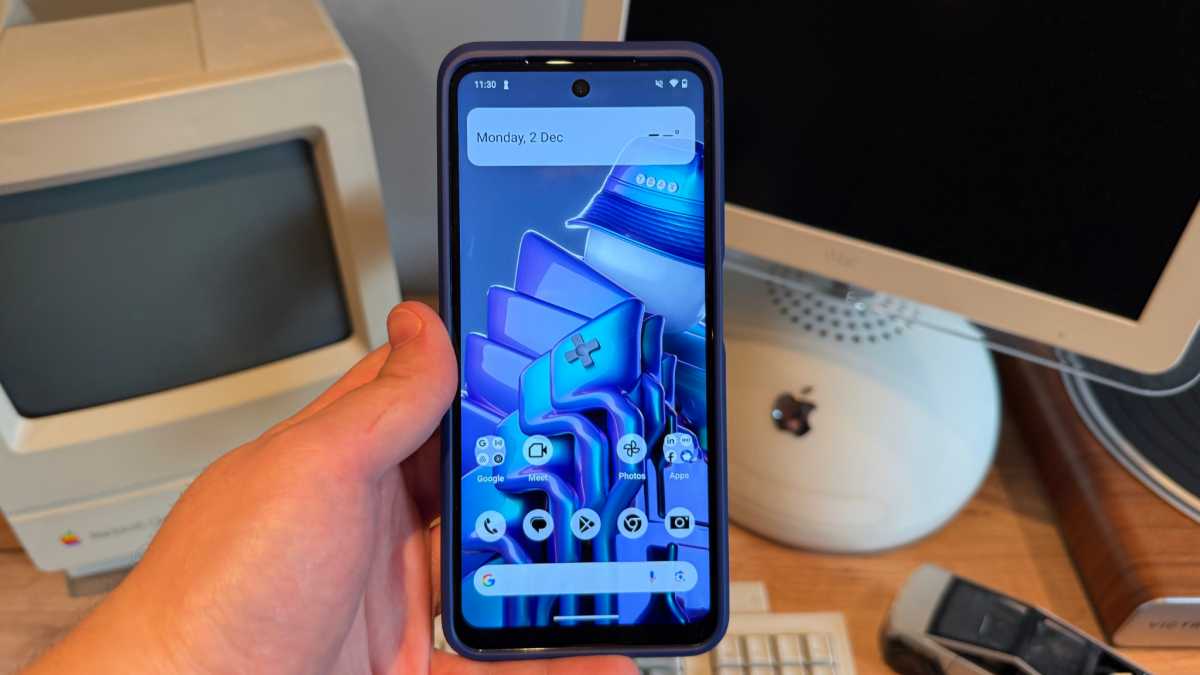
The display is the most disappointing aspect of the HMD Fusion. Its 720×1612 resolution and 269 PPI density are noticeably lower than the industry standard in this price range.
Connor Jewiss / Foundry
While the adaptive 90Hz refresh rate ensures smoother scrolling and animations, the screen’s low brightness (600 nits peak) struggles in outdoor use, and its muted colour reproduction fails to impress during media consumption.
The IPS LCD panel fares better in terms of viewing angles, maintaining clarity even when tilted. However, the large bezels, especially at the chin, make the phone feel dated compared to sleeker devices such as the Redmi Note 14 5G .
For enterprise users or those prioritising battery life, the trade-off is justifiable. Still, a Full HD+ panel would have significantly elevated the overall experience without drastically impacting battery performance.
This also seems like the right place to mention that the fingerprint sensor seems very unreliable, and has flat out refused to work in some situations for me.
The built-in speakers are a little worse than other budget smartphones that I’ve tested. Audio is (barely) passable if you need to play content out loud in a bind, but I’d say it’s essential you use a pair of headphones when you’re watching or listening to anything. I will say that the singular speaker manages to get decently loud, but I do wish that the sound coming out of it was less muddy overall.
Specs & Performance
- Snapdragon 4 Gen 2
- Solid CPU performance but weak GPU output
- Handles multitasking and light gaming well, but struggles with intensive tasks
Powered by Qualcomm’s Snapdragon 4 Gen 2 chipset, the Fusion delivers satisfactory performance for its price.
Day-to-day tasks like web browsing, social media, and streaming are smooth, aided by 8GB of RAM and UFS 2.2 storage.
Connor Jewiss / Foundry
However, the Adreno 613 GPU struggles with graphically intensive games or high-resolution video watching, limiting content to lower framerate settings. Casual games run smoothly at medium settings, thanks to the HD+ resolution reducing GPU strain.
For anyone who only uses their phone for light tasks (such as non-gamers), the performance could be reliable. However, those seeking stronger graphics performance might consider alternatives like the Poco X7 Pro, which features a more capable GPU.
HMD Fusion benchmarks
Cameras
- 108Mp main camera delivers sharp daylight images
- 50Mp selfie camera excels in bright conditions
- Limited zoom and poor low-light performance hinder versatility
The Fusion’s 108Mp primary camera performs admirably in well-lit conditions, capturing detailed and vibrant shots with natural colours.
Connor Jewiss / Foundry
While it lacks OIS, the gyro-EIS stabilises videos reasonably well, albeit only at 1080p@30fps. The 2Mp depth sensor adds minimal value, while the absence of an ultra-wide or telephoto lens limits creative shooting options. Note that all of these photos are in “HDR” mode, so this is the most detail and light that the device can capture.
One thing I couldn’t help but notice is how slow the shutter button is – this phone takes a while to actually snap a photo. It’s really rather annoying as you have to stay where you are for longer. I imagine it would be almost impossible to capture anything fast-moving.
Selfies from the 50Mp front camera are clear and social media-ready, particularly when paired with the Flashy Outfit’s LED ring light, which enhances low-light photography.
However, in darker settings, both cameras suffer from noise and loss of detail, which is expected at this price point.
The dedicated Night Mode tries to capture more detail but often struggles, with the resulting images lacking the clarity you’d expect from a budget phone. Surprisingly, the Portrait Mode was the opposite – it captured lots of detail and excelled in edge detection and blurring.
Battery Life & Charging
- Impressive longevity with a 5000mAh battery
- 33W wired charging offers decent speeds but lacks wireless capability
- Modular Outfits enable creative power-sharing options
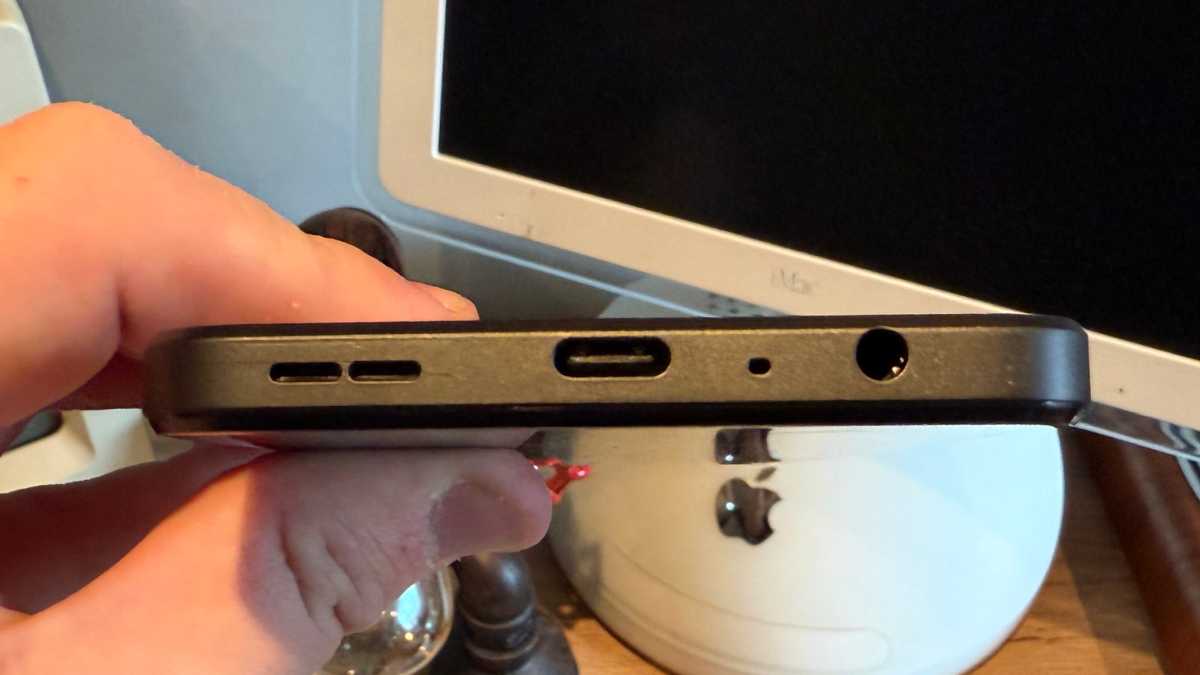
The Fusion excels when it comes to battery life, thanks to its 5000mAh cell paired with the power-efficient Snapdragon 4 Gen 2. Honestly, the battery in this thing is really hard to drain.
Connor Jewiss / Foundry
During testing, it lasted nearly two days of moderate use, including video streaming, browsing, and photography. For light users, the battery could stretch even further, making it a reliable choice for long trips.
Charging is capped at 33W, and it starts off very slowly. It reached 50% after 41 minutes (which felt like a lifetime) and fully charged the device in an hour and a half.
While it lacks wireless charging natively, the upcoming Wireless Charging Outfit addresses this limitation, highlighting the advantages of the modular system.
Software & Features
- Near-stock Android 14 with minimal bloatware
- Two Android upgrades and three years of security updates
- Open source platform encourages innovative third-party Outfit designs
The Fusion’s software experience is mostly positive, thanks to its clean Android 14 implementation. Bloatware is minimal, with a few pre-installed apps easily uninstalled. I don’t like pre-installed apps at all, but compared to more expensive mid-rangers, I can’t complain too much about the HMD Fusion.
Customisation options like toggling refresh rates and configuring modular features are intuitive and user-friendly. However, there are one or two weird software quirks.
For example, when the phone was out of battery, holding down the power button wouldn’t display a flat battery icon – like every other phone. Ever. While not the biggest problem, those less familiar with tech may worry something is wrong with the handset.
However, the promise of only two OS upgrades and three years of security patches falls short compared to Motorola and Samsung, which offer longer support. Occasional software bugs, including random restarts, mar an otherwise smooth experience.
The Flashy Outfit is the most exciting accessory available for the Fusion. Its integrated LED ring light elevates selfie and portrait photography, with customizable brightness and colour settings in the camera app. Unlike third-party ring light cases, it draws power directly from the phone, eliminating the need for separate charging.
While current Outfits focus on practicality, such as rugged cases and wireless charging, the open-source platform hints at future possibilities.
Price & Availability
At launch, the HMD Fusion costs £229.99/$299.99. It’s available in only one colour: Noir (Black).
You can buy the phone directly from HMD UK or HMD US , plus a variety of third-party retailers. All of the Modular Outfits are sold separately.
The device isn’t available on contract, so you’ll have to buy it outright and pair it with a SIM deal .
It’s difficult to compare the HMD Fusion to a regular phone, but its price puts it in competition with some of the best budget handsets you can buy, with the CMF Phone 1 , Galaxy A16 5G and Redmi Note 14 Pro 5G emerging as key rivals.
Connor Jewiss / Foundry
Should you buy the HMD Fusion?
The HMD Fusion is a bold attempt at modular smartphones, offering eco-conscious users a sustainable and customizable device.
While it excels in battery life, repairability, and creative modularity, its underwhelming display and limited performance hold it back.
For enthusiasts and developers, the Fusion presents a unique canvas for experimentation, but mainstream users might find better value elsewhere. I can see where the Fusion is headed; I just don’t think it quite sticks the landing.
Specs
Dimensions: 164.2 x 75.5 x 8.3mm Weight: 202.5g IP Rating: IP54 splash resistance Display: 6.56-inch IPS LCD Resolution: 720 x 1612 pixels Refresh Rate: 90Hz Chipset: Snapdragon 4 Gen 2 (4nm), Adreno 613 GPU Memory: Up to 256GB storage with Micro-SD support Main Cameras: 108Mp (wide), 2Mp (depth) Selfie Camera: 50Mp Battery: 5000mAh, 33W wired charging Software: Android 14, two major OS upgrades
Best Prices Today: HMD Fusion
Author: Connor Jewiss, Contributor, Tech Advisor

Connor is a technology writer and editor, with a byline on multiple platforms. He has been writing for around seven years now across the web and in print too. Connor has experience on most major platforms, though does hold a place in his heart for macOS, iOS/iPadOS, electric vehicles, and smartphone tech. Just like everyone else around here, he’s a fan of gadgets of all sorts. Aside from writing, Connor is involved in the startup scene, which puts him at the front of new and exciting tech - he is always on the lookout for innovative products.
Recent stories by Connor Jewiss:
- Oppo Reno 13 FS review: Well-priced battery champ
- Oppo Reno 13 Pro review: Camera-first mid-ranger that excels
- Samsung Galaxy A26 review: Budget phone that looks like a flagship
