Home air quality can affect your health and happiness. But what pollutants are likely to be in the air in your home – and how can you find out which are a problem? Read on to find out.
What’s in the air in your home?
These are the harmful pollutants most likely to be in the air in your home:
- VOCs (volatile organic compounds) – chemicals from solvents, cleaning products, personal care products, new furniture, paints and aerosols
- Particulate matter or particle pollution – dust, dirt, soot and liquids
- Raised carbon dioxide levels – from heaters, dryers and fireplaces
- Carbon monoxide – also from heaters, dryers and fireplaces
- Radon – an odourless, tasteless, radioactive gas
VOCs
VOC stands for volatile organic compound. You may see the group referred to as TVOC: total volatile organic compounds. VOCs are gases, often emitted by cleaning products when they’re used. Some examples of well known VOCs are the carcinogens benzene and formaldehyde, and toluene, which is toxic.
VOCs can come from a range of sources but the ones in your home are likely to be from cleaners or disinfectants, air fresheners, cosmetics and deodorants, dry-cleaned clothing, a wood burning stove or fire, paint, varnish, adhesives or sealants.
If you’re painting or cleaning, it’s a good idea to open the windows, although this isn’t an ideal solution if you live next to a road.
Apart from a chemical smell, there’s no way to know what the VOC levels are like in your home, so you’ll need to buy an air quality monitor.
Many air purifiers will display VOC content, so if you’re about to embark on a big decorating project, you might just want to invest in one straight away. Our round up of the best air purifiers we’ve tested will help you to find the one that’s right for you.
Particulate matter
This is also known as particle pollution, PM or aerosol. Basically, it’s all the little bits floating about in the air that you might breathe in. It’s a mixture made up of solid particles and drops of liquid – dirt, dust, pollen, soot, smoke, chemicals and metals.
The concerning particles are the very small ones: those under 10 micrometres across. (For reference, a human hair is approximately 75 micrometres thick, so 10 micrometres is very tiny indeed.)
Larger particles are usually filtered out in the nose and throat but particles of this size can make their way into your lungs and affect your heart, your respiratory system and your immune system.
Particulate matter is one of the air pollutants that leave visible signs, although obviously you can’t see the smaller, more dangerous particles.
If you have an open fire or you live near a busy road, you will probably have a lot of particulate matter in the air in your home. Other signs to look out for are high levels of dust or soot on surfaces.
If particle pollution is a problem in your home, you’ll probably know by the evidence above. The best thing to do is buy an air purifier. You can browse the best we’ve tried out and get buying advice .
Carbon dioxide
Carbon dioxide occurs naturally in the air in very small amounts but in higher concentrations, it can make a room feel stuffy and stale. People may develop a headache or feel drowsy or unable to concentrate.
If you have a new home, it may be more airtight for energy efficiency, and is more likely to have concentrated amounts of carbon dioxide in the air. You can combat high carbon dioxide levels by making sure that air can circulate around your home but if it’s an ongoing concern, you should consider buying an air quality monitor.
Carbon monoxide
Every year, 60 people in England and Wales die from accidental carbon monoxide poisoning . If you have a poorly installed or maintained appliance like a cooker, a heater or a central heating boiler, or if an appliance is damaged or malfunctions, you may be at risk of poisoning from this odourless, colourless gas.
The best way to protect yourself is with a carbon monoxide detector. Fortunately, these are cheap and effective. Every household should have at least one of these, depending on the size of your home. If you’re living in rented accommodation and didn’t buy your own appliances, you should buy one right now.

Radon
Radon is a radioactive gas naturally created by the decay of small amounts of uranium in soil and rocks. It’s the second leading cause of lung cancer after smoking cigarettes.
Every area has some radon, but it’s recommended that you test for the gas if you live in an area that is more likely to be highly affected. If you’re in the UK, you can use this map from Public Health England to find out whether your area is high or low risk.
Our recommended air quality monitor, the Airthings Wave Plus, has built-in radon detection. You can read our review to find out more .
Humidity
Most air quality monitors will also monitor humidity levels. However, if the air in your home is too damp, you’ll probably notice other signs, such as foggy windows, peeling or cracking paint inside, and mould growth on inner walls. If you often let clothes air dry indoors, the air in your home may be too damp.
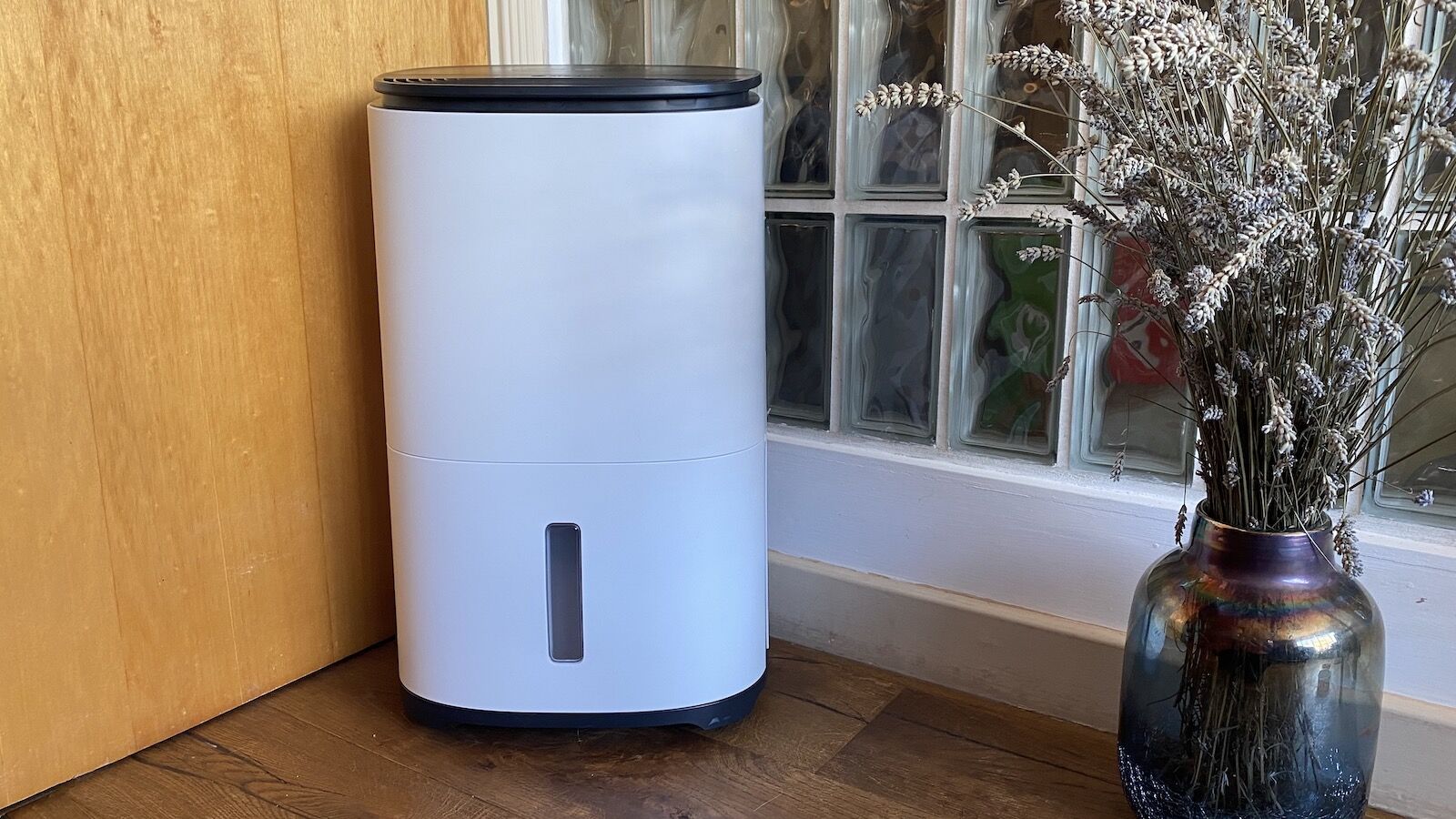
If you already know that damp is an issue, you could bypass an air quality monitor and go for a dehumidifier and air purifier in one. We tested and reviewed the Meaco Arete One – it’s a compact and efficient appliance with a medical grade H13 HEPA filter. You can use the air purifying function separately.
There are other steps you can take to make sure the air you breathe in every day is clean. For tips and advice, read our article on how to improve the air quality in your home or check out our round-up of the best air purifiers we’ve tested.
Author: Emma Rowley, Deputy Editor, Tech Advisor

Tech Advisor’s Deputy Editor, Emma has been a journalist and copywriter for over 20 years and has been testing and writing about home tech and appliances for seven years. She tries out every appliance she writes about at home, and aims to recommend time- and energy-saving products that will last.
Recent stories by Emma Rowley:
- These are the best cooling fans of 2026
- Roborock’s stair climbing robot vac concept has legs (literally)
- I switched to air fryer cooking for everything and I won’t go back
