I’ll admit it: modern flip phones still confuse me. More than five years after the original Galaxy Z Flip arrived, I’m still not sure who should buy one.
Usually, you end up paying a premium for worse battery life and inferior cameras. Is what you get in return – a much more pocketable device and brilliant selfies – really worth it? In my opinion, it’s never improved my smartphone experience overall.
However, that doesn’t stop me from being excited when a new flip phone is released (I am Tech Advisor’s Mobile Editor, after all). Samsung has just unveiled the Galaxy Z Flip 7 , and it’s strong competition for one of the most interesting phones of the year so far, Motorola’s Razr 60 Ultra .
Samsung’s new flagship flip (we also now have a more affordable version in the Z Flip 7 FE) delivers many of the upgrades I’ve been craving, but there are still significant shortcomings that make it hard to recommend, at least so far.
Looking for more? Read my hour-by-hour live diary with the Z Flip 7 , from unboxing to the first two full days of usage.
I spent around 15 minutes using the Galaxy Z Flip 7 during a Samsung hands-on session ahead of the phone’s launch. These are my takeaways for now, but they may change when I more thoroughly test the device for the full review.
The cover screen I’ve been waiting for… almost
Much has been made of the Razr 60 Ultra’s full-screen cover display, which makes the Galaxy Z Flip 6 look practically ancient by comparison.
However, Samsung has decided that now is the time to fire back, and it means business. The 4.1-inch, 120Hz ‘FlexWindow’ on the Z Flip 7 is actually bigger than Motorola’s version, and it looks gorgeous in person.
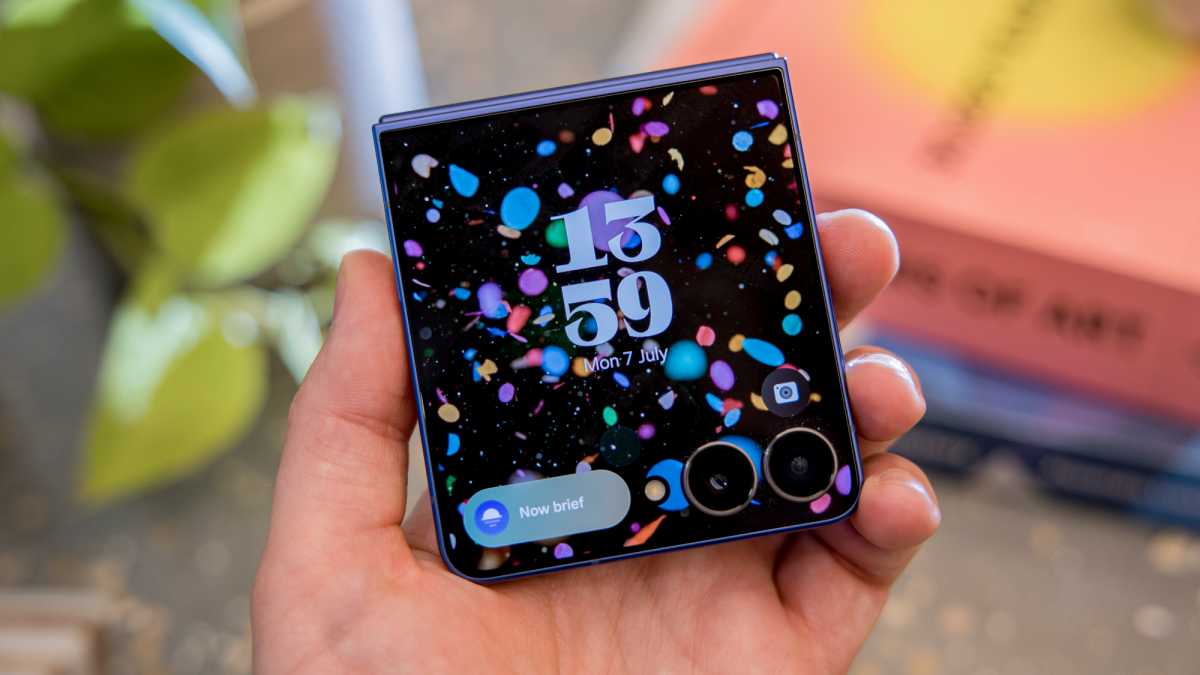
The Z Flip 7’s cover screen is a massive step in the right direction
Dominik Tomaszewski / Foundry
I really enjoyed my few minutes trying it out, especially with the impressive new Gemini Live integration. One UI 7 staples, such as the ‘Now Bar’, make it easy to see at-a-glance information from the likes of timers and third-party apps such as Uber without opening the phone, while some of the new widgets and customisation options look great.
The Z Flip 7 is brilliant for taking selfies, especially with the new option to automatically zoom in and out to keep you in the frame. It can also use AI to detect when there’s something significant in the background (the Eiffel Tower was used as an example in my briefing) and not crop that out, either.
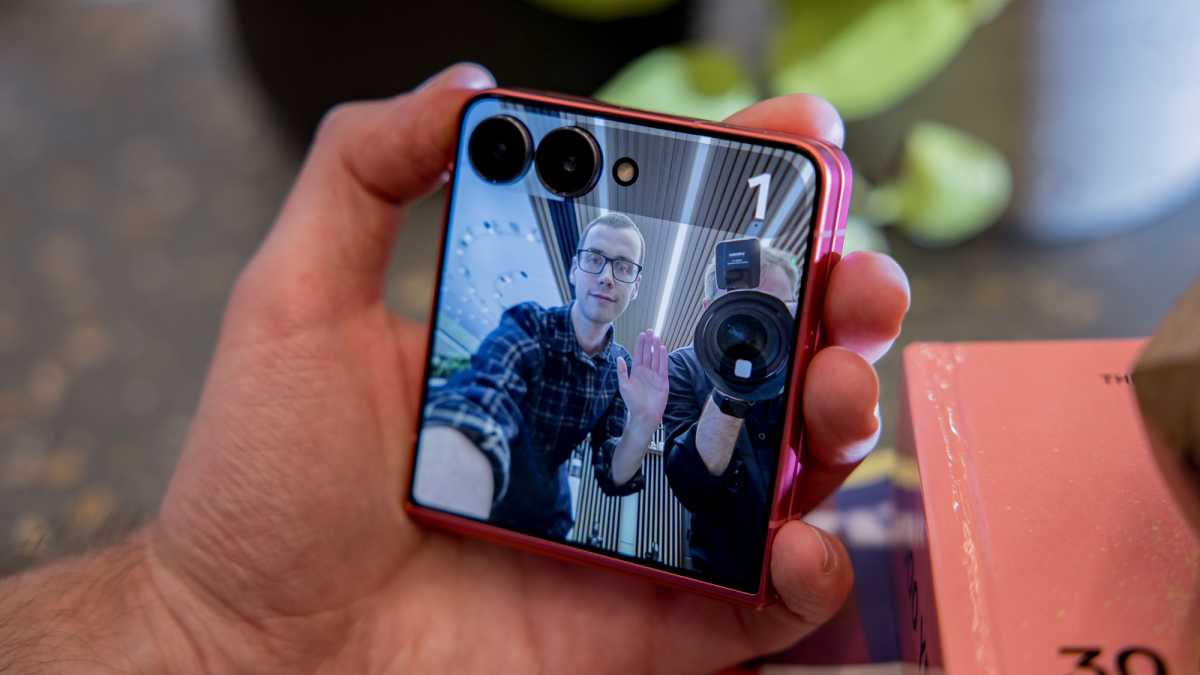
The Z Flip 7 starts a countdown timer when you hold up your palm before taking a photo
Dominik Tomaszewski / Foundry
That all being said, you still can’t easily run any app on the cover screen! If you’ve read my Galaxy Z Flip 6 review , I’m probably sounding like a broken record, but the hoops you must jump through to access all Play Store apps are nothing short of ridiculous.
I understand that not every app will play nicely with the unusual aspect ratio of the display, and crucial tools such as Google Maps are natively supported. But with the camera lenses now obscuring parts of the display anyway, it really doesn’t matter if things look a bit weird from time to time.
Motorola solves this by simply displaying a warning when you open the app for the first time. Why does Samsung continue to make it so difficult?
Durable design, but still not fully safe from the elements
One of the main things that struck me when trying out the Galaxy Z Flip 7 was its durability. I was concerned that the larger cover screen would make it more fragile, but if anything, it feels more robust than the Z Flip 6.
The upgraded ‘Armour Flex’ hinge feels especially tough, yet the crease is slightly less noticeable on the 6.9-inch internal display than last year.
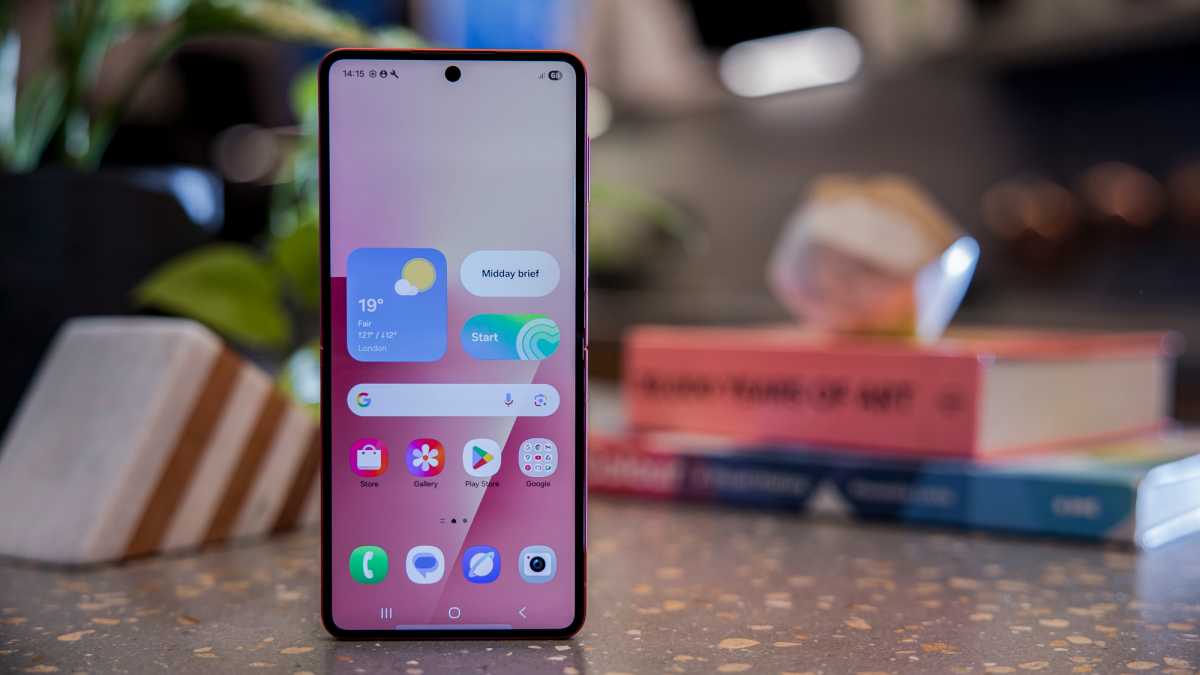
With the screen on, the Z Flip 7’s crease is practically invisible
Dominik Tomaszewski / Foundry
However, it’s not totally safe from dust. An IP48 rating is on par with the Razr 60 Ultra, meaning it can survive a dunking in up to 1.5m of water but is still susceptible to any solid objects smaller than 1mm. In other words, watch out for sand at the beach.
I understand the difficulty in achieving an IP68 rating on even non-folding flagship phones, but it’s still a compromise you’ll need to be aware of.
Promising cameras, but why still no telephoto?
Samsung is sticking with the 50Mp main sensor that performed so well on the Galaxy Z Flip 6. No complaints here – it delivered excellent image quality in a variety of scenarios, including selfies.
The harsh lighting of the hands-on area doesn’t provide an ideal scenario for testing, but initial evidence suggests image quality on par with – if not better than – last year.
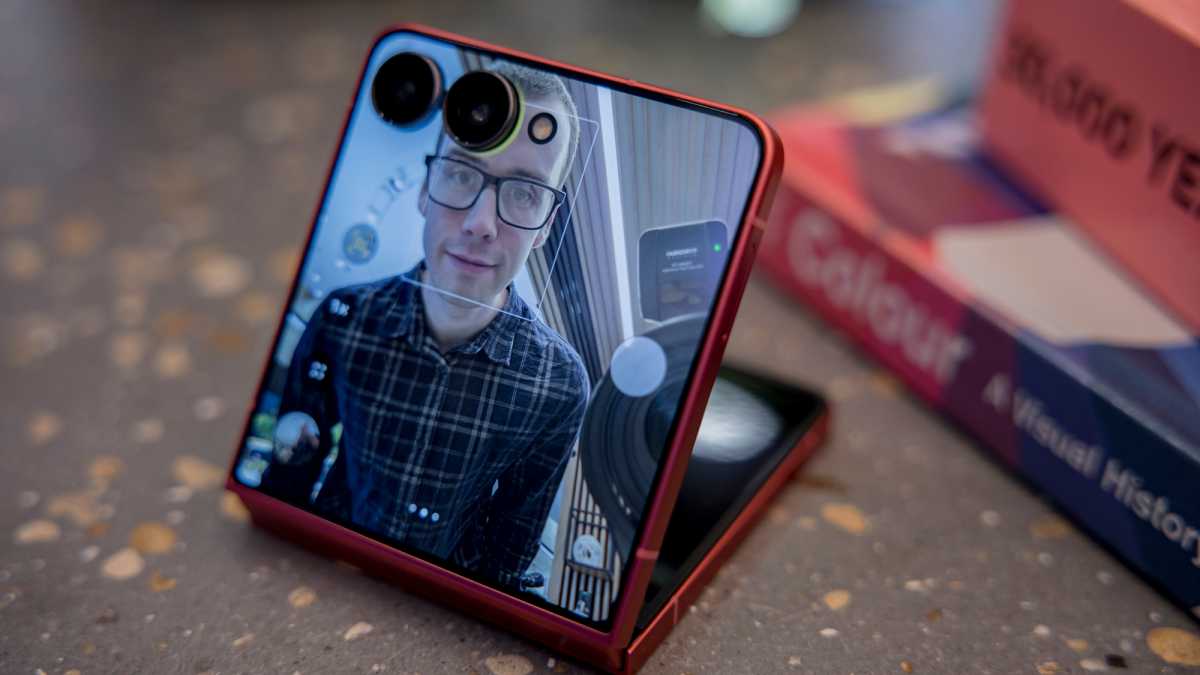
When taking selfies, the camera can now zoom in and out automatically
Dominik Tomaszewski / Foundry
The front-facing camera is much less important on flip phones, but the 10Mp lens looks to be just fine for video calling and the like. And while it’d be nice to have a better ultrawide, I found the 12Mp sensor to deliver decent images, especially when the lighting was good.
However, I still don’t understand why Samsung hasn’t added a dedicated telephoto lens for optical zoom. Without it, you’re entirely reliant on the inferior digital zoom, with image quality deteriorating fast once you go beyond 2x.
As someone who regularly goes to concerts, I can pretty much forget about getting good photos unless I’m right next to the stage. And the argument of not having enough space for another lens isn’t valid when the cover screen is so much larger.
If Samsung really wants its flip phones to have no-compromise cameras, the lack of a telephoto must be fixed.
A bigger battery, but what about charging?
In my Z Flip 6 review, I complained about its subpar battery life. A 4000mAh cell just isn’t big enough on an Android phone in 2025.
On the Z Flip 6, Samsung has addressed this… sort of. The new 4300mAh cell is a big gen-on-gen improvement, with the company now claiming up to 31 hours of video playback on a single charge.
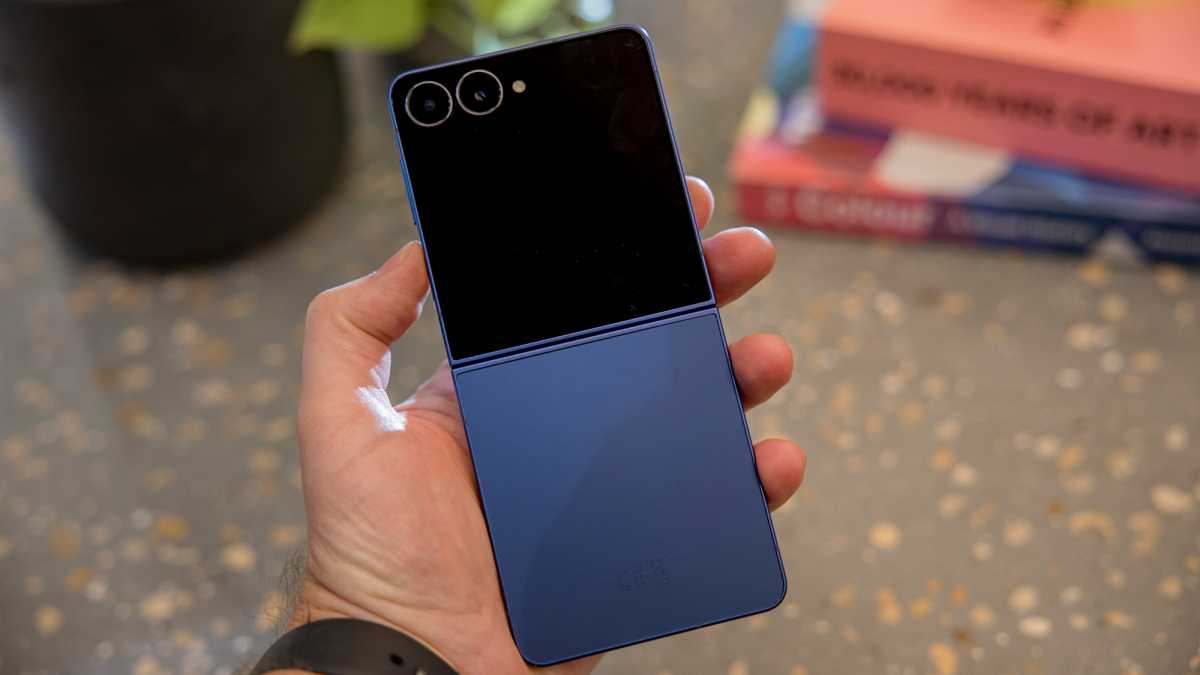
The Z Flip 7 looks particularly good in this ‘Blue Shadow’ finish
Dominik Tomaszewski / Foundry
However, this is based on a 720p video running locally, so it doesn’t provide an accurate reflection of battery life. I hope the new Exynos 2500 chipset and software optimisations will deliver comfortable all-day battery life, but I still have my doubts.
Oh, and charging is still a measly 25W! Come on, Samsung, you can do better than that. At least give us the 45W of the S25 Ultra – it isn’t much to ask.
Cheaper than the Razr 60 Ultra, but still expensive
Despite some meaningful upgrades on the Galaxy Z Flip 7, I’m pleased to see the price remain the same. When the phone is released on 25 July, it’ll start at the exact same £1,049/$1,099 as its predecessor, meaning it’s now cheaper than the Razr 60 Ultra (from £1,099/$1,299), especially in the US.
However, this is still a lot to pay for a phone with obvious compromises. Unless you’re really sold on the flip form factor, it’ll probably be hard to justify.
The Galaxy Z Flip 7 is a big step in the right direction, but it doesn’t appear to be the game-changing device that Samsung is hoping for. I really hope I’m wrong, but you’ll have to wait for my full review to find out.
We’ve also got early hands-on reviews of the 7 Fold 7 and the 7 Flip 7 FE , if you want to check out more of the new lineup.
Author: Anyron Copeman, Mobile Editor, Tech Advisor

Anyron is Mobile Editor at Tech Advisor, where he’s been a mainstay of the editorial team since 2019. In his current role, Anyron is responsible for all smartphone, tablet and mobile network coverage on the site. A BA Journalism graduate, he has experience with a wide range of consumer tech products and services, including smartphones, tablets, foldables, wearables and more.
Recent stories by Anyron Copeman:
- The truth: Android 17 won’t matter to most people
- I missed you, Pixel 10 Pro XL
- These are the best Xiaomi phones you can buy right now
