Huawei’s mammoth dual-hinged Mate XT Ultimate shocked the world when it was unveiled in China in September last year. Now, it’s finally launching globally, and that means early adopters from around the world can try out this tri-fold tech for themselves – if they can stomach the lofty €3500 MSRP.
The question is, should they? I’ve been living with it for the past 24 hours, and using this futuristic tech out and about can be an unnerving experience compared to your bog-standard smartphone .
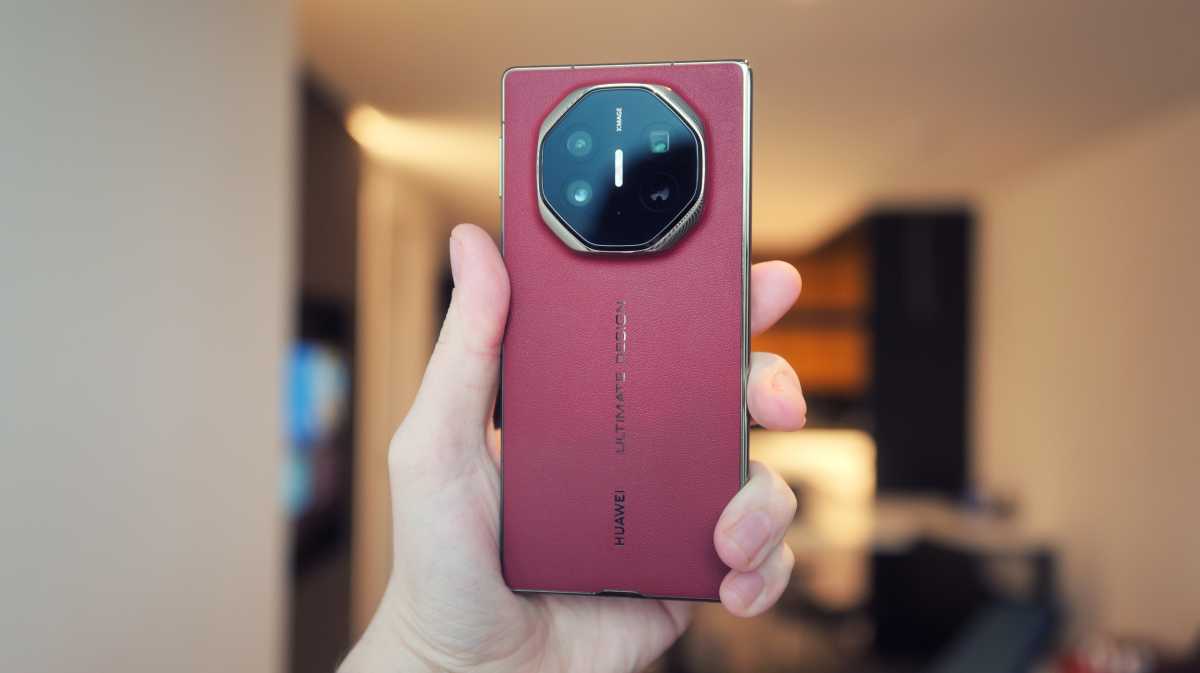
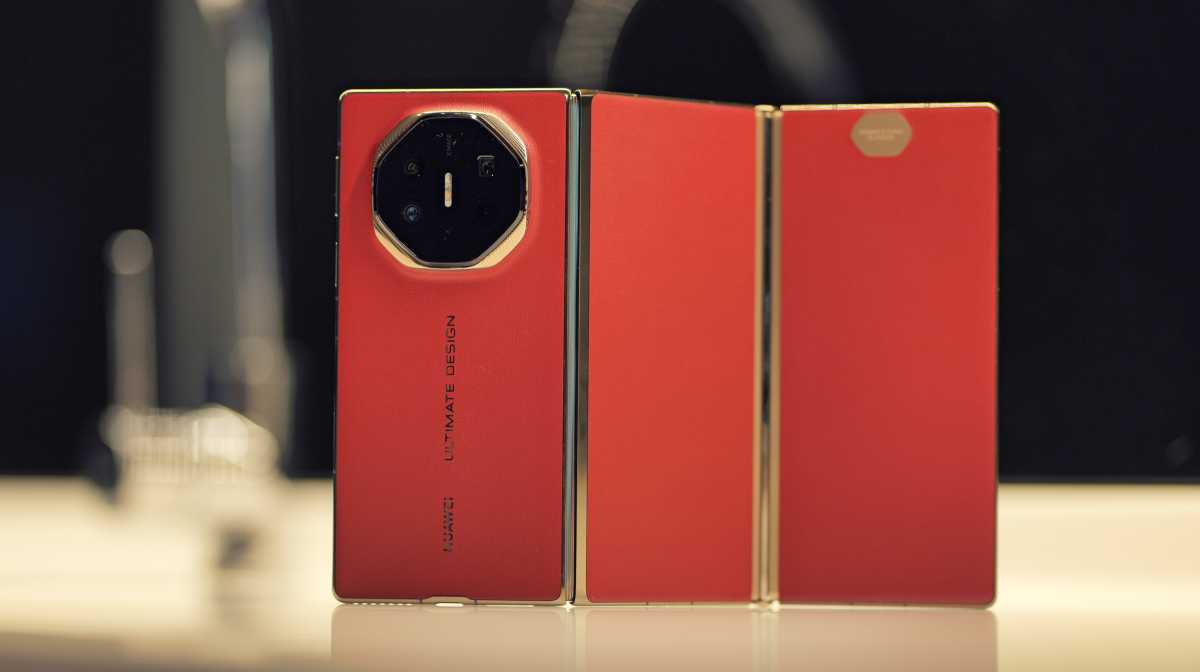
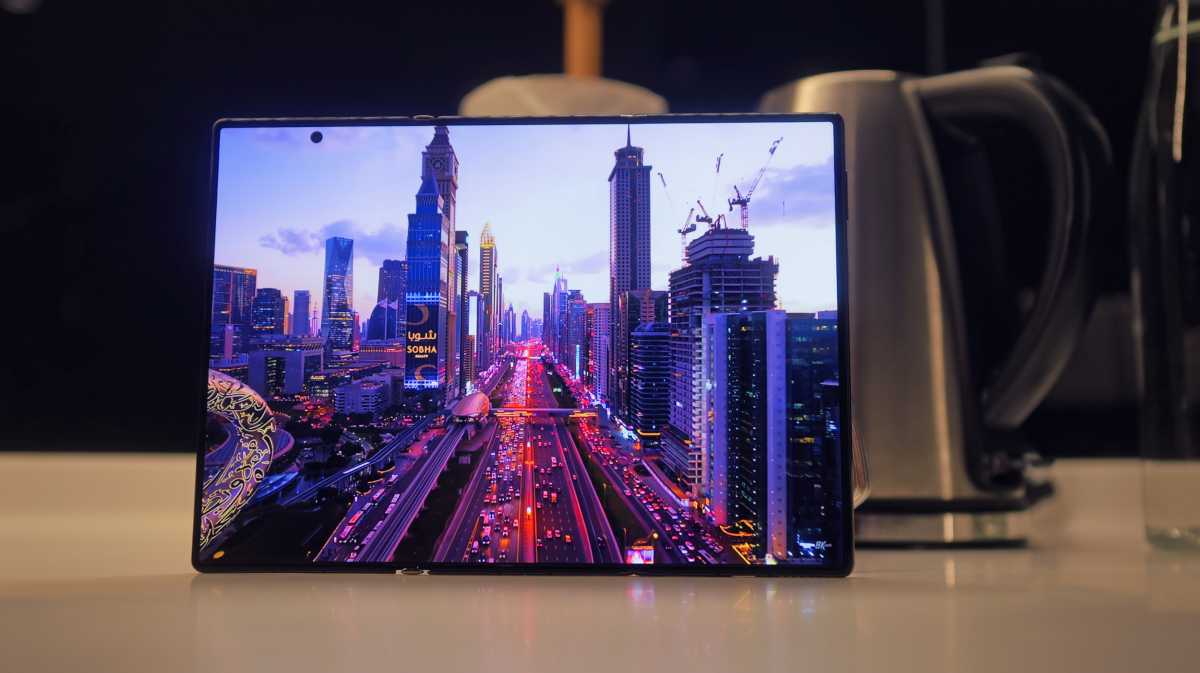
Before we get to that, let’s look at the hardware. There’s no question that the Mate XT is an engineering marvel. It’s impossibly slim, barely thicker than the Z Fold 6 folded down, but it turns into a gigantic 10.2-inch tablet. It’s almost like carrying a TV screen in your pocket – watching a movie on the train is an entirely new experience.
If that’s simply too much screen, you can just engage one of the hinges, resulting in an experience more akin to a traditional foldable. Of course, you can opt to just use it like a classic smartphone too, for those times where portability trumps screen size.
Elsewhere, the specs are pretty respectable. It has the same main camera and selfie camera as the Huawei Mate X6 , and only the telephoto and ultrawide cameras get a downgrade, utilising lower-res 12Mp sensors. However, that doesn’t mean they’re unimpressive. Huawei’s image processing is second to none, and so far, my snaps are looking excellent.
There’s also a 5600mAh battery to keep the giant screen running all day, as well as speedy 66W wired and 50W wireless charging. Of course, the usual Huawei caveats apply – this phone doesn’t have the latest and greatest chipset, and the lack of support for Google services makes things tricky, too. That’s not news though, Huawei phones have come with some baggage for the last few years.
Luke Baker
There are workarounds, and they do the job, but the experience will never be as seamless as using a foldable from a competing brand. If you want the lowdown on Huawei software, check out my review of the Huawei Mate X6 , where I get more into the ins and outs of living with a Huawei phone on a daily basis.
Software trickiness aside, what’s it like living with the world’s first tri-fold phone? In all honesty, it’s been daunting. There are two main reasons for this, but the first is it attracts a lot of attention. Most people have never seen a tri-fold phone, and if you unfold it in public, be prepared to see people staring, more often than not, you’ll need to answer some questions about it.
This could be a good or a bad thing depending on your personality. I’m more than happy to show off my phone to strangers, that’s basically my job, after all. The problem is how expensive this phone is (and how expensive it looks). I can’t deny that it made me nervous when people were ogling it, and I didn’t even pay for the thing.
Luke Baker
Then, there’s the more practical aspect. The dual-hinge design means that the delicate folding display is exposed at all times. I wouldn’t call myself clumsy, but like everyone else, I do drop my phone from time to time – and I’m not confident that this fancy handset would survive. Huawei hasn’t revealed any information about the global repair policy, or its associated prices, but I think it’s safe to say it’ll cost you.
In fairness, the included case has a flap that covers the exposed edge, which gives me a little more confidence. Plus, a Huawei representative showed me their Mate XT, which has been used for months with no case and is still looking pristine. There’s no way it’s as durable as a glass cover screen, though, the physics of a folding display simply don’t allow for that.
These two factors have made me perpetually nervous when using the Mate XT, and so far, that unsettling feeling outweighs any possible benefits of a larger display. Maybe I’ll change my tune after spending more time with it.
There’s no denying that the extra screen real estate is luxurious. No matter whether you’re gaming, watching a show, or even doing simple things like reading a webpage or looking at a map, the experience is so much better on a big display. The fact that it can be folded down into such a slim and lightweight package feels like magic.
Luke Baker
At times, I could convince myself this is the future of mobile computing, but the fragility is a huge sticking point, and I’m not sure how it can be addressed. Most people need a phone that’s more durable than this, and even the most careful users would surely appreciate an outer screen that doesn’t scratch so easily.
The question is, how do you do that? With the current design, there’s no way to keep the fragile folding screen inside, and I can’t picture an alternative method that would do so. Barring some material science breakthrough, the tri-fold phone seems destined to remain a niche device.
I’m excited to spend more time with the Mate XT Ultimate, and there’s every possibility my opinions will change. So, keep an eye out for my full review in the coming weeks, I’ll be testing out everything this phone has to offer.
Author: Luke Baker, Contributor, Tech Advisor

Luke is a freelance journalist who has been working in consumer electronics for over a decade. Previously Features Editor at Pocket-lint, Luke can now be found contributing reviews and features to a variety of publications, as well as running a YouTube channel called Neon Airship in his spare time. Luke loves anything that takes pictures, whether it’s a smartphone, camera or drone, and he also gets very excited about the latest VR and AR tech.
Recent stories by Luke Baker:
- Sony Xperia 1 VII review: When unique isn’t enough
- Oppo Find X9 Pro review: I think I’m in love
- Google Pixel 10 Pro Fold vs Samsung Galaxy Z Fold 7: Which to buy?
