Up until the very recent unveiling of the Circular Ring 2 , with its FDA-cleared atrial fibrillation detecting powers, we hadn’t seen a smart ring that promised deep health-tracking abilities.
Most are designed to monitor your general well-being and fitness, though can deliver the kind of data that if you know what to look for, could suggest that something’s not quite right.
Oura introduced a new feature to its Oura Ring Gen 3 and new Oura Ring 4 smart rings that it says can help to detect early signs of sickness. That feature is called Symptom Radar.
After putting the feature into beta testing in April 2024, Oura launched Symptom Radar for all users to access in December 2024. I’ve been using it over the past month to find out how it works, what it actually does and whether it can detect if you’re getting sick.
How does Oura Symptom Radar work?
Symptom Radar is available to both Oura Ring Gen 3 and Ring 4 users and is a feature included as part of Oura’s paid-for subscription service.
To locate it inside of the Oura companion app you’ll need to go to the dropdown menu on the Today screen. Oura states it’s been developing this feature since 2020, so it’s taken a few years to get it out there for its users to put to use.
Mike Sawh
It promises to detect what Oura describes as ‘strains on the body’ and does that by spotting changes to some key data it tracks and how that corresponds with your baseline data.
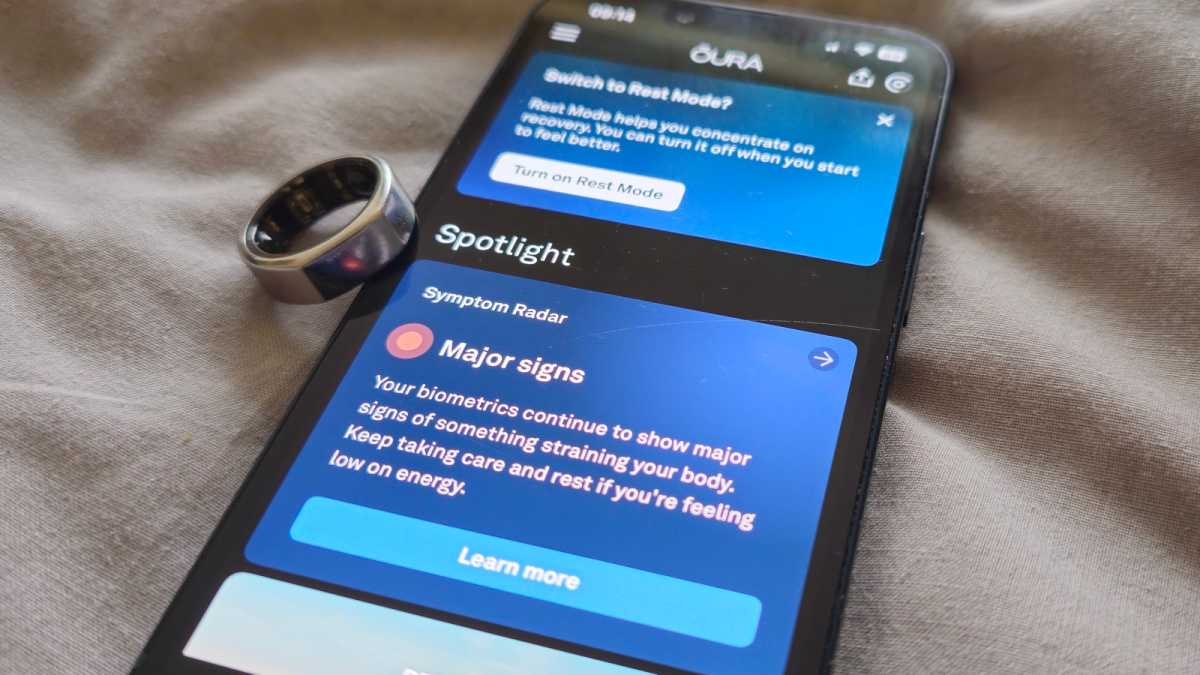
When it detects minor or major strains it will notify users of that on the Today section of the app. If there are minor or major signs of stress, it will suggest turning on Oura’s Rest Mode, which can put a hold on capturing activity-focused tracking until you’re feeling better again.
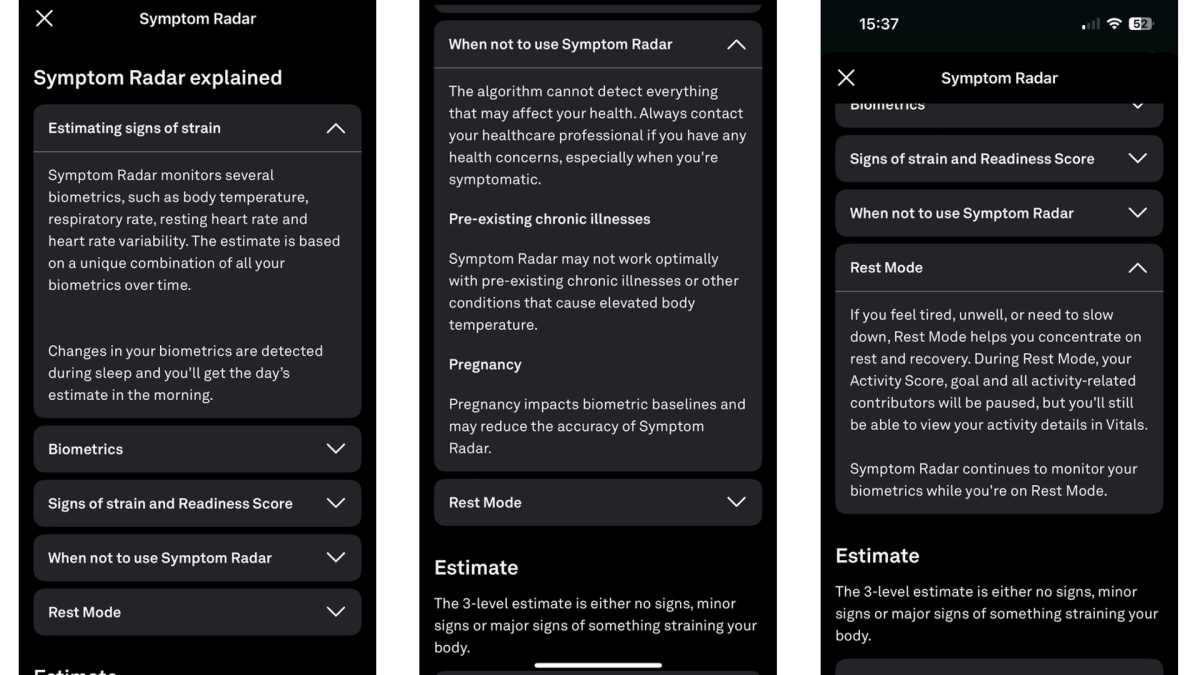
Oura is focusing on body temperature, resting heart rate and heart rate variability to detect these changes. These are monitored during sleep with Oura requiring seven nights of tracked sleep data over a period of 14 days to start delivering Symptom Radar insights.
Symptom Radar does sound like it’s doing something similar to Oura’s core Readiness Scores. These look at your biometrics, both short and long-term, to tell you how prepared you are to take on your day – similar to other smart rings like the Samsung Galaxy Ring .
Oura states that these two insights won’t necessarily always align. You could still have a high Readiness Score but see signs of strain in the Symptom Radar. That’s because the latter is designed to detect early signs of illness and may not start to impact your Readiness Score straight away.
This isn’t a feature for everyone, however. Oura says that it shouldn’t be a feature used by anyone who’s pregnant or has a pre-existing chronic illness as they can impact biometric baselines and hugely affect the accuracy of using it.
Putting Symptom Radar to work
I thought it was a good idea to start using this illness detection feature at a time when catching a cold would definitely be increased.
Over the Christmas and New Year period I was travelling a lot both in the UK and then around Belgium and Holland.
Mike Sawh
The first task is to capture enough sleep data over a two-week period to get the Symptom Radar up and running. I was using the Oura Ring Gen 3, which I’ve used for a few years now and do have some gripes about the frequency I have to charge it, especially with all monitoring features enabled. So it took a bit of time to get the data I needed.
When I’d got enough, the Symptom Radar screen in the Oura app had something to show me. If there are no signs of strain, there’s not a huge amount to see.
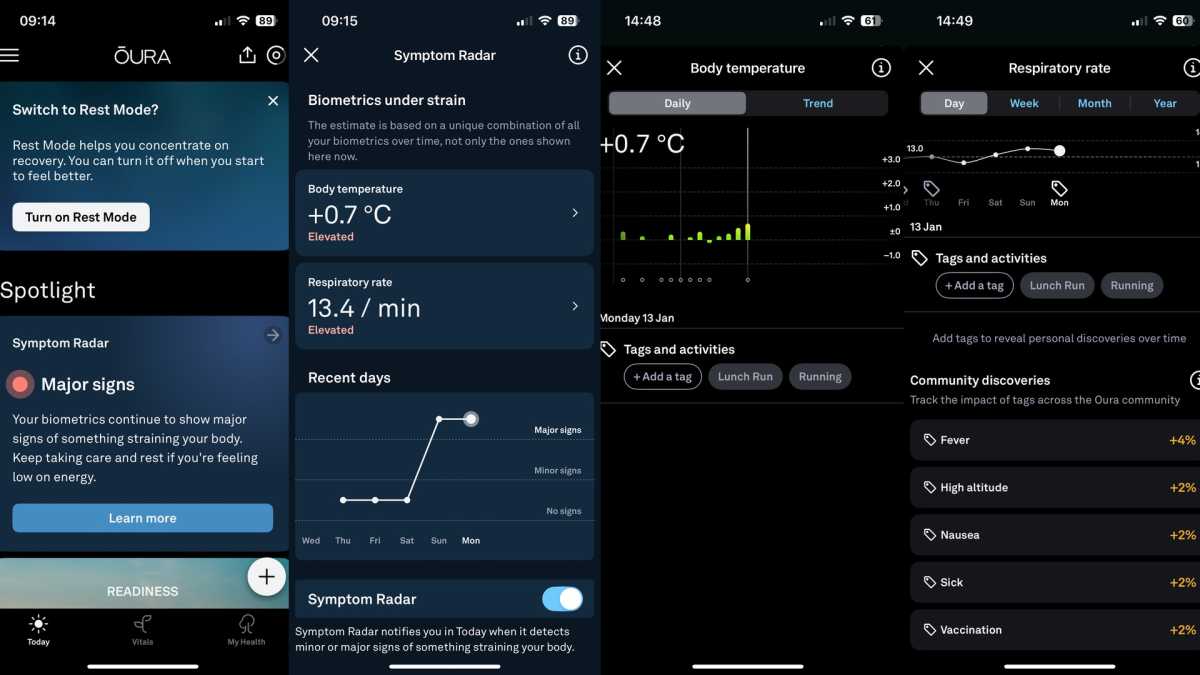
There’s a strain graph to indicate when there have been no signs, minor signs or major signs of strain. For most of the time it was enabled, there wasn’t a lot to see, which is a good thing, because you don’t want to see signs of strain.
I felt good, energised and in good shape during that time as well, so it didn’t conflict with how I was feeling.
Mike Sawh
Going into January after I’d been jumping on and off trains around Belgium and Holland over the New Year period and into my first week of work I started to feel a bit run down. We all know how bitterly cold it’s been and I’d started to get a little bit of a headache and felt a bit chesty.
I put the latter down to the freezing temperatures. A couple of days later I saw my first piece of real Radar action. After syncing my Oura the Today page flashed up that major signs of strain were detected and suggested I turn on Rest mode. My body temperature and respiratory rate were elevated.
I knew I wasn’t feeling 100%, but felt I could still do things like work and get through some of my daily routine. My Readiness and Sleep scores were rated as good so I decided I’d break my day up with a lunchtime run.
I realised I should’ve listened to the app because I ended up cutting my run short significantly. I felt exhausted and things just didn’t feel right. In the days after, I also had to travel, I was working on limited sleep and that major sign of strain message unsurprisingly stuck around. it wasn’t until I had a full night of sleep, gave my body time to recover and did the sensible things I needed to recover that those major signs of strain changed to minor ones and then no signs of strain at all.
Is Symptom Radar a useful smart ring feature?
Like any feature you find on a wearable that relies on capturing biometric data to provide useful insights into your general well-being, the insights are only as good as the data behind it.
As a long-term Oura user, I know the data accuracy isn’t always spotless. If there’s one area it does do well in it’s sleep monitoring and capturing good data during the night.
When the feature came to life, it didn’t take a lot of work to decipher what Oura was trying to tell me. This is a big reason why Oura’s smart ring is still considered the leader in this space. By putting your data in front of you in a manner that you can absorb it and know what you have to do with it.
While Oura still lacks the same sort of regulatory clearance or approval you’ll find attached to health monitoring features on smartwatches, this feels like an important step in the direction of Oura saying it can raise the alarm when something’s not right so you can act before things get worse.
It’s perhaps no surprise why Samsung is seemingly prepping its own Symptom Radar feature to give its own Galaxy Ring smart ring similar powers too.
Author: Mike Sawh, Contributor, Tech Advisor

Mike has been testing and reviewing consumer technology for over 10 years, specialising in wearable and fitness technology. He’s a keen swimmer and runner and co-founder of YouTube channel, The Run Testers.
Recent stories by Mike Sawh:
- Our 10 favourite budget smartwatches, vetted by tech experts
- Luna Ring Gen 2 review: A stylish and subscription-free smart ring
- Amazfit T-Rex 3 Pro review: Flashy upgrade for a likeable outdoor smartwatch
