When Mary Shelley’s Frankenstein came out in 1818, she most likely couldn’t have imagined that 200 years later, 21st-century audiences would still be drawn to her story.
Netflix and Guillermo del Toro’s Frankenstein is the latest revival of the Victorian character that refuses to stay dead. This fresh adaptation (which just dropped ) arrives at a time when monsters in horror are no longer just scary figures, but complex characters carrying human emotions.
Jacob Elordi’s portrayal of Frankenstein’s Creature and Oscar Isaac’s Victor bring a new perspective to Shelley’s story, emphasising the emotional stakes behind the monster’s actions – but it’s not the only film to do so. From the bloodthirsty zombies in 28 Years Later to the morally grey vampires of Sinners , today’s villains are reimagined with unexpected depth.
But why are we suddenly sympathising with the monsters we once feared?
Spoilers for Frankenstein, Sinners and 28 Years Later Below
<img loading=“lazy” src=“https://b2c-contenthub.com/wp-content/uploads/2025/11/391_PF_20240315_06239_R2_2a4c64.jpg?quality=50&strip=all&w=1200" onerror=“this.onerror=null;this.src=‘https://blogger.googleusercontent.com/img/a/AVvXsEhe7F7TRXHtjiKvHb5vS7DmnxvpHiDyoYyYvm1nHB3Qp2_w3BnM6A2eq4v7FYxCC9bfZt3a9vIMtAYEKUiaDQbHMg-ViyGmRIj39MLp0bGFfgfYw1Dc9q_H-T0wiTm3l0Uq42dETrN9eC8aGJ9_IORZsxST1AcLR7np1koOfcc7tnHa4S8Mwz_xD9d0=s16000';" alt=“Mia Goth as “Elizabeth” and Oscar Isaac as “Victor” in NETFLIX’s Frankenstein. The pair are looking over Victor’s half creation - 1”>
Ken Woroner/Netflix
Modern horror isn’t just about monsters lurking in the dark, it’s about what’s underneath the surface. In del Toro’s adaptation, we first meet Frankenstein’s Creature on a warpath to confront Victor for cursing him with eternal life. His violent tendencies, lurking in the shadows, and strength signal danger.
Once they reunite (not without casualties), Victor is determined to set the record straight. The story unfolds through both Victor’s and the Creature’s perspectives.
The monster as the protagonist
We follow the Creature through key moments in his life, but this is an adaptation of Frankenstein’s monster like no other. Gone are the bolts and metal that have previously marked him as otherworldly.
Instead, his body bears scars and patches that tell a story of trauma and survival, creating a sense of vulnerability. Perhaps for the first time, through his battle wounds, we see the Creature not as a monster to fear, but as a figure to empathise with.
As the Creature finally comes to life, Victor’s long and time-consuming efforts finally succeed, but he doesn’t see it as a win. His creation initially has the same cognitive abilities as a small child. We watch as he learns to speak, even slowly learning Victor’s name. Elordi’s performance adds an element of innocence that suggests monsters aren’t born cruel, but are influenced by what’s around them.
In many ways, the Creature is like a helpless infant. His innocence and dependence make Victor’s frustration even sadder. He’s framed as a neglectful parent rather than a brilliant scientist. His constant rejection of his ‘child’ makes him hard to like.
Where Victor turns away, Elizabeth (Mia Goth) shows the tenderness he cannot, revealing that the Creature’s ability for empathy and human emotion was always there. The real horror lies in Victor’s failure to nurture this.
Whether del Toro intended to or not, the Creature’s perspective is far more engaging. Even when Victor tells his side of the story, his creation feels like a ball of sunshine. While Victor, despite his age and intelligence, often behaves like a petulant child.
In this adaptation, Victor’s frustration and repeated abandonment paint him as the true antagonist, while the Creature becomes the protagonist we root for. In del Toro’s hands, horror takes the backseat and human connection drives the story.
The parallels between Sinners and Frankenstein
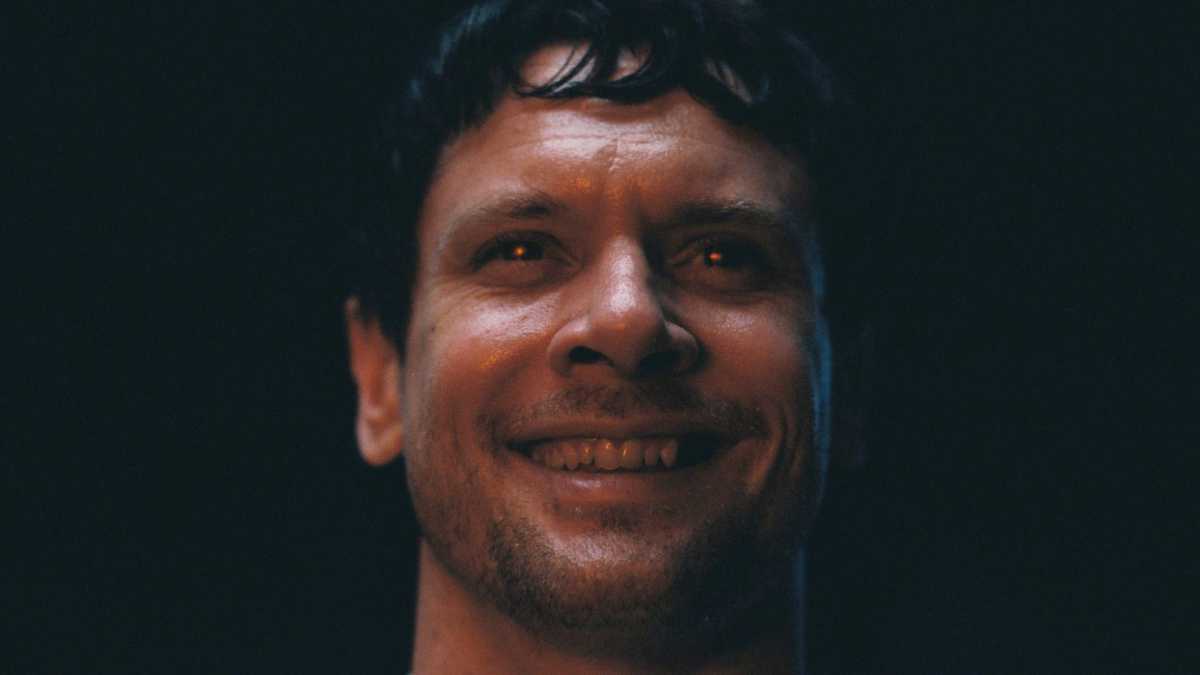
Jack O’Connell’s portrayal of Remmick the vampire in Ryan Coogler’s Sinners is a character the audience initially fears, but his backstory invites empathy. We first meet him being chased by a group of Choctaw vampire hunters. Seeking shelter, he arrives at the house of two Ku Klux Klan members, who he later turns into vampires.
We next see them all trying to get an invite into the Juke Joint the two main characters, twins Smoke and Stack (Michael B Jordan) have just purchased.
<img loading=“lazy” src=“https://b2c-contenthub.com/wp-content/uploads/2025/11/remmick.jpeg?quality=50&strip=all&w=1200" onerror=“this.onerror=null;this.src=‘https://blogger.googleusercontent.com/img/a/AVvXsEhe7F7TRXHtjiKvHb5vS7DmnxvpHiDyoYyYvm1nHB3Qp2_w3BnM6A2eq4v7FYxCC9bfZt3a9vIMtAYEKUiaDQbHMg-ViyGmRIj39MLp0bGFfgfYw1Dc9q_H-T0wiTm3l0Uq42dETrN9eC8aGJ9_IORZsxST1AcLR7np1koOfcc7tnHa4S8Mwz_xD9d0=s16000';" alt=“Jack O’Connell as “Remmick” in Warner Bros SINNERS. There’s a red glint in his eye and his fangs are on display - 2”>
Warner Bros. Pictures
With his Irish roots, Remmick has experienced colonisation, oppression and violence. These moments that shape his worldview help explain, but don’t excuse his morally ambiguous behaviour.
He turns innocent people into vampires, manipulates, and harms others, but he does reveal that the landowner Smoke and Stack purchased their club from is a member of the Ku Klux Klan and plans to kill them the next day. This revelation complicates our view of him. He isn’t a straightforward villain.
This is further explored once he visits the Juke Joint. He is not just hunting humans, he is drawn to Sammie’s (Mile Caton) music, whose supernatural powers offer him a fleeting sense of belonging.
His words show how oppression has twisted his reality. His promise of connection rests on the same power imbalance he claims to resist. The scene forces both the twins and us to ask what freedom really means. Living forever as a vampire or confronting a world that has never let you belong?
In this way, Remmick is not dissimilar to Frankenstein’s Creature, who is also shaped by abandonment and seeks connection after being rejected at every turn. Even as we recoil at Remmick’s actions, his story further highlights that modern horror figures are defined not just by what has been done to them, but what drives them also.
Humanity in the Infected
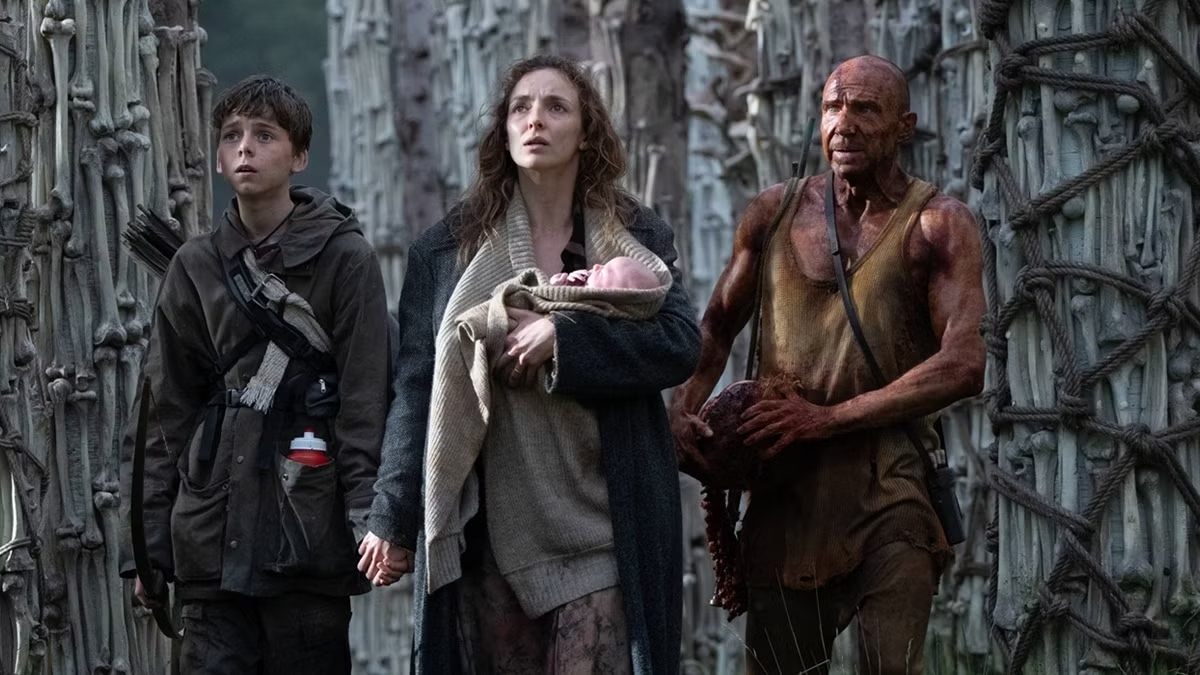
Danny Boyle’s 28 Years Later takes a similar approach, humanising the film’s antagonists, the Infected, in an unexpected moment of vulnerability.
One pregnant zombie woman goes into labour and is helped by Isla (Jodie Comer) This usual rabid monster struggles, leans on another person for help, and reveals a moment of softness that completely contrasts with the violent horror typically associated with the Infected, who have forced civilisation to go into hiding.
<img loading=“lazy” src=“https://b2c-contenthub.com/wp-content/uploads/2025/11/28-years-later-11.jpg?quality=50&strip=all" onerror=“this.onerror=null;this.src=‘https://blogger.googleusercontent.com/img/a/AVvXsEhe7F7TRXHtjiKvHb5vS7DmnxvpHiDyoYyYvm1nHB3Qp2_w3BnM6A2eq4v7FYxCC9bfZt3a9vIMtAYEKUiaDQbHMg-ViyGmRIj39MLp0bGFfgfYw1Dc9q_H-T0wiTm3l0Uq42dETrN9eC8aGJ9_IORZsxST1AcLR7np1koOfcc7tnHa4S8Mwz_xD9d0=s16000';" alt=” Alfie Williams as “Spike”, Jodie Comer as “Isla” and Ralph Fiennes as Dr Kelson in 28 YEARS LATER. They all look scared, there are bones behind them and Isla is holding a baby - 3”>
SONY
Though she dies shortly after giving birth, the scene highlights that even creatures defined as monsters can have moments of humanity. It serves as reminder to the audience that the Infected have little control over their actions.
Like Remmick in Sinners and Frankenstein’s Creature, the Infected are shaped by circumstances beyond their control. In this case, a virus. This tender scene allows us to empathise. Despite our fear of the zombies, it doesn’t remove their capacity for fragility and need for community.
From del Toro to Coogler to Boyle, modern horror has now changed. It’s not about who or what to fear. Frankenstein’s Creature, Remmick and the Infected show that the scariest monsters are shaped by trauma and human emotion. Vulnerability and empathy can exist alongside violence, flipping the genre on its head.
In 2025, the most terrifying thing isn’t the monster, but the world that’s made them.
Author: Kesewaa Browne, Contributor, Tech Advisor

Kesewaa Browne is a freelance culture writer whose work has appeared in BBC Culture, FILMHOUNDS, and Black Ballad. From horror to romance, she covers any genre, as long as the story is hooky. With a background in television production, she’s passionate about spotlighting often-overlooked individuals behind the scenes, particularly those from underrepresented backgrounds. Her work has contributed towards websites that have received Webby Awards.
Recent stories by Kesewaa Browne:
- Ironheart: Why Marvel’s latest heroine deserves your attention
- F1: The Academy – The tech driving women’s toughest motorsport