At a glance
Expert’s Rating
Pros
- Good suction power
- Efficient mopping unit
- Easy to understand and logical app
Cons
- Poor performance in corners and along edges
- Pricey for its feature set
- The mop unit must always be attached
Our Verdict
The Philips Homerun 7000 Aqua is a new model that offers automatic emptying of the onboard dustbin, good suction power and relatively efficient floor mopping. However, its competitors in the same price range are smarter and offer more features. Plus, its object identification system Consistently underperforms.
Best Prices Today: Philips Homerun 7000 Aqua

Philips and robot vacuum cleaners aren’t the most obvious pairing. But the brand has launched a number of models over the years. The Homerun 7000 Aqua is the first we’ve had the opportunity to test.
Design & Build
Philips has equipped the Homerun 7000 Aqua with some of the key features you’d expect to see in high quality robot vacuums at the moment. It both vacuums and mops, and it comes with a charging station that offers automatic emptying.
Thanks to these features, and because of its fairly high price point, the Homerun 7000 sits among advanced models from, for example, Roborock, Ecovacs and Dreame.
Andreas Bergsman
Its competitors are excellent machines that have appeared among our most recommended buys . However, unlike some of those rivals, Philips’ new challenger only offers automatic dustbin emptying, not emptying and filling of the water tank, and very few options for control of the mop unit itself.
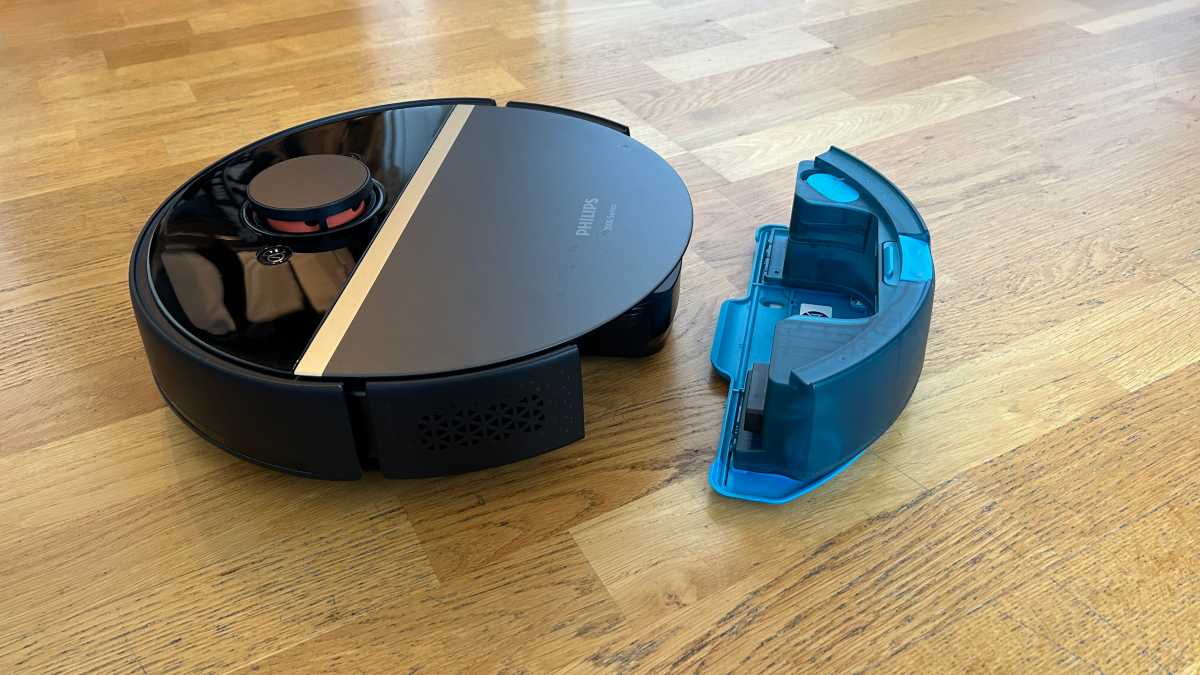
In terms of shape and design, the Homerun 7000 Aqua does not differ significantly from the standard. It’s round, with the laser navigation system set into a raised disc on the top and an on/off and home button next to it. At the back is the removable mopping unit consisting of a water tank (0.24 litres) and the associated washable microfibre cloth that you attach with Velcro (two cloths are included in the package).
Unlike most competitors, the mop unit must always be attached, even if you only want to vacuum, so the cloth is pulled dry behind the robot for more efficient dust collection. What this means is that cloths will wear out more quickly, so you’ll need to replace them more often.
Performance & Features
The charging-slash-auto emptying station is relatively small, at least compared to alternatives that offer sophisticated mop refilling, cleaning and (sometimes) drying. When the dust bag is filled, it’s easily replaced with a new one at the touch of a button on the top of the station. Depending on usage, you’ll probably need to change the bag every two months.
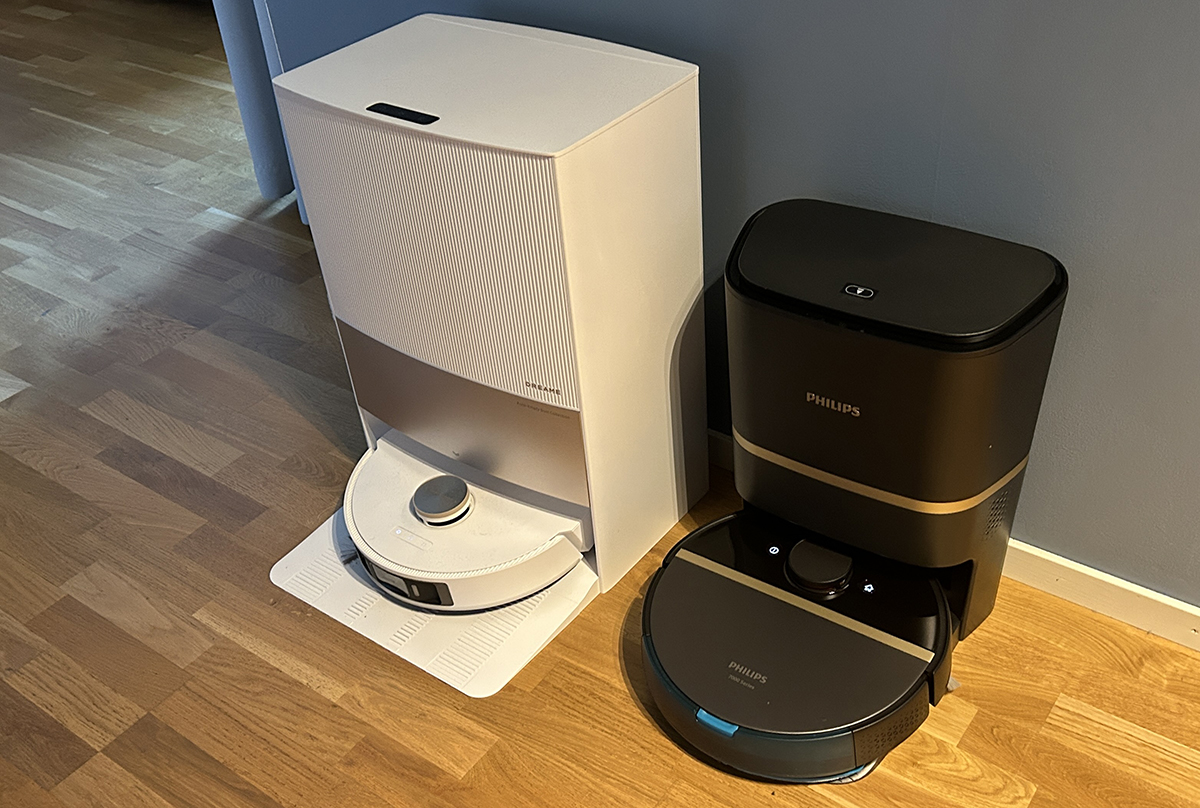
Compared to the Dreame L20, for example, the Ultra Homerun 7000 requires relatively littlespace.
Andreas Bergsman
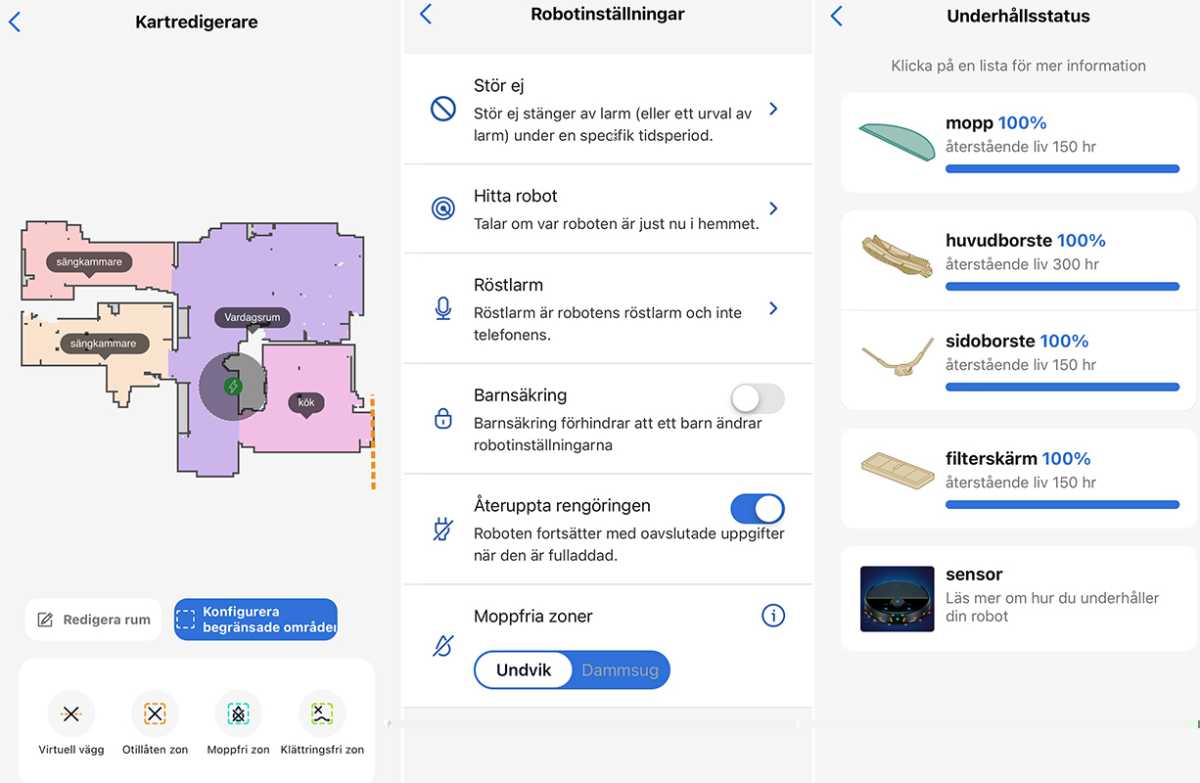
The installation is quickly completed and the robot will then go on a reconnaissance round to map the home. Afterwards, you can use the app to name, divide or combine the different areas. You can also add virtual walls and no-go zones in the app. The menu system is both easy to understand and logical.
Also in the app, you can set the suction level, the moisture level of the mop and whether the robot should repeat cleaning in different rooms. You can also choose how the actual mopping should be done, with or without vibration, and whether the robot should move in a y-pattern. If you choose the latter, the cleaning session will take longer, but it will be more thorough.
Andreas Bergsman
Should you buy the Philips Homerun 7000 Aqua?
In terms of day-to-day cleaning, the Homerun 7000 Aqua performs well. The maximum suction power is specified at 5,000 Pa, almost on par with many of the competitors’ top models, and certainly the pick-up is good. The dust, sand, gravel and grains of rice I placed on the floor were efficiently sucked up and any debris that was missed was caught in the backing fibre cloth. Even when wet mopping, with the Y-movement pattern activated, the robot manages to rub away even some dried-on stains. Great!
But its performance was much less impressive when it comes to corners and edges. The side brush simply doesn’t reach far enough to brush out the dirt and when mopping, it’s even worse; here, even areas closest to the edges are missed.
Obstacle detection is another problem for the Homerun 7000 Aqua. The 3D sensor in the front, as well as additional sensors in the front bumper, should, according to the manufacturer, ensure that small objects (as small as 2x2cm) can be identified and avoided, but we ran into trouble immediately.
Larger items like shoes and toys were detected, but cords, balled-up paper and even a lighter, didn’t seem to attract the system’s attention and were run over without mercy and then either stuck in the undercarriage or simply sucked up into the container.
Not the right robot vacuum for you? Have a look at the top performers in our round-up of the best robot vacuums we’ve tested.
Specifications
Best Prices Today: Philips Homerun 7000 Aqua
