Right now, one of the biggest concerns for everyone is the monthly heating bill. The best way to make sure there are no nasty surprises in store is to keep a close eye on when you’re using the heating and make sure that you’re never wasting it warming up an empty room, or keeping the house toasty when you’re out.
If you’re wondering if smart heating is worth it, that level of control is exactly what a smart thermostat can offer. Here’s how. While features vary from brand to brand, all will allow you check the temperature at a glance and adjust it – all on your mobile phone and even when you’re out – and set schedules so you’re only using your heat when you need it the most.
Beyond that, there are more advanced features, including geo-location, which can automatically turn off your heat when the last person goes out, and open window detection to make sure you’re only ever heating your house – not accidentally warming up the garden.
In the past, we’ve been sceptical of brands’ claims that a smart heating system can deliver huge energy bill savings – several brands make claims of up to 30% savings. But with the rise in energy prices, savings are much more likely. If you use all its energy efficiency features, you will almost certainly lower your heating bills, and perhaps significantly.
However, these savings won’t be instant as you’ll need to factor in the cost of the system and installation. If you want to know whether smart heating will make a difference to your individual situation, we’ve written a dedicated article that will help you to figure it out.
If you decide to go for it, the next question is: which smart thermostat is best for you? There’s a huge amount of variation in tech and pricing, which can make it difficult to figure out what you’re getting for your money and what a good deal looks like.
We’ve tested most of the smart systems in the UK market and we’ve done our best to break down how each works, what features they have, how they’re installed and what might make them worth your money.
If you’ve got an Ideal Boilers brand boiler from mid-2019 on, have a look at our article on the Halo Combi , which is specifically designed to be an Ideal-compatible smart heating system.
Best smart heating system reviews
1. Hive Thermostat Mini – Best budget choice

Pros
- Well designed
- Easy to use
- Geolocation tech
- Boost function
Cons
- Not a learning device
- Most features accessible only via app

Hive’s newest thermostat constitutes one of the most affordable ways to get smart heating.
It has all the same features as the pricier Hive Thermostat – plus, it can control up to six heating zones, compared to the previous iteration’s three. But the big change is that most of the controls have been shifted away from the minimalist, touchscreen thermostat to the app.
You’ll use the app to set up scheduling for your hot water and heating, switch on frost protection and holiday mode, turn on geolocation (so you’ll get an alert if you leave home without switching off your heating) and boost your heating and hot water.
There’s the option to add to your set-up with Hive thermostatic radiator valves for granular room-by-room heating control, and the Thermostat Mini is compatible with with Alexa, Google Assistant, Apple HomeKit, Siri Shortcuts and IFTTT .
Read our full Hive Thermostat Mini review
2. Hive Active Heating 2 – Best design

Pros
- Easy to use interface
- Beautiful design
- Part of Hive ecosystem
Cons
- Professional installation recommended
The Hive Active Heating system is a great upgrade for anyone who wants or needs to be able to control their heating remotely. The addition of multi-zone support is also good, and the ability to boost heating and hot water is a brilliant feature.
This second iteration of Hive is a giant leap forward from the solid (but somewhat dull) first-generation product. The interfaces of both the app and thermostat are intuitive and quick to use. There are clearly energy savings which Hive can help you make and you may be able to recoup your expenditure if you’re conservative with your temperatures and schedule.
It’s easy to add the Hive Active Light, as well as smart plugs and switches.
Read our full Hive Active Heating 2 review
3. Honeywell Evohome – Most comprehensive system

Pros
- Comprehensive
- Easy to use
- Convenient
Cons
- Expensive
Despite the cost, EvoHome is a fantastic system for those who want to control temperatures in different rooms and control their hot water. It’ll also suit homes with underfloor heating. It’s particularly good for larger homes with few occupants where you might want to heat only certain rooms at certain times.
It’s very easy to use, even for technophobes and although it can take a while to set a schedule in the first place, making tweaks is quick and simple.
If money is no object, we can highly recommend Evohome.
Read our full Honeywell Evohome review
4. Drayton Wiser Multizone – Easy to install

Pros
- Easy installation
- Reasonably priced
- Multi-room
Cons
- Weak signal from control box may require a booster
Wiser is easy to install and easy to use. You could get it set up in half an hour and it won’t require you to call out an engineer. It doesn’t have lots of advanced features but it is much cheaper than some of its rivals.
What it does do well is allow you to control the temperature separately in different rooms, via smart radiator valves, which are also easy to fit.
The app is great, too, and several features have been added since launch, showing that it’s still being developed.
Read our full Drayton Wiser Multi-Zone review
5. Nest Learning Thermostat (3rd Generation) – Simplest to use

Pros
- Well designed
- Can control your hot water
Cons
- Works best in smaller homes
Being reliable, well-designed and easy to use, the Nest thermostat is a great choice. It doesn’t have the array of accessories and compatibility of systems that some systems do, but you can buy separate smart TRVs to control radiators without changing your plumbing.
The Nest Protect smoke and carbon monoxide alarm also works with the thermostat, as does the Nest Cam camera. The 3rd generation can also control your hot water, making it even better, and the latest app update means your phone can tell it when you’ve gone out, so you don’t waste money heating an empty home.
Read our full Nest Learning Thermostat (3rd Generation) review

Pros
- Complete automation
- Prevents wasted heat
Cons
- Installation recommended
- Subscription required
Determining a house’s temperature depending on who’s at home makes a lot of sense. In this arena, Tado is the best smart thermostat as its presence detection simply follows you and your smartphone via GPS and other location factors.
Being able to control the temperature (wherever you are) via an app on your phone is an ideal way to control your heating and energy costs. New inside and outside Air Comfort reports and Open Window Detection features, plus the ability to control multiple zones via smart radiator valves, improve on the central idea.
Some of Tado’s best features are now locked behind a paid subscription, so you may want to bear that in mind before investing.
Read our full Tado Smart Thermostat Starter Kit V3+ review
7. Nest Thermostat E – Most stylish

Pros
- Easy to install
- Good value for US buyers
Cons
- Limited features compared to Nest 3rd Gen
The Nest E is a great smart thermostat that’s comfortably among the most stylish and easy to use on the market, but as it stands in the UK, there’s not much reason to opt for the E over the existing 3rd Generation Nest, which has some extra functionality for a similar price – excluding the potential cost of a professional installation.
It’s a different story in the US though – a bigger price gap makes the E an easy recommendation if you’re in the States, it offers all of the most important features of the third-generation Nest, together with design improvements, for a significantly lower price.
Read our full Nest Thermostat E review
8. Netatmo Smart Thermostat – E-ink display

Pros
- Sophisticated temperature setting and scheduling
Cons
- Limited functionality
- Most changes need to be made via the app
Netatmo’s thermostat is relatively basic, lacking any kind of presence detection, but it works well and is one of the cheaper options. It takes into account your home’s insulation quality as well as the outside temperature when setting the temperature.
Netatmo lets you set a different schedule for every day of the week or create different schedules and switch between them, so you could have weekday and weekend heating schedules to fit your routine.
Bear in mind that the display lets you adjust temperature and nothing else, so you’ll need a compatible phone or tablet to get the most from the system.
Read our full Netatmo Smart Thermostat review
9. Genius – Full smart home capability

Pros
- Good for larger homes and businesses
- Gives complete heating control
Cons
- More expensive than rivals
Genius is easy to use and efficient, and over time it may even save you the cost of installation. And it’s fairly priced, although far from cheap. How long Genius takes to pay for itself will depend on your circumstances, and it should be considered a long-term investment.
But it is a great product, and if you are looking to install a zoned smart heating system, we are happy to recommend Genius – not least because of its potential as a true smart home network for your house.
Read our full Genius review
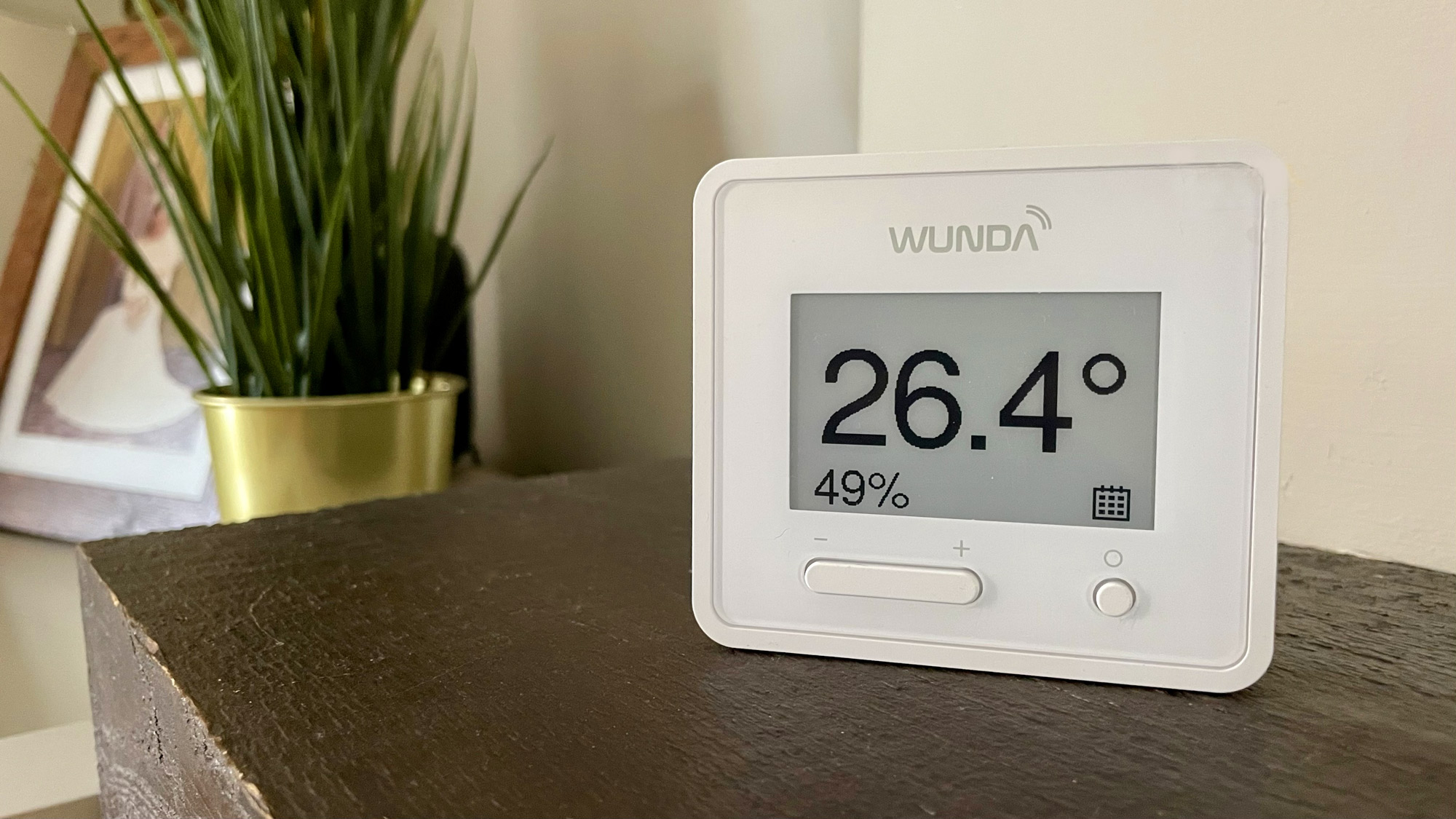
10. Wunda WundaSmart – Flexible multi-zone system
Pros
- Controls up to 30 rooms and 50 radiators
- Good app with useful features
- No data stored in the cloud
- Works with underfloor heating
Cons
- Expensive to control every room
- No display on TRVs
- Requires professional installation
WundaSmart is a name that’ll be new to most people, but if you have a large home and a generous smart heating budget, it’s one that’s worth getting getting to know. If you have spare rooms that aren’t in use for most of the time, or you want an easy way to schedule heating separately in different parts of the house, this could be a good system to choose.
It uses smart radiator valves and temperature sensors working in combination to measure and control the heat in each room. And it has a great suite of smart features such as heat boost, geofencing and open window detection.
There are downsides, however. It’ll be an expensive initial investment to kit out all of your rooms and most people will also need to pay for professional installation.
Read our full Wunda WundaSmart review
Is smart heating worth it?
Whether smart heating is worth it to you or not will depend on whether you rent or own your own home, if you find it hard to remember to turn off the heating when you go out, if there are rooms in your home you use rarely, or only at certain times of day – and a host of other factors.
We’ve got a dedicated article that can help you to decide: Can smart heating save you money?
In short, though: if you rent, you’ll be better off buying smart radiator valves for your rooms, which you can take with you when you move. For homeowners who are planning to stay in their current house or flat for a few years, smart heating could well be a good investment, although it’ll take time to pay for itself.
Which smart heating system is the best value?
The best value smart thermostat will be the one that works best for your home. As homes comes in so many shapes and sizes, it’s impossible to give a single answer.
What we can say, however, is that if you have a smaller home or a flat, the Hive Thermostat Mini is one of the cheapest to buy. You can find out more in our review , but it has a great feature set for its price point and is easy to use.
Does smart heating require professional installation?
If you’re fairly handy around the home, you may be able to install your own smart heating. If that’s the case, look out for a brand that advertises easy self-installation.
But in most cases, you’ll need a professional to come and do it for you, so don’t forget to factor that into the purchase price.
Should I buy smart radiator valves as well as a smart thermostat?
A smart thermostat alone will only let you choose one temperature for your entire home – unless you get a multi-zone system, which lets you split your home into more than one zone and set different temperatures and schedules accordingly.
Smart radiator valves (or smart TRVs, as they’re also called) let you control the temperature in individual rooms. If you buy the same brand as your smart thermostat, you’ll even be able to do it from the same app.
What this means is that you can set the temperature in your bedroom to a comfortable warmth right before you go up to bed, but ensure that it’s switched off during the day, even when the radiators in the living room are on. Or, you could have the radiator on in your home office when you’re working during the day while all the other radiators are off.
The downside is that smart radiator valves are pricey. You’ll need one for every radiator you want to control and, as they’re battery-powered, you’ll also need to factor in the cost of batteries.
Where should you install your smart thermostat?
The best place to fit your smart thermostat will usually be in the room you use the most, like the living room, or in a central space like the hallway. The temperature sensor in the thermostat will use that room to determine the heat in the whole house. So, if you’ve set the target temperature to 21 ° C, when your living room reaches that temperature, the heating in the whole house will switch off.
Author: Emma Rowley, Deputy Editor, Tech Advisor

Tech Advisor’s Deputy Editor, Emma has been a journalist and copywriter for over 20 years and has been testing and writing about home tech and appliances for seven years. She tries out every appliance she writes about at home, and aims to recommend time- and energy-saving products that will last.
Recent stories by Emma Rowley:
- The essential Oral-B iO guide: Every iO electric toothbrush’s features and price
- Oral-B iO10 Limited Edition electric toothbrush review: The last word in luxury – and price
- Roku rival Aero gets you Freely without a smart TV
