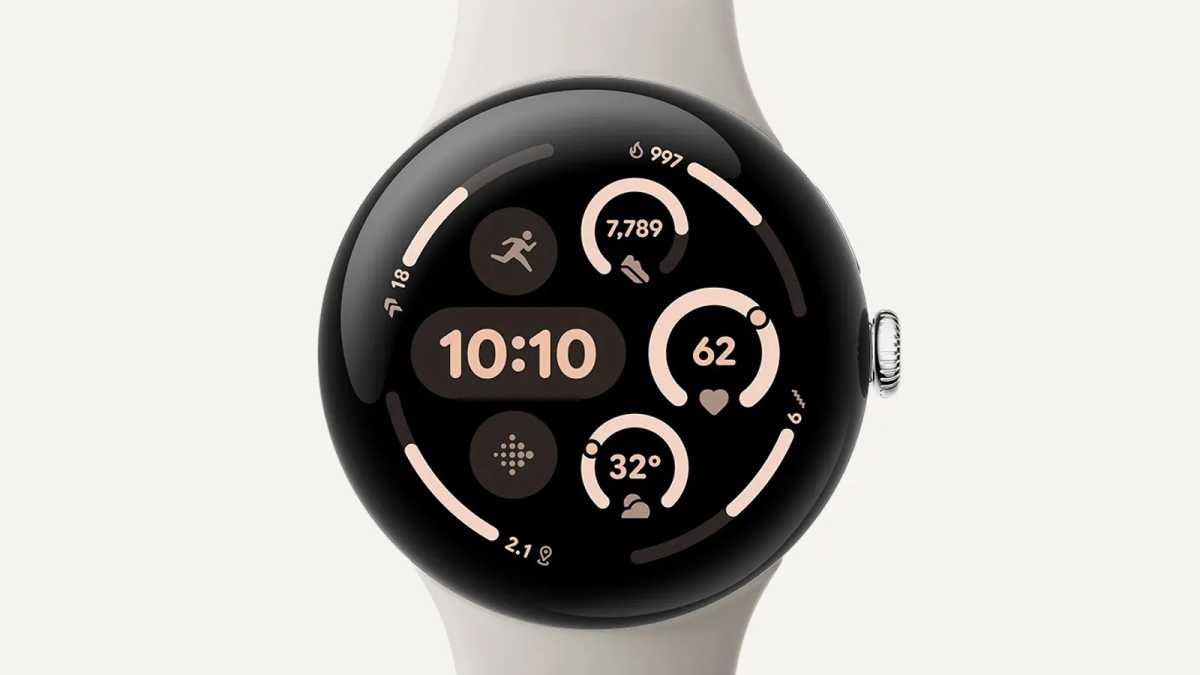
The Pixel Watch 3 is now official and the headline news is that it’s coming in two sizes, it’s getting a potentially life-saving feature that can detect the loss of a pulse and Google’s also bolstering the Pixel Watch’s fitness tracking abilities.
One type of watch wearer Google is making a big play for is runners like me. While previous Pixel smartwatches have covered the run tracking bases, it’s an entirely different story with Watch 3.
It’s going to make it easier to build interval running workouts, so the type of short and sharp workouts that can help improve running pace and strengthen your cardiovascular fitness. It’s the kind of training you’d want as part of any half-marathon or marathon training plan.
There’s more. Google is adding real-time haptic and audio feedback during runs to make sure you’re sticking closely to those workouts, it’s letting you download areas on Google Maps to make sure you have a clear idea of your running surroundings and it’s promising improved heart rate tracking accuracy compared to the Pixel Watch 2 .
Find out where to pre-order the Pixel Watch 3 with the best deals .
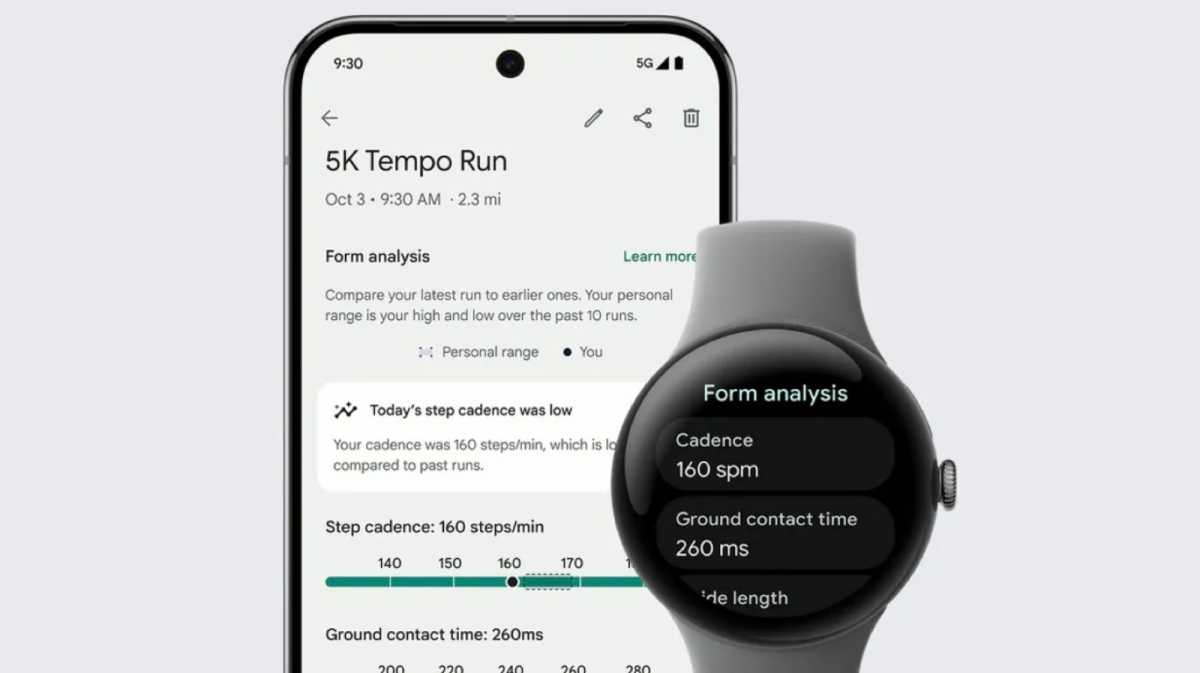
One new addition that piqued my interest was the introduction of advanced running metrics, which offers runners data around running form and technique. These advanced metrics have been available on sports watches for some time and recently introduced on the Apple Watch and Samsung Galaxy Watch Ultra , too.
According to Google’s Pixel Watch 3 announcement blog post, these new advanced running metrics, which include cadence, stride length and height and ground contact time, will be delivered by “advanced motion sensing”. That is combined with machine learning to analyse the data, which is presented inside of the Fitbit app to look over.
Google has offered a sample of what that analysis will look like (image below), suggesting it can tell you if your running cadence is low, but what doesn’t seem clear is whether the Fitbit app will show you how to make improvements to your running form based on the data it can record.
This is something that Apple, Samsung and sports watch makers like Garmin and Coros also lack when it comes to offering these advanced running metrics from the wrist. Yes, they’ll capture them and plot them in a range of nice graphs, but when it comes to taking that information and telling you what to do with it, that is notably absent.
It’s why I’m surprised that a company whose most recent I/O developer conference was so heavily dominated by machine learning didn’t seem seize the opportunity to use it for this particular feature.
Granted it’s not entirely ignored the use of AI for some of the Pixel Watch 3’s new running features and will use it to help power its daily running recommendations, which are based on Google’s machine learning technology alongside your training history and readiness to train among other data points such as cardio load.
However, Google could have stolen a march on the competition by doing more to help users understand how to work on running form with access to these advanced running metrics. Things like couch to 5K are so popular these days that anyone picking up a Pixel Watch 3 could be a real boon.
Putting a coaching spin on things has been done before in the running and wearable space. Back in 2017, I tested a device called the Lumo Run . This was something you clipped onto the back of your shorts and it used the type of motion sensors you typically find in smartwatches today.
That’s an accelerometer, gyroscope and a magnetometer. It was also capable of capturing the type of running metrics Google promises on the Pixel Watch 3. Beyond that, it offered simple exercises pre and post-run related to your running form data. It even sought to improve things in real-time, using audio cues to tell you to do things like keep your chin up or roll your arms back to improve your form during runs.
The Lumo Run, which is sadly no longer around, required the device, a smartphone for the GPS tracking and headphones to put it to best use. Google has the GPS and the ability to track those extra metrics built into its smartwatch so it could’ve looked to provide similar exercises in-app if it didn’t want to try and provide that form fixing during a run.
I do think the moves Google has made to make the Pixel Watch 3 a better fit for runners are positive on the whole. I shouldn’t rule out that it might choose to bring AI and those advanced running metrics much closer together further down the line.
From afar and without having it on my wrist, Google does at least seem to go beyond what Apple and Samsung offers in terms of offering some form of analysis of that running form data. It might seem like a niche feature in the grand scheme of what the new Pixel Watch 3 is capable of, but Google might have missed a good opportunity to do things differently. Hopefully it still will.
Related reading:
- The Pixel Watch 3 gets one of the flagship Pixel 9’s best features
- The Pixel Watch 3 fixes Google’s biggest smartwatch problem
- The Pixel Watch 3 is the first smartwatch with this potentially life-saving feature .
Author: Mike Sawh, Contributor, Tech Advisor

Mike has been testing and reviewing consumer technology for over 10 years, specialising in wearable and fitness technology. He’s a keen swimmer and runner and co-founder of YouTube channel, The Run Testers.
Recent stories by Mike Sawh:
- Our 10 favourite budget smartwatches, vetted by tech experts
- Luna Ring Gen 2 review: A stylish and subscription-free smart ring
- Amazfit T-Rex 3 Pro review: Flashy upgrade for a likeable outdoor smartwatch
