In The Surfer, Nicolas Cage stars as an unnamed man on the cusp of a mid-life crisis. Determined to return to himself and the mirage of his childhood, this man (who we’ll call Cage) is desperate to belong somewhere, to someone, again… and what better place to do so than on a sun-soaked Australian beach.
Inspired by classic surf noir and John Cheever’s short story, The Swimmer, the low-budget thriller delves into the local extremism of territorial beach boys who don’t want outsiders (like Cage) to surf in the picturesque paradise, Lunar Bay. Yet, Cage is determined to take his son to the beach, so he rides the waves of their toxic masculinity, hazing rituals and threats of violence.
And so begins Lorcan Finnegan’s wild, hallucinogenic thriller that grows in a tidal wave of tension, until Cage resolves breaks and his dream is washed away.
Finnegan, the Irish director behind Vivarium and Nocebo, had initially envisioned an Australian actor for Cage’s role. However, as the surfer had left the country as a teenager, there was something appealing about him no longer having the accent as it reinforced this feeling of being an outsider.
“Nic was top of the list,” Finnegan said about casting, once an Aussie actor was off the cards, “we sent it to his manager and Nic read it and liked it. That was that.”
“He loved the title, The Surfer, he thought it was intriguing and he’d seen Vivarium before, and he liked that,” Finnegan explained. “I think he just responded really well to the material; he thought it Kafkaesque, strange and interesting.” Not to mention, Finnegan adds: “He liked that we were going off to the middle of nowhere in Australia to make a movie.”
The long-running actor, who is known for his action roles and satirical ones alike (think The Unbearable Weight of Massive Talent), not only brought Finnegan’s vision to life but did so with great professionalism and energy, the director shares.
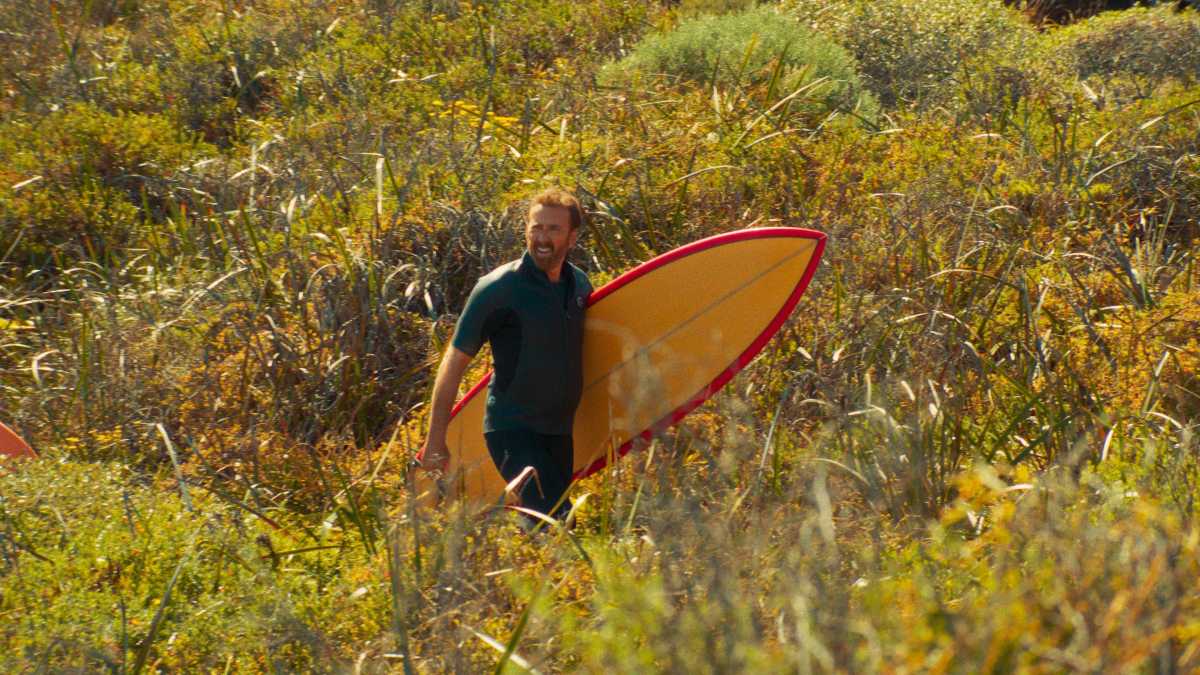
Vertigo Releasing
“I think he’s just an amazing actor,” Finnegan added, “He’s extremely prepared and extremely invested. It’s not like he ever dials it in. He never needs to look at a script. He knew all of his dialogue inside out.”
“…he’s got a lot of energy and likes to work fast,” he shared, “I like to work fast, so it was just a really good collaboration between the two of us. It’s been a pleasure.”
Sadly, Cage’s character has a far from pleasurable journey in the film. The constant conflict with the estate agent and the local surfers leaves him at the end of his tether: he’s forced to live out of his car, eat out of bins and is eventually driven to vicious outbursts.
Stifled by an ever-growing heat, Finnegan worked with Thomas Martin to capture the saturated aesthetic often seen in New Wave Australian cinema that they admired such as Walkabout and The Last Wave.

Vertigo Releasing
Finnegan explains that mounting heat-induced madness was even woven into the colour grading, telling Tech Advisor: “It was going to have to get hotter and hotter through the film. We used a lot of warm colours and there are very few cool colours apart from the sea and the sky that would contrast with this dry, hot car park.
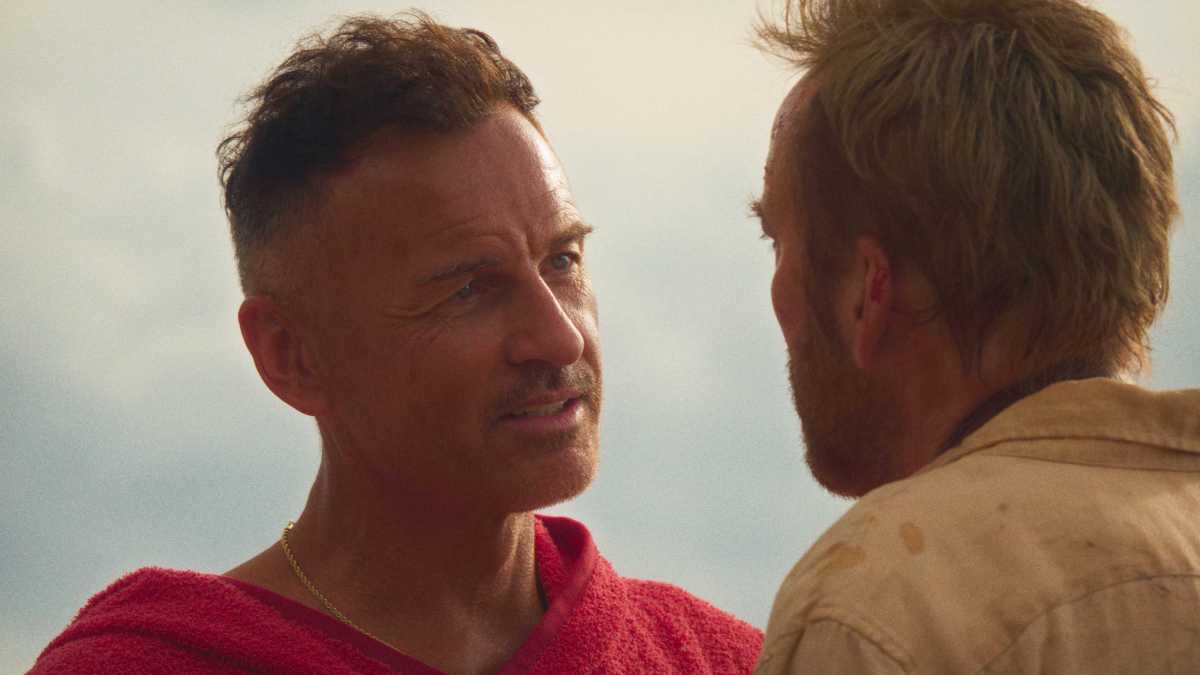
“To me, they represented a way into understanding Nic’s character,” Finnegan says, “These young men are looking to belong to something and Nic’s character is also looking for that. Sometimes these guys who are a little bit lost can get sucked into their world very easily and start listening to everything they have to say.
“[Cage’s character] hates them, but he also wants to be with them and be accepted. These men are almost like little boys not allowing another kid to play in their tree house.”
Vertigo Releasing
Close camera shots add to the overwhelming sense of claustrophobia, as the film is entirely shot across two settings – the beach and the adjacent car park – and told solely through Cage’s increasingly paranoid perspective.
“We never cut away to anything else,” Finnegan continues, “There’s no objective view of what’s actually going on. As it gets hotter, we use flame bars for heat distortion and mirrors, bending them around to create weird distortion and a lot of old-school in-camera effects, like water reflections back onto his face, even when he’s not anywhere near the sea.”
Cage’s fixation on his childhood home on the clifftop being the solution to his problems only makes the situation worse. His wife has left him and is having another child with her new partner. His son has lost interest in him. What good can this sun-kissed corner of the continent do to resolve those relationship issues?
“It’s a classic reaction to all of that,” Finnegan says, “particularly amongst men to take all of their problems and compound them into something physical. He thinks, ‘If I buy back that house, then everything will be fine, everything will be fixed.’
“He’s putting all this emphasis on something materialistic to fix all of his emotional and relationship problems. But in fact, it’s almost like he has to go through what he goes through – this psychological journey – to get to the other side to realise he needs something simpler, which is just to go surfing with his son.”
The Surfer is out in cinemas now. You can buy your tickets from Cineworld , Odeon and Vue in the UK, and AMC Theatres , Fandango and Atom Tickets in the US.
- I’m in a situationship with Netflix, and I hate it
- Poker Face season 2: Five questions I have after the first three episodes
Author: Jess Bacon, Contributor, Tech Advisor

Jess Bacon is a freelance entertainment and culture critic whose work can be found in Stylist, Dazed, Rolling Stone, The Guardian, Cosmopolitan, The Daily Beast and more. She covers everything from sci-fi and fantasy to streaming and female-led cinema. She’s currently working on her first non-fiction book.
Recent stories by Jess Bacon:
- Stranger Things’ bombshell opening episode sets up season 5 as a full-blown horror
- Thunderbolts* review: “The best of Marvel with an addictive new energy”
- Netflix’s You season 5 review: “a dark, twisted and slightly deranged end”
