At a glance
Expert’s Rating
Pros
- Excellent charging speed
- Very capable main camera sensor
- Premium design and finish
Cons
- Performance issues
- Stale software with lots of bloatware
- Very similar to its predecessor
Our Verdict
The Redmi Note 14 Pro+ is a capable mid-range contender with excellent charging speeds and a strong main camera, but dated secondary cameras and lack of meaningful upgrades make it feel like a half-step forward.
Price When Reviewed
This value will show the geolocated pricing text for product undefined
Best Pricing Today
Best Prices Today: Xiaomi Redmi Note 14 Pro+ 5G

The Redmi Note 14 Pro+ from Xiaomi offers a polished design, impressive charging speeds, and a highly capable 200Mp main camera. It introduces Qualcomm’s Snapdragon 7s Gen 3 chipset, delivering solid performance for everyday tasks and moderate gaming.
However, it’s let down by outdated Android 14 software at launch, excessive pre-installed bloatware, and unimpressive secondary cameras. While the device shines in display brightness, design aesthetics, and battery efficiency, it struggles to differentiate itself meaningfully from its predecessor, the Redmi Note 13 Pro+.
I like to think of this £399 mid-range phone as what you see is what you get. You can see an impressive design and decent cameras. Apart from fast charging speeds, everything on the inside is far less impressive – software included.
Design & Build
- Premium looks and polished materials
- Sturdy and practical
- Curved edges make for a slightly dated aesthetic
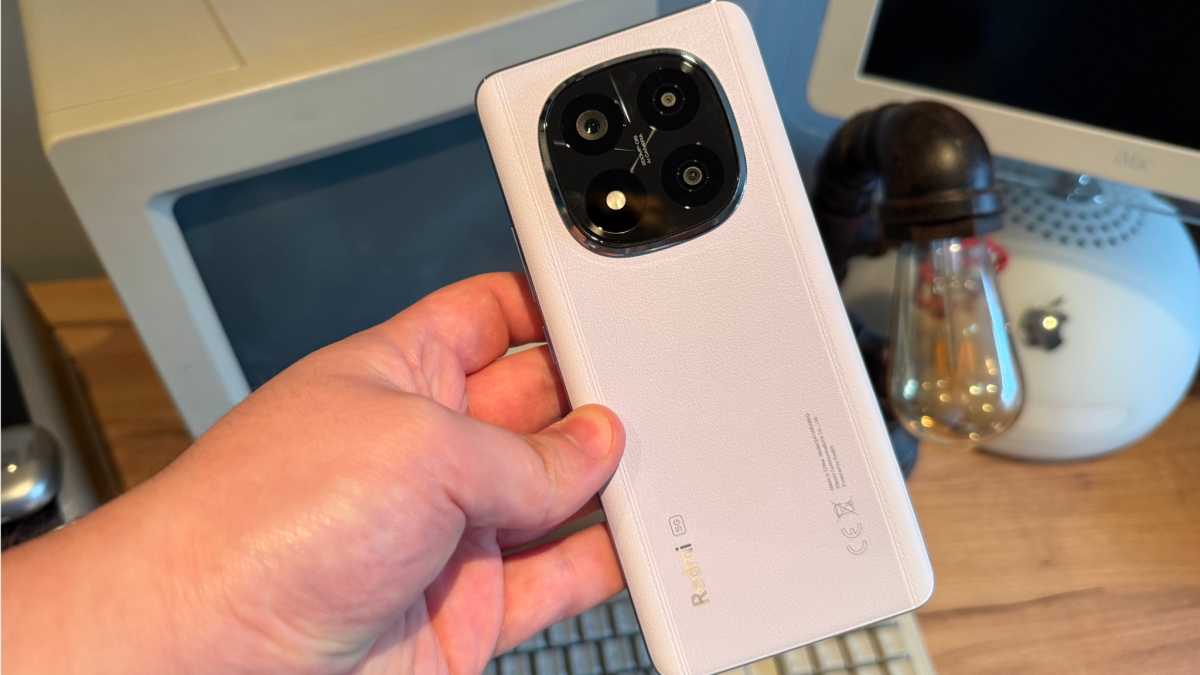
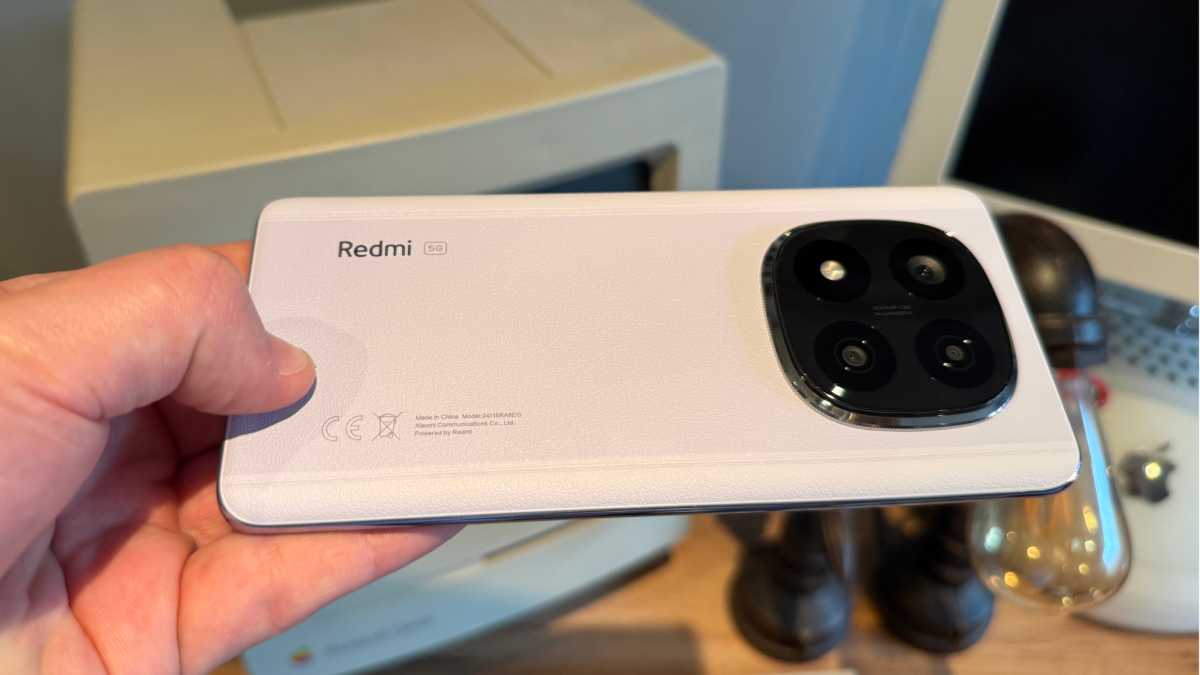
The Redmi Note 14 Pro+ is a beautifully designed device that punches above its weight in terms of aesthetics. It looks more like a flagship phone than a handset you’d expect to find at this price. This is part of Xiaomi’s aim with Redmi devices.
The Lavender Purple vegan leather option adds a touch of luxury, making the phone look more premium than its price would suggest. Besides, I really like this particular colour.
Connor Jewiss/Foundry
The minimalist branding and color-matched aluminum sides elevate the overall design – it feels distinctly premium. Despite weighing 210g, the excellent weight distribution ensures the device never feels unwieldy.
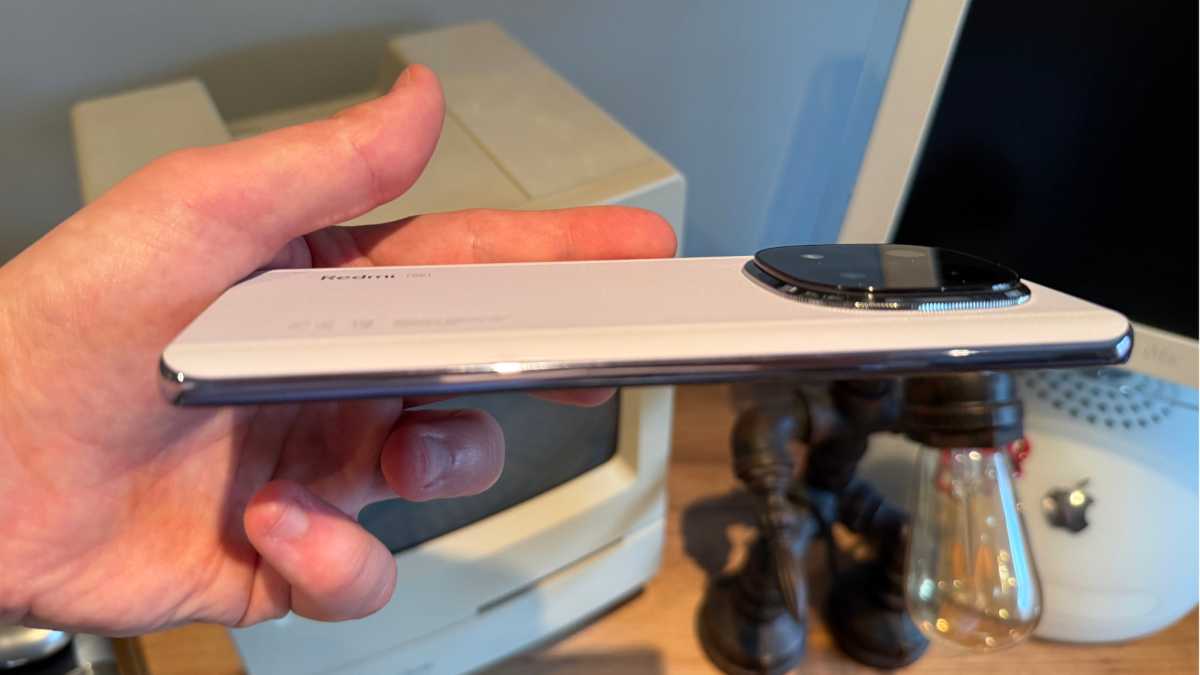
The curved-edge design is functional, reducing bezel thickness and enhancing screen real estate, but feels slightly out of step with the current trend toward flat-sided frames. I’ve long been of the opinion that curved edges need to go, so I’m personally not a fan.
That said, many users are still keen on the design choice. The phone’s IP68 rating is a standout feature in this price range, ensuring reliable durability against water and dust.
The Gorilla Glass Victus 2 protection on the display is a welcome addition, though the fingerprint sensor placement could have been higher for easier one-handed use.
Plus, the under-display fingerprint sensor wasn’t the most reliable in my experience. Even after re-adding my fingerprint, it still took multiple attempts on each unlock.
Overall, the Note 14 Pro+ strikes a balance between sophistication and practicality.
Screen & Speakers
- Vibrant 6.67-inch, 120Hz AMOLED display
- High peak brightness at 3000 nits
- Decent stereo sound, but lacks bass
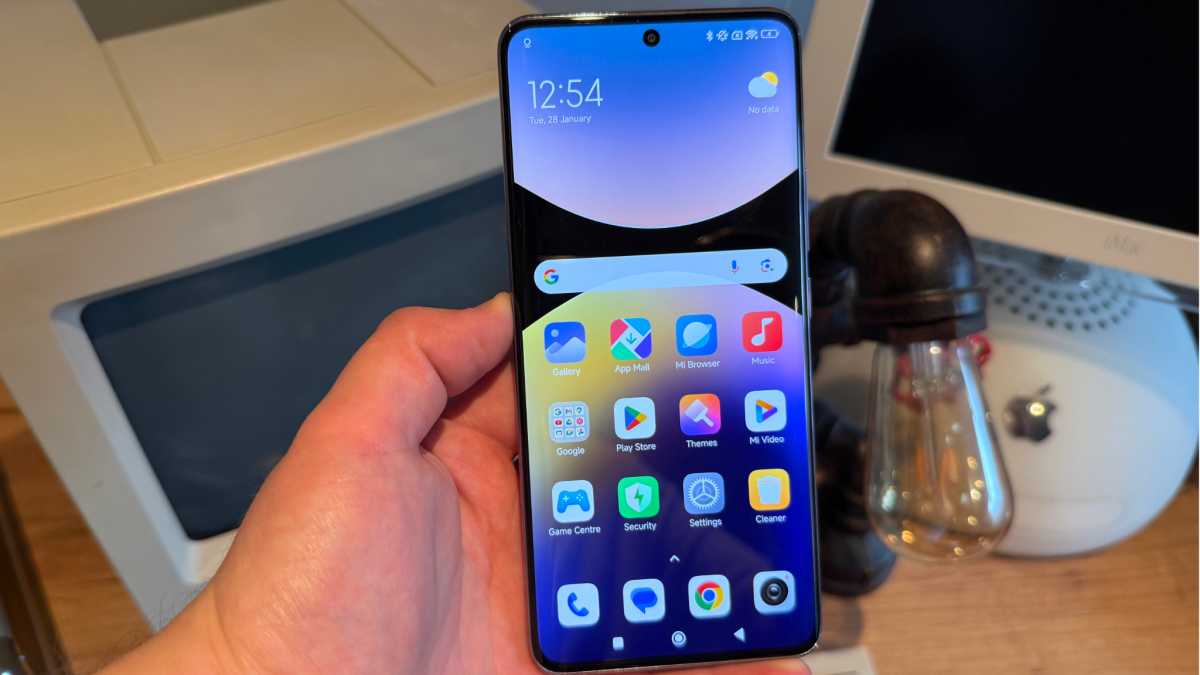
The 6.67-inch AMOLED panel on the Note 14 Pro+ impresses with its rich contrast and vivid colours. With a resolution of 2712×1220, the display remains sharp for all content types, from videos to web browsing.
The panel’s peak brightness of 3000 nits ensures excellent visibility outdoors, outperforming many competitors in the mid-range segment.
Connor Jewiss/Foundry
I found that the default colour calibration leans cooler, meaning that the display is often not as vivid as others. Colours just don’t pop as much. But, some adjustments in the settings allow users to achieve more natural tones.
The 120Hz refresh rate delivers smooth scrolling, making interactions fluid and enjoyable. However, the ambient brightness sensor can be inconsistent. I often had to go in and make manual adjustments in certain lighting conditions, particularly when it got darker.
The stereo speaker setup is satisfactory for the price, delivering clear vocals and decent volume levels, though bass remains minimal. The addition of 1920Hz PWM (pulse-width modulation) dimming reduces eye strain, a thoughtful touch for extended screen use.
Specs & Performance
- Snapdragon 7s Gen 3 is solid but unspectacular
- Struggles with prolonged, high-intensity tasks
- Outperformed by similarly priced competitors
The Snapdragon 7s Gen 3 chipset is a capable performer for day-to-day use, handling multitasking and moderate gaming with ease.
Paired with up to 12GB of RAM with 512GB of storage (or 8/256GB), the device performs reliably for apps like Chrome, YouTube, and social media. However, the mid-range Adreno 710 GPU shows its limits with demanding games, where reduced settings are necessary for smooth gameplay.
Connor Jewiss/Foundry
Benchmark comparisons reveal its middling performance. Its Geekbench 6 score was 3189 for the multi-core test. This places it similarly to the Poco X7 Pro and OnePlus Nord 4 , but just ever so slightly below.
Not too far off is the Google Pixel 8a , but the Redmi device is definitely a step below. It’s a far cry from the performance you’d get from the Snapdragon 8 series chips, and it is noticeable in day-to-day use.
While the device isn’t a powerhouse, its UFS 3.1 storage ensures snappy load times, though UFS 4.0 would have been a welcome upgrade.
Redmi Note 14 Pro+ 5G benchmarks
Cameras
- Strong 200Mp main sensor
- Weak secondary lenses
- Rivals like Google’s Pixel 8a do better
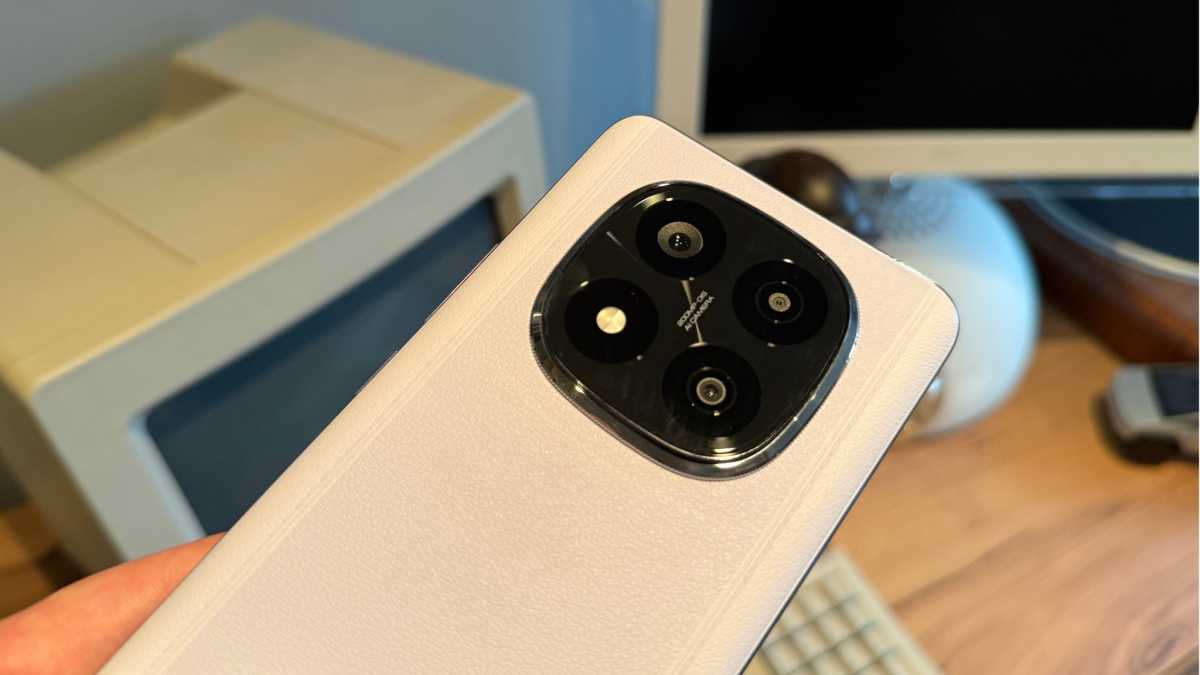
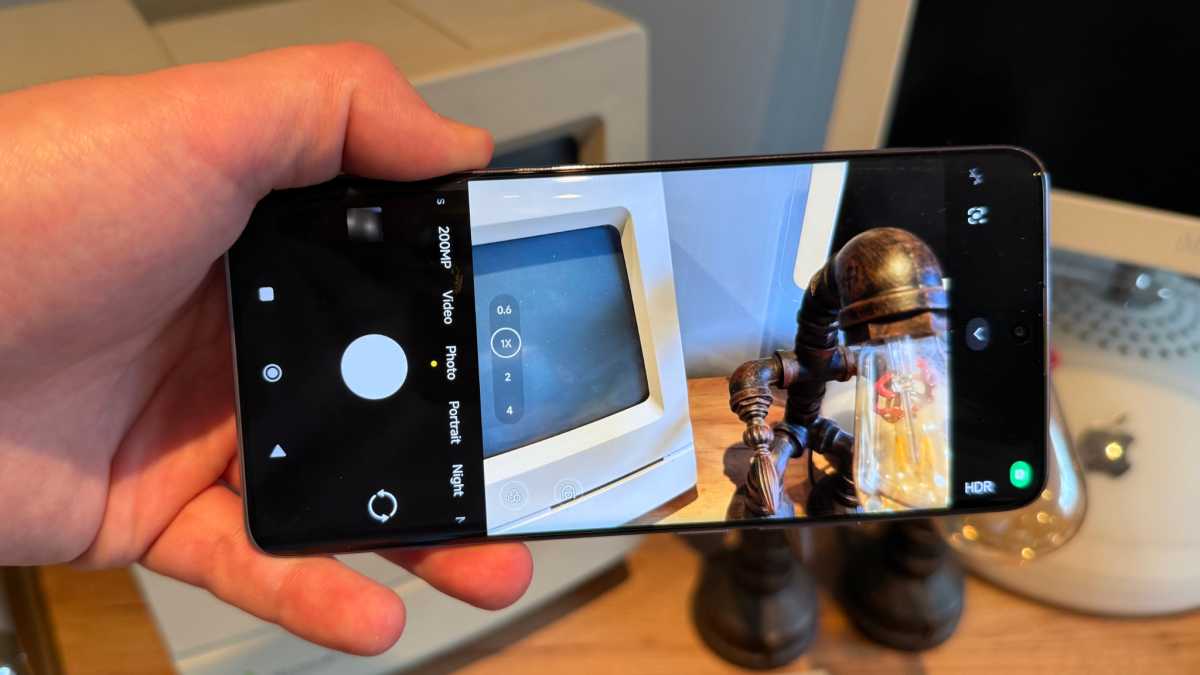
The 200Mp main camera is another standout feature, producing crisp, colourful photos with excellent dynamic range.
OIS (optical image stabilisation) ensures sharp results even in challenging lighting conditions, making it a reliable shooter for most scenarios. That said, I noticed that images often looked darker than the reality of the situation.
Connor Jewiss/Foundry
I found that the default autofocus settings often picked the wrong area of the image to highlight. In some sample photos, you’ll notice that the device favoured the back of the image rather than the foreground.
However, the secondary cameras are disappointing, with the 8Mp ultrawide struggling with detail and the 2Mp macro offering limited usability. I doubt you’ll ever use the macro camera, and the ultrawide’s quality really starts to fall apart if you look too closely.
Zoom images hold detail remarkably well though, and look rather sharp. Even when you start to pixel peep, I was impressed with how good these images looked.
Note that if you want to take any photo in its full 200Mp glory, you’ll need to use a dedicated mode that takes slightly longer to process.
Low-light photography benefits from the advanced sensor and OIS, but competitors like the Pixel 8a offer more consistent results. Video recording is capped at 4K/30fps, which is adequate but underwhelming for a device in this price range.
Connor Jewiss/Foundry
Selfies taken with the 20Mp front camera are more than adequate for social media.
Some processing features try to assist in different lighting conditions, and there are a number of beauty features baked into the camera app if that’s your sort of thing. That said, I was expecting sharper photos from the 20Mp lens.
Battery Life & Charging
- Fast 120W charging speed
- A 5110mAh battery delivers all-day use
- No wireless charging
Battery life is a strong suit for the Redmi Note 14 Pro+. The 5110mAh cell provides a full day of moderate usage, though it doesn’t quite reach the longevity of devices like the Honor Magic 7 Lite with its huge 6600mAh battery.
That said, I rarely ended a day below 20% of battery remaining during normal use, so you’ve got more than enough in that respect.
Connor Jewiss/Foundry
One observation I made over testing is that the battery seems to drain rather quickly during more performance-intensive tasks.
Watching a 4K HDR show on Netflix for 30 minutes sucked up 7% of the battery. This likely comes from the chipsets inside needing to crank up the power to handle the task.
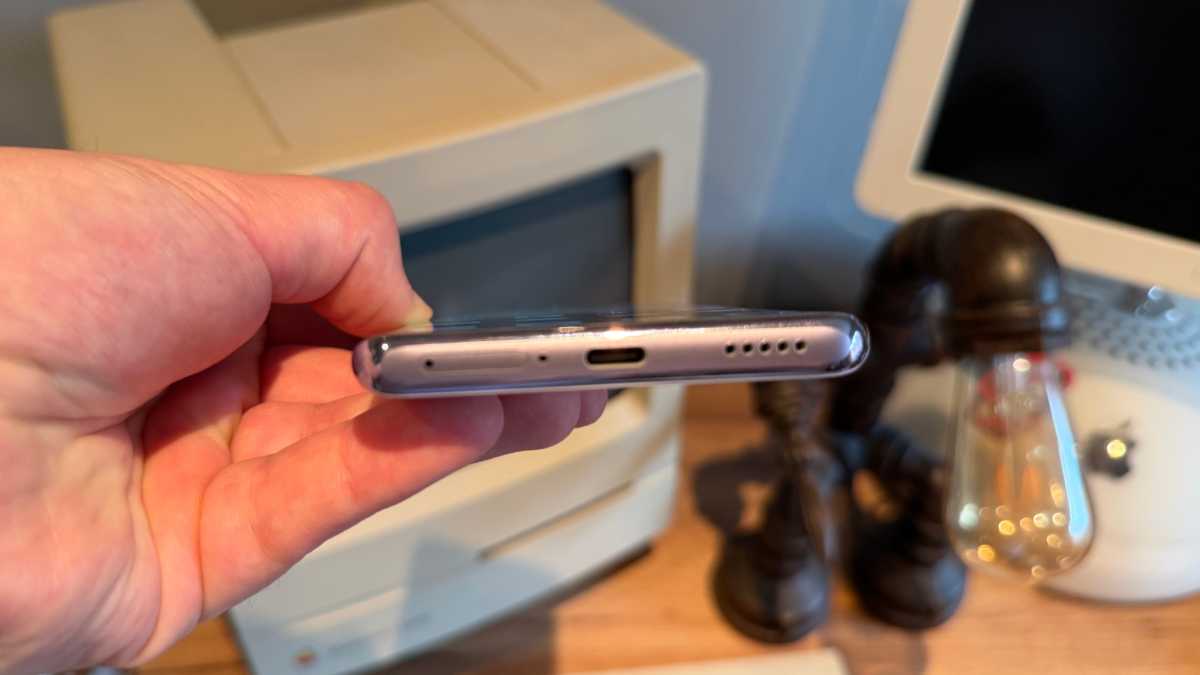
Where the Note 14 Pro+ truly shines is in its 120W wired charging, which takes the battery from empty to full in just under 25 minutes, outpacing most competitors.
Of course, you’re going to need the right charging brick and cable to achieve these speeds which is not included in the box and costs £59.99 . Using a normal charging brick, you’ll get slower (but still speedy) charging times.
Software & Features
- Ships with Android 14 instead of Android 15
- Excessive pre-installed bloatware detracts from the experience
- Barely 3 years of Android OS updates
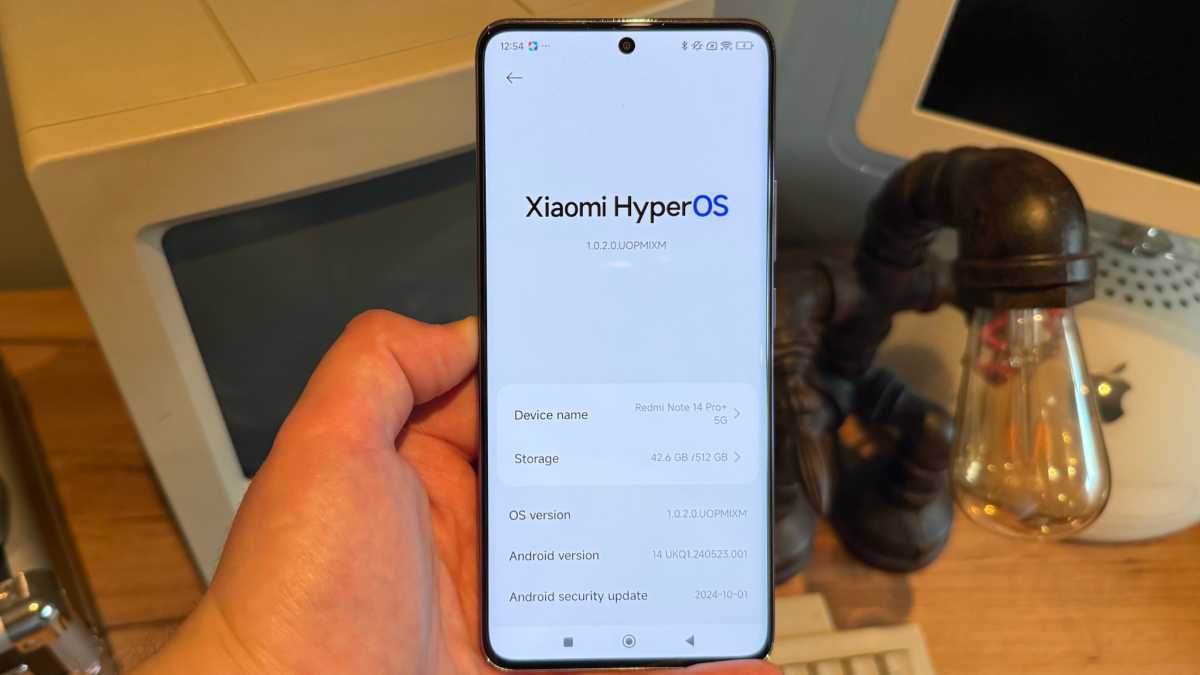
As a Xiaomi-owned brand, Redmi phones run the company’s own HyperOS software on top of Android.
The HyperOS skin feels functional but somewhat dated, with its reliance on Android 14 being a major drawback in 2025 as Android 15 is starting to trickle out.
Connor Jewiss/Foundry
Personally, I find that Xiaomi’s software lacks the polish of competitors like Samsung’s One UI or Google’s Pixel experience. You don’t get nearly as much ecosystem compatibility as you’d find from the likes of Google, Samsung, or Apple.
The sheer amount of bloatware you get on this handset is frustrating, requiring a rather time-consuming cleanup when you first get the device to free up space. I despise bloatware, and it seems particularly egregious here.
Xiaomi promises three Android updates, but the fact that Android 15 will count as one of these updates is disappointing. You’re sort of only getting two updates.
AI tools like Circle to Search and object erasers in the Gallery are useful but fail to justify the software’s overall limitations.
Price & Availability
The Redmi Note 14 Pro+ is priced at £399 for the 8GB/256GB variant and the 12GB/512GB version available for £449.
It launched in India in December 2024, before rolling out globally in January 2025. Colour options include Lavender Purple (with vegan leather), Frost Blue, and Midnight Black.
Take a look at the best mid-range phones to see our top recommendations.
Connor Jewiss/Foundry
Should you buy the Redmi Note 14 Pro+ 5G?
The Redmi Note 14 Pro+ is a capable mid-range smartphone with highlights like a stunning design, excellent charging speeds, and a dependable 200Mp main camera.
However, it fails to innovate meaningfully over its predecessor , offering minimal improvements in secondary cameras, performance, and software. The bloatware-laden HyperOS 2 and outdated Android 14 further detract from its appeal.
While the Note 14 Pro+ is a decent choice for users prioritising charging speed, camera versatility, and design, competitors like the Poco X7 Pro, OnePlus Nord 4, and Google Pixel 8a offer more well-rounded packages.
Specs
- Screen: 6.67-inch AMOLED, 2712×1220, 120Hz, 3000 nits peak brightness
- Processor: Qualcomm Snapdragon 7s Gen 3
- Memory: 8GB/12GB RAM
- Storage: 256GB/512GB UFS 3.1
- Rear Cameras: 200Mp (f/1.65, OIS) + 8Mp ultrawide (f/2.2) + 2Mp macro
- Front Camera: 20Mp (f/2.4)
- Battery: 5110mAh, 120W wired charging
- Software: Android 14 with HyperOS 2
- Dimensions: 163x75x8.75mm, 210g
Best Prices Today: Xiaomi Redmi Note 14 Pro+ 5G
Author: Connor Jewiss, Contributor, Tech Advisor

Connor is a technology writer and editor, with a byline on multiple platforms. He has been writing for around seven years now across the web and in print too. Connor has experience on most major platforms, though does hold a place in his heart for macOS, iOS/iPadOS, electric vehicles, and smartphone tech. Just like everyone else around here, he’s a fan of gadgets of all sorts. Aside from writing, Connor is involved in the startup scene, which puts him at the front of new and exciting tech - he is always on the lookout for innovative products.
Recent stories by Connor Jewiss:
- Oppo Reno 13 FS review: Well-priced battery champ
- Oppo Reno 13 Pro review: Camera-first mid-ranger that excels
- Poco F7 Pro review: The new mid-range phone to beat?
